
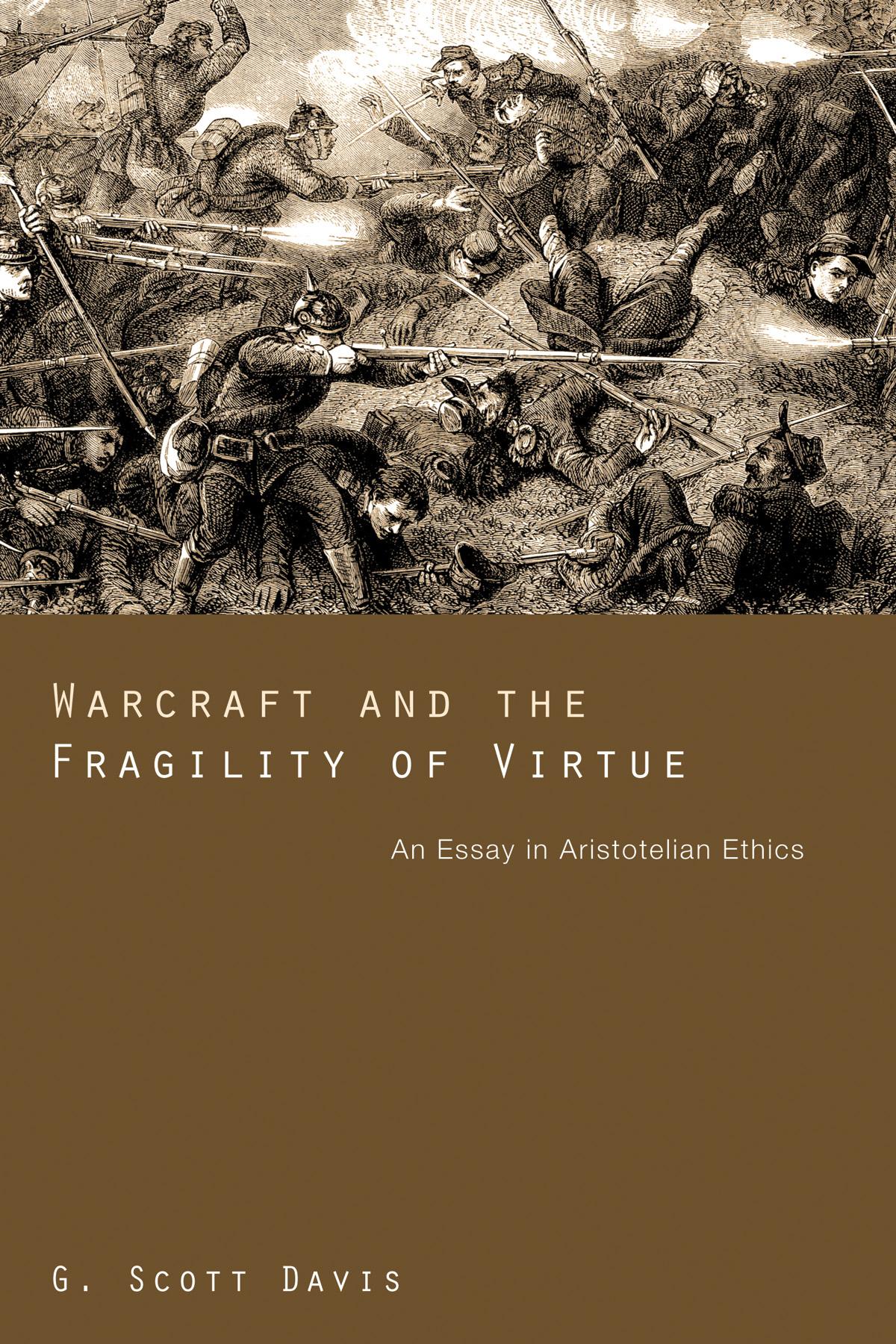
Recent work by Stanley Hauerwas, Alasdair MacIntyre, and Robert Bellah has brought considerable attention to bear on the ethics of virtue. Little clarity has, however, emerged from that discussion on what difference such an ethic would make in practical and political deliberations. Warcraft and the Fragility of Virtue presents, for the first time, a well-developed and effective Aristotelian perspective on reasoning about war and warfare.
Author G. Scott Davis first sketches the fundamentals of as Aristotelian approach to the ethics of war, arguing that the virtue is a craft, of itself fragile, that must be sustained by a community that makes the highest demands upon itself. Introduced as a criterion for evaluating alliances and international relations, the concept of moral community is also of the highest significance for interpreting those ruptures within the community, including resistance and rebellion, that arise concomitantly with the prospect and onset of war.
Pay easily by card, Klarna, Apple Pay or Google Pay. Not happy? You always have a 14-day money-back guarantee. Read more in our terms. If you have any questions, email us at hello@memmo.org.
Memmo makes studying easier – wherever you are in the world. We bring your course books and smart study tools together in one place: summaries, quizzes, podcasts and flashcards. Plus Ted, your study buddy who answers anything you wonder. Over 50,000 students already study here – built to help you learn faster and stress less.
You might also like
Buy the book0