
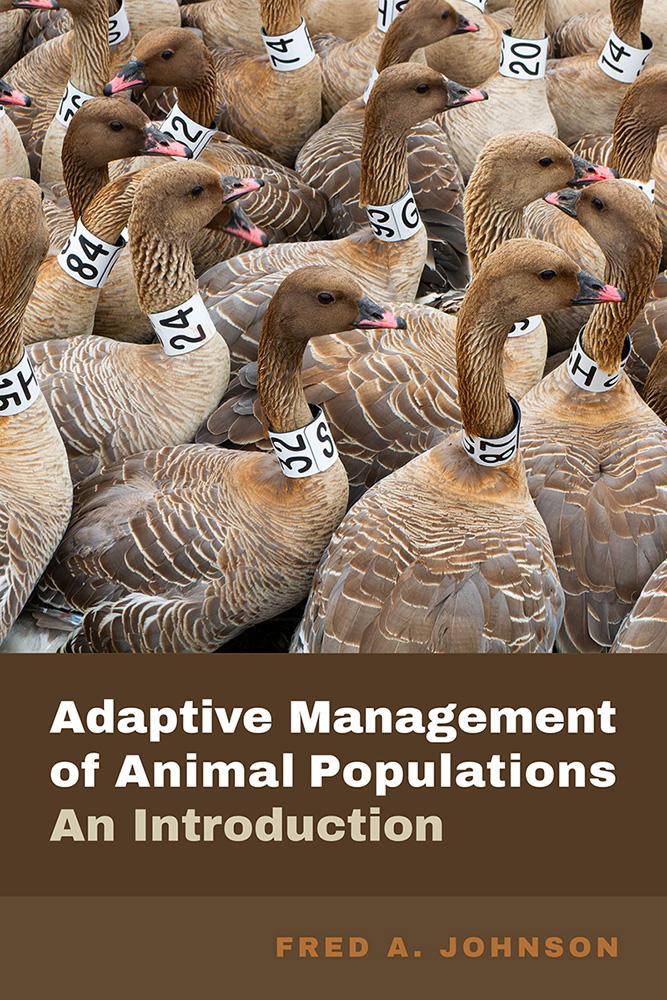
A primer on adaptive management—a dynamic approach to decision-making when outcomes are uncertain and learning is possible
This book explains the principles and processes of adaptive management, outlines when it is most effective, and examines the challenges of implementation. Since its introduction in the 1980s, adaptive management has become a cornerstone of resource conservation. Case studies illustrate its value—for example, determining how disturbance around eagle nests should be controlled and managing harvests of a goose population causing economic damage. Researchers, conservationists, and wildlife managers will value this book as both a practical and technical introduction to the adaptive management process.
Decisions on how to best conserve and manage biological resources cannot be made based on ecological research alone. They must consider multiple decision-makers, competing stakeholder values, the complex interplay of social and ecological systems, and uncertain decision outcomes. Adaptive management offers a unifying framework that helps balance ecological and socioeconomic goals, while improving long-term outcomes through learning and subsequent adaptation of conservation strategies.
Pay easily by card, Klarna, Apple Pay or Google Pay. Not happy? You always have a 14-day money-back guarantee. Read more in our terms. If you have any questions, email us at hello@memmo.org.
Memmo makes studying easier – wherever you are in the world. We bring your course books and smart study tools together in one place: summaries, quizzes, podcasts and flashcards. Plus Ted, your study buddy who answers anything you wonder. Over 50,000 students already study here – built to help you learn faster and stress less.