
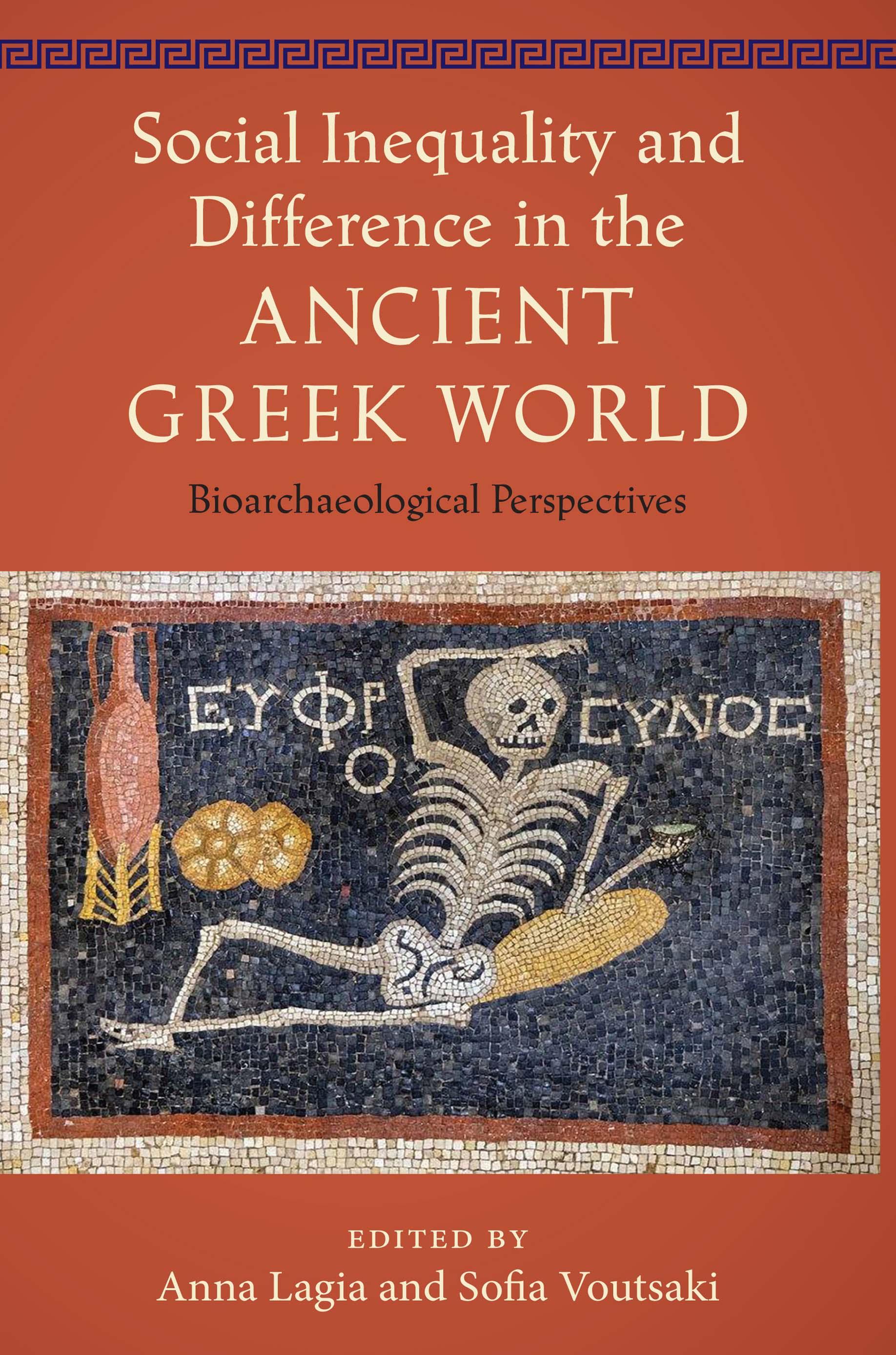
Exploring the relationship between health and inequality in the societies of ancient Greece
In this volume, bioarchaeologists, osteologists, archaeologists, and paleopathologists examine the ways social inequalities and differences affected health and well-being in ancient Greece. Although the ancient Greek civilization is often associated with the ideals of democracy and social equality, the region was characterized by pervasive divisions. Moving beyond elitism and idealization, this book focuses on health-related disparities and difference.
Case studies cover a wide temporal range—from the eleventh century BCE through the sixth century CE, a period not usually examined in bioarchaeological studies of the region—and geographical areas including city-states in the Greek mainland, the Aegean islands, the Ionian coast, Albania, and southern Italy. Comparing health-related data across social groups and sociopolitical systems, contributors explore the relationships between colonists and Indigenous communities, strategies of inclusion and exclusion in mortuary practices, and the impact of urbanization and Romanization on health, diet, and growth. This book also discusses methodological questions such as the challenges posed by poor skeletal preservation, small sample sizes, and incomplete or legacy data.
With a focus on marginalized groups including ordinary people, women, children, and enslaved workers, Social Inequality and Difference in the Ancient Greek World shows how bioarchaeology can dialogue with the disciplines of archaeology and ancient history to explore subjects such as health, inequality, ethnicity, age, and gender. This book opens a new avenue for addressing questions concerning living standards in the ancient world.
Pay easily by card, Klarna, Apple Pay or Google Pay. Not happy? You always have a 14-day money-back guarantee. Read more in our terms. If you have any questions, email us at hello@memmo.org.
Memmo makes studying easier – wherever you are in the world. We bring your course books and smart study tools together in one place: summaries, quizzes, podcasts and flashcards. Plus Ted, your study buddy who answers anything you wonder. Over 75,000 students already study here – built to help you learn faster and stress less.