
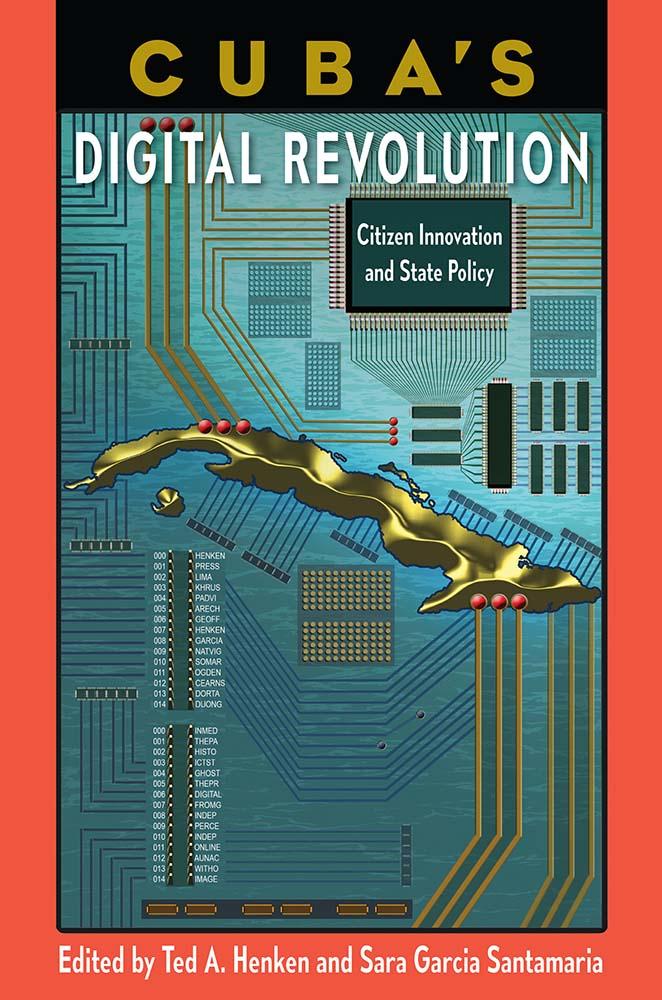
A wide-ranging examination of the ways digital technologies are impacting Cuba’s Revolutionary project
The triumph of the Cuban Revolution gave the Communist Party a monopoly over both politics and the mass media. However, with the subsequent global proliferation of new information and communication technologies, Cuban citizens have become active participants in the worldwide digital revolution. While the Cuban internet has long been characterized by censorship, high costs, slow speeds, and limited access, this volume argues that since 2013, technological developments have allowed for a fundamental reconfiguration of the cultural, economic, social, and political spheres of the Revolutionary project.
The essays in this volume cover various transformations within this new digital revolution, examining both government-enabled paid public web access and creative workarounds that Cubans have designed to independently produce, distribute, and access digital content. Contributors trace how media ventures, entrepreneurship, online marketing, journalism, and cultural e-zines have been developing on the island alongside global technological and geopolitical changes.
As Cuba continues to expand internet access and as citizens challenge state policies on the speed, breadth, and freedom of that access, Cuba’s Digital Revolution provides a fascinating example of the impact of technology in authoritarian states and transitional democracies. While the streets of Cuba may still belong to Castro’s Revolution, this volume argues that it is still unclear to whom Cuban cyberspace belongs.
Publication of the paperback edition made possible by a Sustaining the Humanities through the American Rescue Plan grant from the National Endowment for the Humanities.
Pay easily by card, Klarna, Apple Pay or Google Pay. Not happy? You always have a 14-day money-back guarantee. Read more in our terms. If you have any questions, email us at hello@memmo.org.
Memmo makes studying easier – wherever you are in the world. We bring your course books and smart study tools together in one place: summaries, quizzes, podcasts and flashcards. Plus Ted, your study buddy who answers anything you wonder. Over 50,000 students already study here – built to help you learn faster and stress less.