
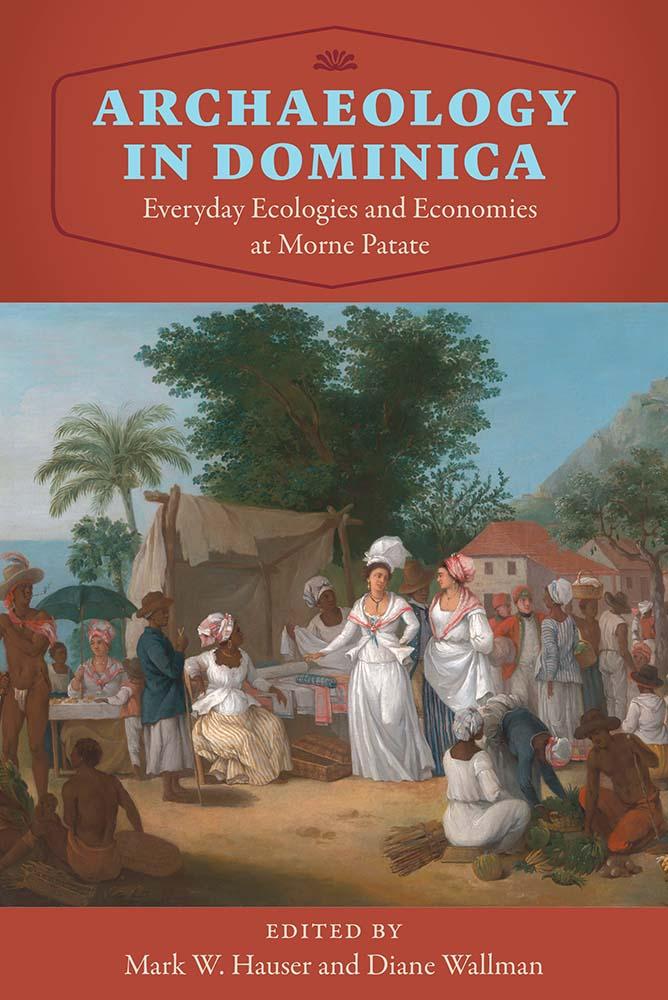
Archaeology in Dominica examines the everyday lives of enslaved and free workers at Morne Patate, an eighteenth- and nineteenth-century Caribbean plantation that produced sugar, coffee, and provisions. Focusing on household archaeology, this volume helps document the underrepresented history of slavery and colonialism on the edge of the British Empire.
Contributors discuss how enslaved and free people were entangled in shifting economic and ecological systems during the plantation’s 200-year history, most notably the introduction of sugarcane as an export commodity. Analyzing historical records, the landscape geography of the plantation, and material remains from the residences of laborers, the authors synthesize extensive data from this site and compare it to that of other excavations across the Eastern Caribbean. Using historical archaeology to investigate the political ecology of Morne Patate opens up a deeper understanding of the environmental legacies of colonial empires, as well as the long-term impacts of plantation agriculture on the Caribbean region and its people.
Pay easily by card, Klarna, Apple Pay or Google Pay. Not happy? You always have a 14-day money-back guarantee. Read more in our terms. If you have any questions, email us at hello@memmo.org.
Memmo makes studying easier – wherever you are in the world. We bring your course books and smart study tools together in one place: summaries, quizzes, podcasts and flashcards. Plus Ted, your study buddy who answers anything you wonder. Over 75,000 students already study here – built to help you learn faster and stress less.