
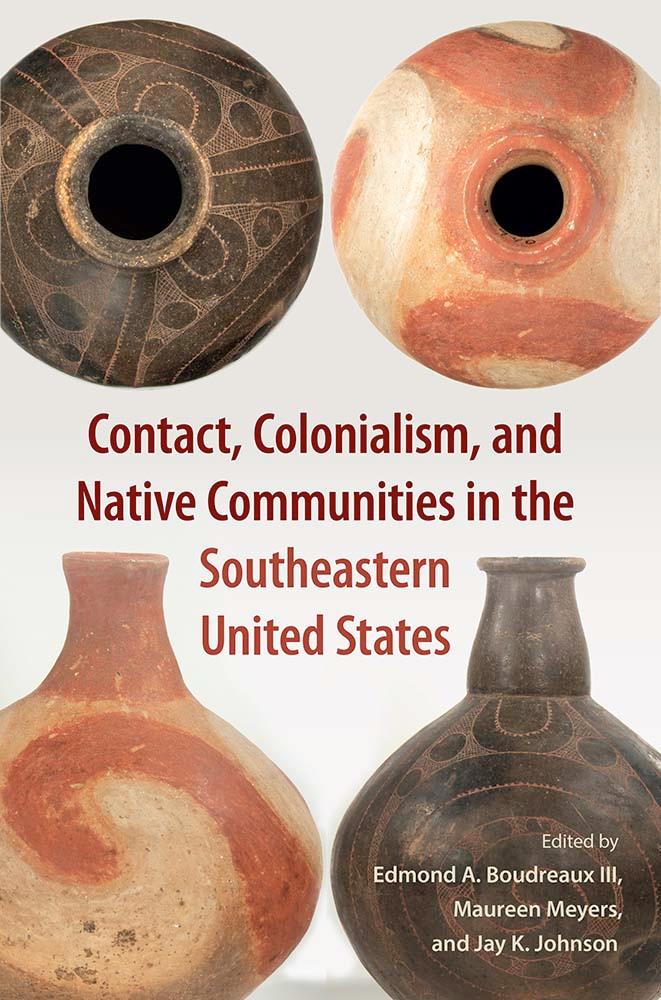
The years AD 1500–1700 were a time of dramatic change for the indigenous inhabitants of southeastern North America, yet Native histories during this era have been difficult to reconstruct due to a scarcity of written records before the eighteenth century. Using archaeology to enhance our knowledge of the period, Contact, Colonialism, and Native Communities in the Southeastern United States presents new research on the ways Native societies responded to early contact with Europeans.
Featuring sites from Kentucky to Mississippi to Florida, these case studies investigate how indigenous groups were affected by the expeditions of explorers such as Hernando de Soto, Pánfilo de Narváez, and Juan Pardo. Contributors re-create the social geography of the Southeast during this time, trace the ways Native institutions changed as a result of colonial encounters, and emphasize the agency of indigenous populations in situations of contact. They demonstrate the importance of understanding the economic, political, and social variability that existed between Native and European groups.
Bridging the gap between historical records and material artifacts, this volume answers many questions and opens up further avenues for exploring these transformative centuries, pushing the field of early contact studies in new theoretical and methodological directions.
A volume in the Florida Museum of Natural History: Ripley P. Bullen Series
Pay easily by card, Klarna, Apple Pay or Google Pay. Not happy? You always have a 14-day money-back guarantee. Read more in our terms. If you have any questions, email us at hello@memmo.org.
Memmo makes studying easier – wherever you are in the world. We bring your course books and smart study tools together in one place: summaries, quizzes, podcasts and flashcards. Plus Ted, your study buddy who answers anything you wonder. Over 75,000 students already study here – built to help you learn faster and stress less.
You might also like
Buy the book0