
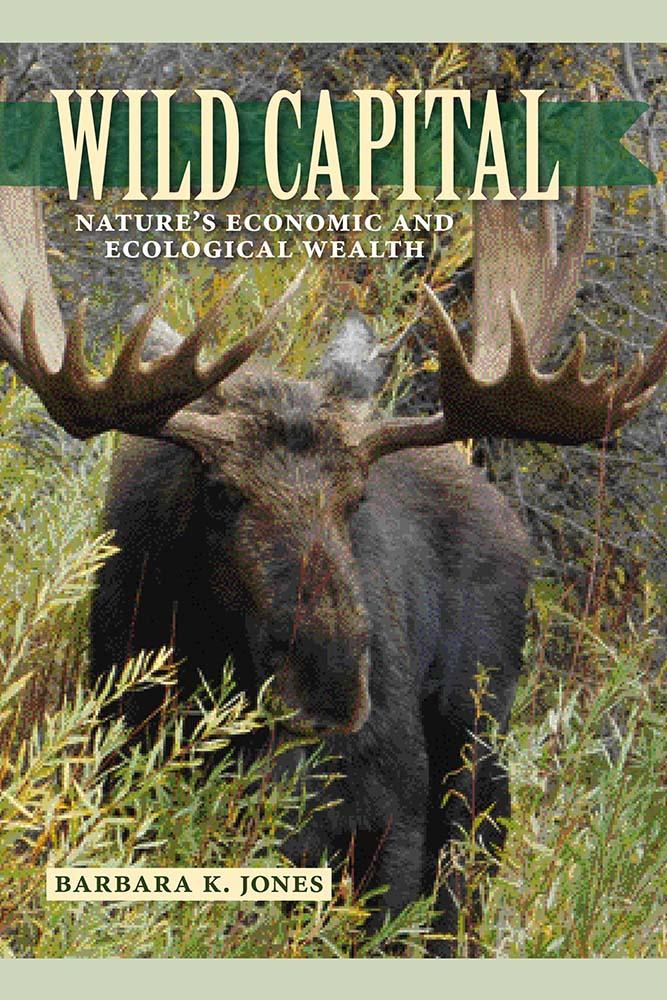
In Wild Capital, Barbara Jones demonstrates that looking at nature through the lens of the marketplace is a surprisingly effective approach to protecting the environment. Showing that policy-makers and developers rarely associate wild places with monetary values, Jones argues that nature can and should be viewed as a capital asset like any other in order for environmental preservation to be a competitive alternative to development.
Jones describes how the ecosystem services model, a tool that connects human well-being with the services nature provides, can play a critical role in assigning species and their habitats measurable values. She uses five highly recognizable animal species—moose, manatees, sharks, wolves, and bald eagles—as examples to show how highly valued charismatic fauna can serve as symbolic representations of entire ecosystems at risk. Through an emphasis on branding, incentives, and ecotourism, Jones advocates for channeling the social and economic power of these and other faces of nature to inspire greater environmental awareness and stewardship.
Contending that many people don’t realize how fiscally pragmatic environmental initiatives can be, Jones is optimistic that by recognizing the costs of habitat destruction and diminished biodiversity, we will make better choices regarding conservation and development. In doing so, we can more readily move toward co-existence with nature and a sustainable future.
Pay easily by card, Klarna, Apple Pay or Google Pay. Not happy? You always have a 14-day money-back guarantee. Read more in our terms. If you have any questions, email us at hello@memmo.org.
Memmo makes studying easier – wherever you are in the world. We bring your course books and smart study tools together in one place: summaries, quizzes, podcasts and flashcards. Plus Ted, your study buddy who answers anything you wonder. Over 50,000 students already study here – built to help you learn faster and stress less.
You might also like
Buy the book0