
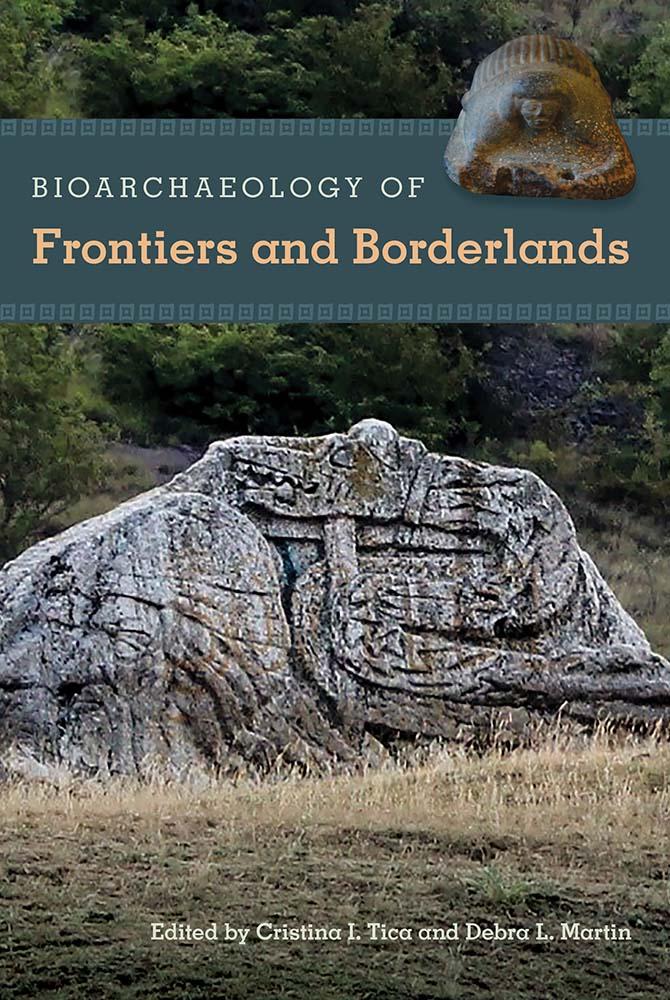
Frontiers and territorial borders are places of contested power where societies collide, interact, and interconnect. Using bioanthropological case studies from around the world, this volume explores how people in the past created, maintained, or changed their identities while living on the edge between two or more different spheres of influence.
Examining a wide range of borderland settings, essays in this volume discuss the mobility of people in Roman Egypt and investigate patterns of genetic difference in Iron Age Italy. They show how social and cultural interactions helped buffer the stressful physical environment of eleventh-century Iceland and describe bioarchaeological evidence of traumatic injuries indicating tension across regional borders in the precontact American Great Basin and Southwest. Contributors look at isotope data, skeletal stress markers, craniometric and dental metric information, mortuary arrangements, and other evidence to examine how frontier life can affect health and socioeconomic status. Illustrating the many meanings and definitions of frontiers and borderlands, they question assumptions about the relationships between people, place, and identity.
As national borders continue to ignite controversy in today’s society and politics, the research presented here is more important than ever. The long history of people who have lived in borderland areas helps us understand the challenges of adapting to these dynamic and often violent places.
A volume in the series Bioarchaeological Interpretations of the Human Past: Local, Regional, and Global Perspectives, edited by Clark Spencer Larsen
Pay easily by card, Klarna, Apple Pay or Google Pay. Not happy? You always have a 14-day money-back guarantee. Read more in our terms. If you have any questions, email us at hello@memmo.org.
Memmo makes studying easier – wherever you are in the world. We bring your course books and smart study tools together in one place: summaries, quizzes, podcasts and flashcards. Plus Ted, your study buddy who answers anything you wonder. Over 75,000 students already study here – built to help you learn faster and stress less.