
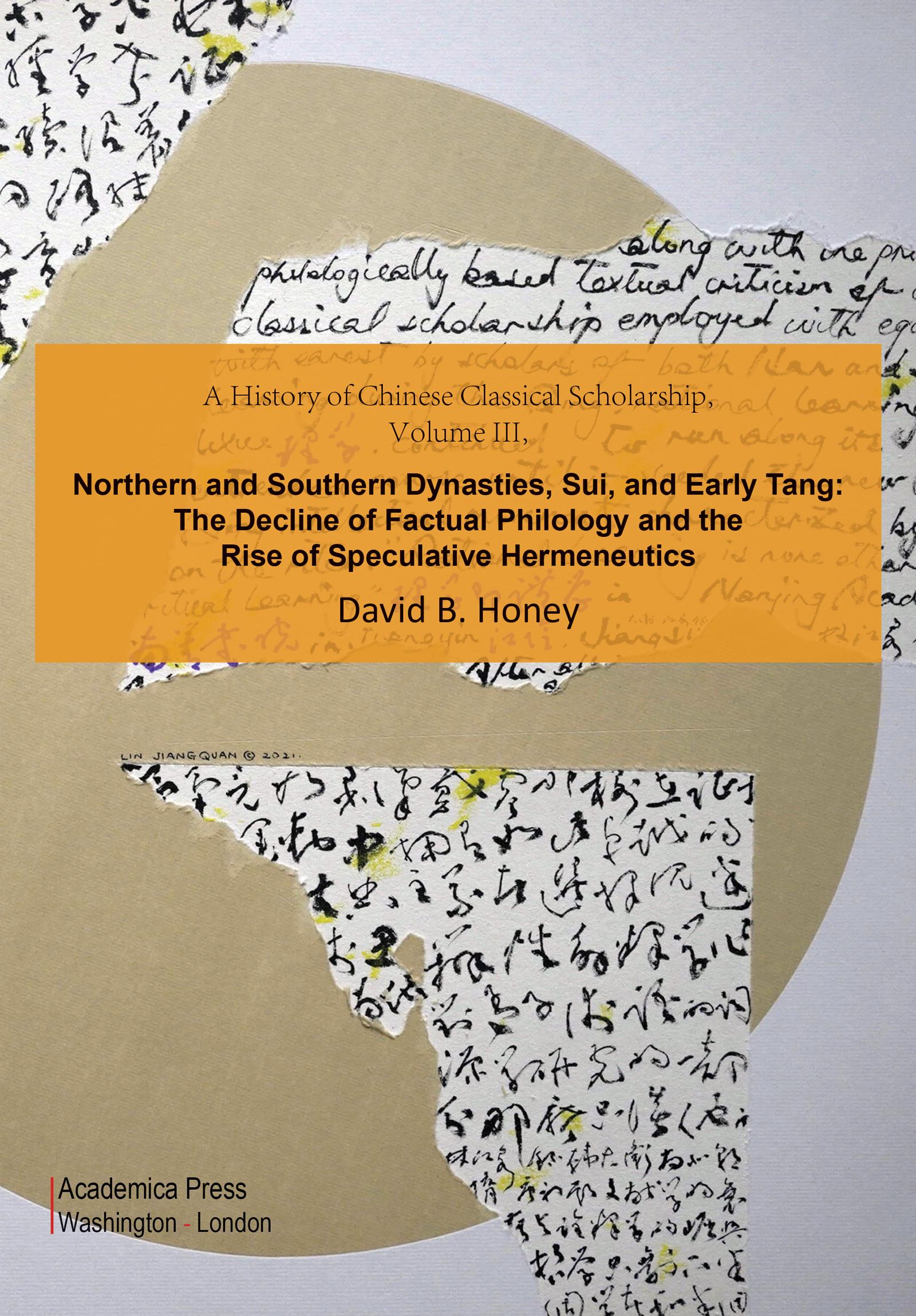
This exciting third volume of David B. Honey’s comprehensive history of Chinese thought begins with China after nomadic invaders overran the northern regions of the historic kingdom. The differentiation between scholarly emphases—northern focus on the traditional pedagogical commentary, and southern classical school’s more innovative commentary—led to an emphasis on the interpretation of the overall message of a text, not a close reading of smaller sections. As Honey explains, serious attention to the phonological nature of Chinese characters also began during in this long era. Based on the work of earlier Sui dynasty classicists, Kong Yinga and his committee produced the Correct Meaning commentary to the Five Classics during the early Tang Dynasty, which is still largely normative today. The book demonstrates that the brooding presence of Zheng Xuan, the great textual critic from the Eastern Han dynasty, still exerted enormous influence during this period, as his ritualized approach to the classics inspired intellectual followers to expand on his work or impelled opponents to break off in new directions.
Pay easily by card, Klarna, Apple Pay or Google Pay. Not happy? You always have a 14-day money-back guarantee. Read more in our terms. If you have any questions, email us at hello@memmo.org.
Memmo makes studying easier – wherever you are in the world. We bring your course books and smart study tools together in one place: summaries, quizzes, podcasts and flashcards. Plus Ted, your study buddy who answers anything you wonder. Over 75,000 students already study here – built to help you learn faster and stress less.
You might also like
Buy the book0