
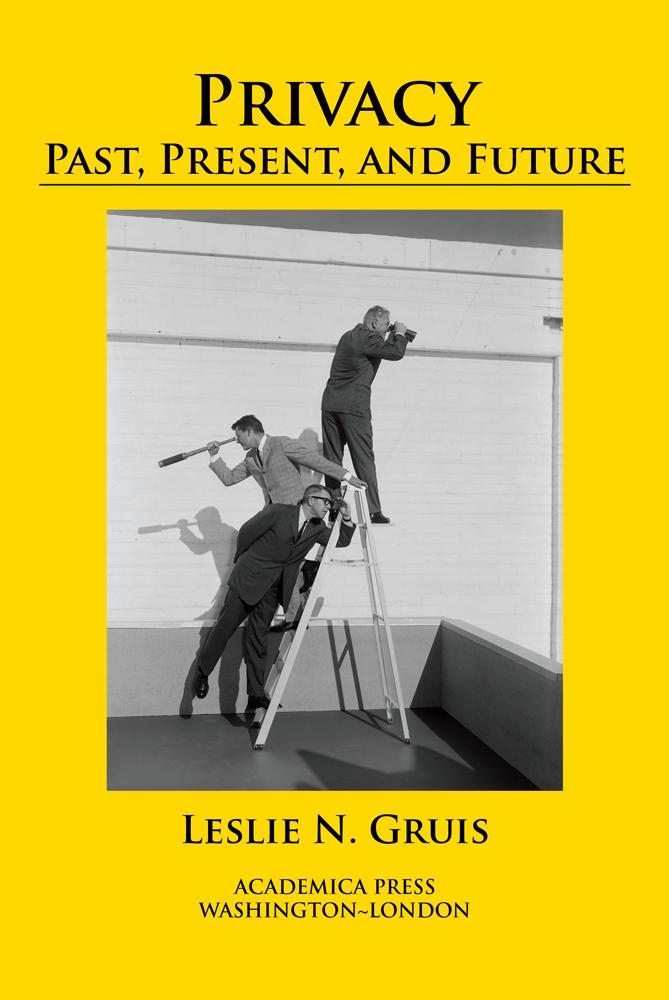
Top analyst Leslie Gruis’s timely new book argues that privacy is an individual right and democratic value worth preserving, even in a cyberized world. Since the time of the printing press, technology has played a key role in the evolution of individual rights and helped privacy emerge as a formal legal concept.
All governments exercise extraordinary powers during national security crises. In the United States, many imminent threats during the twentieth century induced heightened government intrusion into the privacy of Americans. The Privacy Act of 1974 and the Foreign Intelligence Surveillance Act (FISA, 1978) reversed that trend. Other laws protect the private information of individuals held in specific sectors of the commercial world. Risk management practices were extended to computer networks, and standards for information system security began to emerge. The National Institute of Standards and Technology (NIST) incorporated many such standards into its Cybersecurity Framework, and is currently developing a Privacy Framework. These standards all contribute to a patchwork of privacy protection which, so far, falls far short of what the U.S. constitutional promise offers and what our public badly needs. Greater privacy protections for U.S. citizens will come as long as Americans remember how democracy and privacy sustain one another, and demonstrate their commitment to them.
Category: Juridik
e-ISBN: 9781680539714
Pay easily by card, Klarna, Apple Pay or Google Pay. Not happy? You always have a 14-day money-back guarantee. Read more in our terms. If you have any questions, email us at hello@memmo.org.
Memmo makes studying easier – wherever you are in the world. We bring your course books and smart study tools together in one place: summaries, quizzes, podcasts and flashcards. Plus Ted, your study buddy who answers anything you wonder. Over 50,000 students already study here – built to help you learn faster and stress less.
You might also like
Buy the book0