
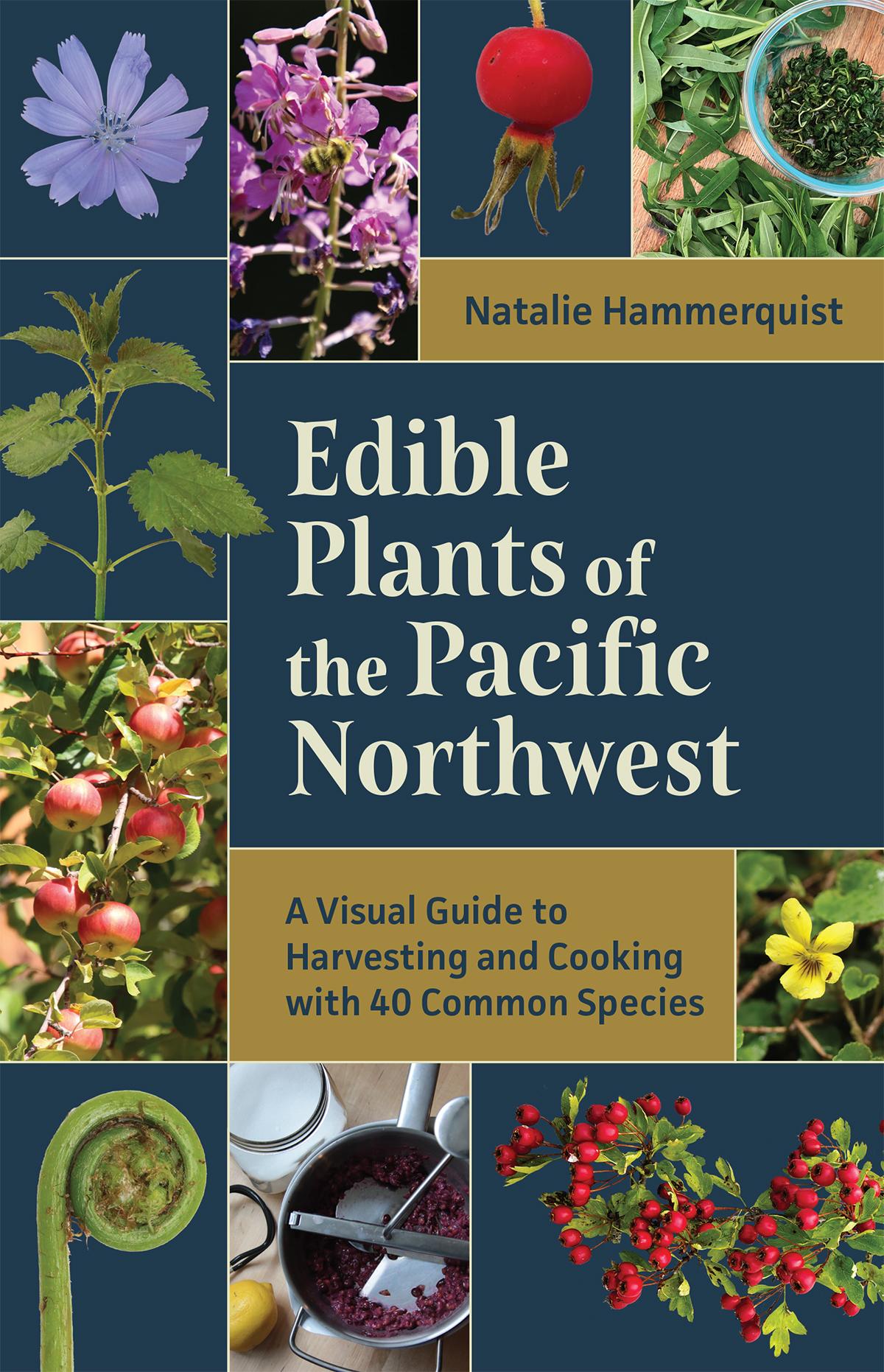
A detailed guide to the most abundant and tasty edible wild plants in the Pacific Northwest
A foraging guide that emphasizes the tastiest wild foods of the region, Edible Plants of the Pacific Northwest is a comprehensive, effective, and ethical resource for anyone interested in foraged food. Appropriate for beginners and experienced naturalists alike, this book teaches readers to identify, harvest, and cook with 40 of the region’s most common wild plants.
Expert forager and educator Natalie Hammerquist not only teaches readers to recognize the most common plants, but she also shows them how to steer clear of threatened species, as well as toxic and poisonous plants, using highly detailed visuals to make identification more immediate and accurate. Her holistic approach to wild foods incorporates both Eastern and Western traditions, as well as folk knowledge, and invites people to form relationships with the land and to act with reciprocity and care in our wild spaces.
Plants range from familiar treats like nettles and evergreen huckleberries, to lesser-known edibles like cattail, mallow, wood sorrel, and more. Recipes include local favorites like rose-petal jam, dock-seed crackers, and slow-cooker applesauce.
- Overviews of 40 edible plants with history, common names, and subspecies
- Beginner-friendly resource explores native, non-native, and invasive plants with detailed listings, recipes, plus a seasonal harvest calendar
- Full-color ID photos with detailed close-ups, as well as contextual photos of plants in the wild
A foraging guide that emphasizes the tastiest wild foods of the region, Edible Plants of the Pacific Northwest is a comprehensive, effective, and ethical resource for anyone interested in foraged food. Appropriate for beginners and experienced naturalists alike, this book teaches readers to identify, harvest, and cook with 40 of the region’s most common wild plants.
Expert forager and educator Natalie Hammerquist not only teaches readers to recognize the most common plants, but she also shows them how to steer clear of threatened species, as well as toxic and poisonous plants, using highly detailed visuals to make identification more immediate and accurate. Her holistic approach to wild foods incorporates both Eastern and Western traditions, as well as folk knowledge, and invites people to form relationships with the land and to act with reciprocity and care in our wild spaces.
Plants range from familiar treats like nettles and evergreen huckleberries, to lesser-known edibles like cattail, mallow, wood sorrel, and more. Recipes include local favorites like rose-petal jam, dock-seed crackers, and slow-cooker applesauce.
Pay easily by card, Klarna, Apple Pay or Google Pay. Not happy? You always have a 14-day money-back guarantee. Read more in our terms. If you have any questions, email us at hello@memmo.org.
Memmo makes studying easier – wherever you are in the world. We bring your course books and smart study tools together in one place: summaries, quizzes, podcasts and flashcards. Plus Ted, your study buddy who answers anything you wonder. Over 50,000 students already study here – built to help you learn faster and stress less.
You might also like
Buy the book0