
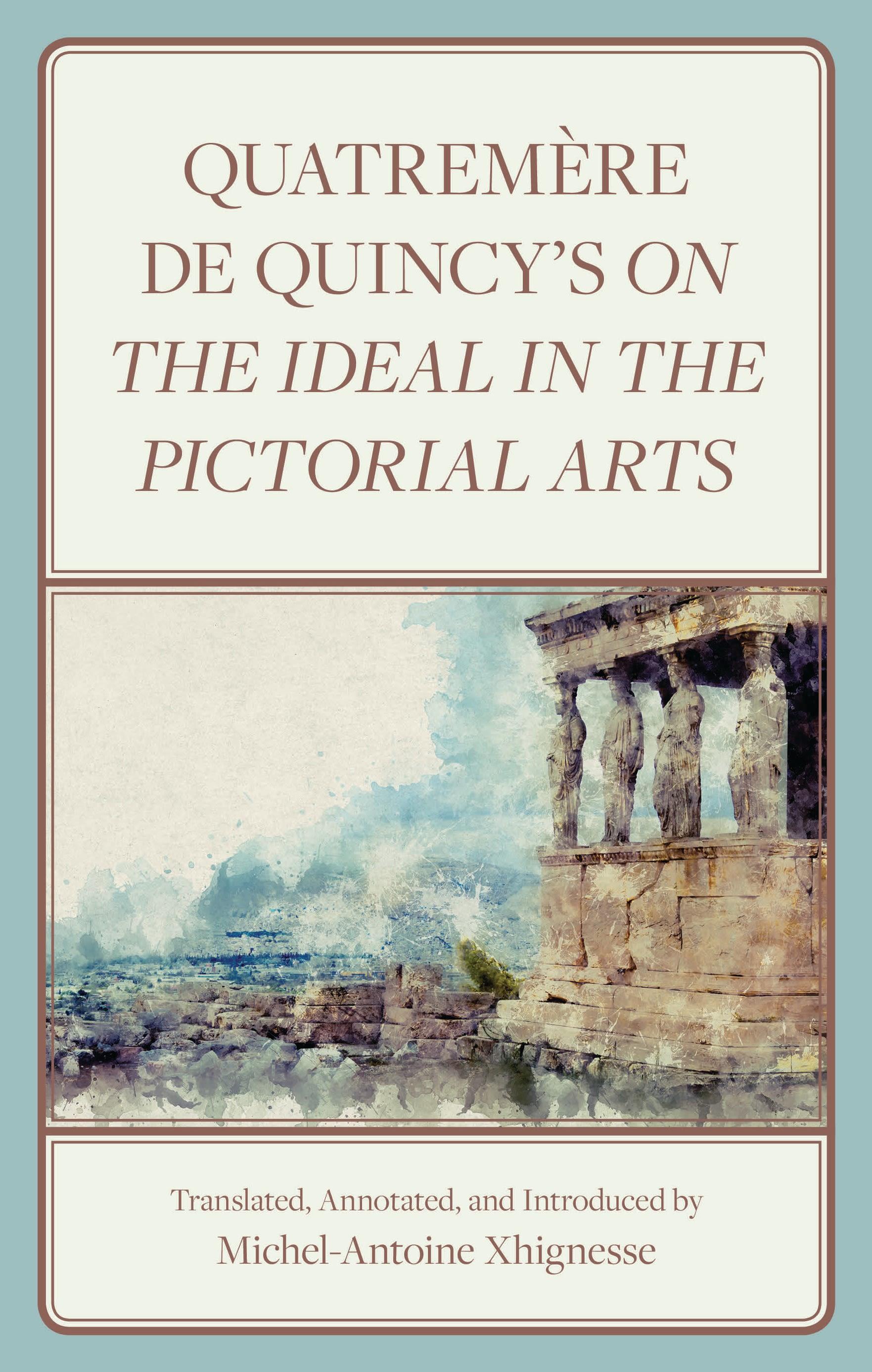
Antoine-Chrysostome Quatremère de Quincy was widely regarded as the pre-eminent art theorist of his day and exerted tremendous influence over the development of the arts in nineteenth-century France, publishing over twenty books over his career. Translated into English for the first time by Michel-Antoine Xhignesse, this 1837 treatise on imitation in the arts represents one of his major theoretical works. Quatremère de Quincy argues, against the prevailing opinion of the day, that artistic imitation aims at communicating the essence of the thing represented (ideal imitation), rather than merely faithfully reproducing its life appearance (real imitation). In order to communicate the essence, he argues, the artist must prioritize the contributions of her imagination over the choice and appearance of her model. This represented a significant departure from other accounts of ideal imitation, such as Batteux's or Winckelmann's, which instead advocated combining the best features of several different models.
Pay easily by card, Klarna, Apple Pay or Google Pay. Not happy? You always have a 14-day money-back guarantee. Read more in our terms. If you have any questions, email us at hello@memmo.org.
Memmo makes studying easier – wherever you are in the world. We bring your course books and smart study tools together in one place: summaries, quizzes, podcasts and flashcards. Plus Ted, your study buddy who answers anything you wonder. Over 50,000 students already study here – built to help you learn faster and stress less.