
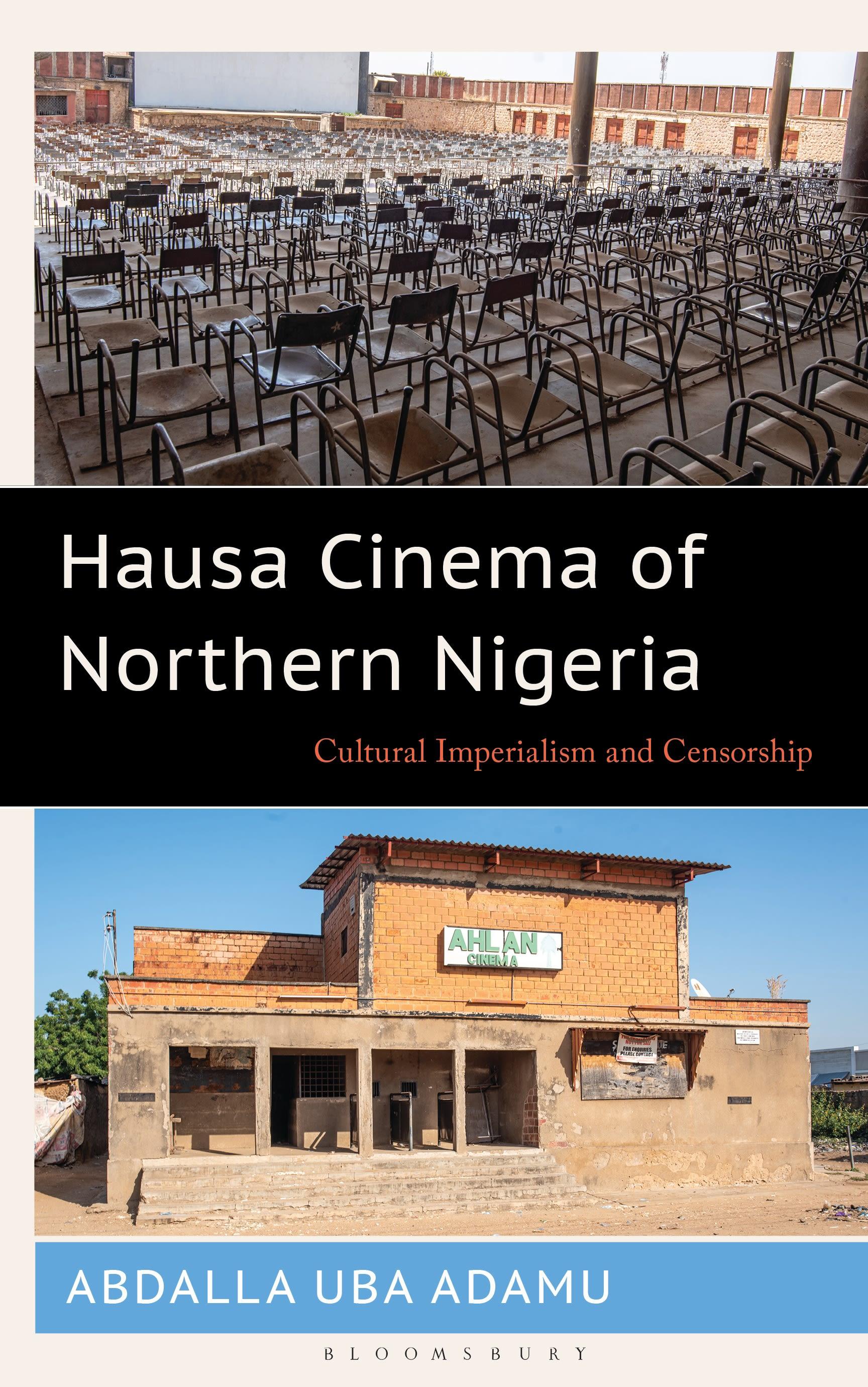
This historical account of cinema in Nigeria explores the transcultural transfer of media from India to Africa through films.
Hausa Cinema of Northern Nigeria examines how the Hindi Cinema of India became the template for storytelling in the Hausa regional cinema of Northern Nigeria and explores the emergence of Indigenous language within cinema in this region. Such emergence created points of divergence with the Islamic public culture leading to censorship both within the entertainment industry and the newly re-introduced Shari'a government of Kano. Throughout this book, Abdalla Uba Adamu explores the tension between Islamic society and the intrusion of transglobal media influences in cinema in Kano. He provides a deeper understanding of global media transnationalism and its impact on Muslim African popular culture. This book also discusses how the Muslim Hausa youth used the agencies of transglobal media technologies to transform the Hausa narrative style from a linear and didactic format to a complex configuration. By examining the Hausa film industry' s history, Adamu challenges the notion of cultural and media imperialism and the dominance of media consumption in contemporary African societies.
Hausa Cinema of Northern Nigeria examines how the Hindi Cinema of India became the template for storytelling in the Hausa regional cinema of Northern Nigeria and explores the emergence of Indigenous language within cinema in this region. Such emergence created points of divergence with the Islamic public culture leading to censorship both within the entertainment industry and the newly re-introduced Shari'a government of Kano. Throughout this book, Abdalla Uba Adamu explores the tension between Islamic society and the intrusion of transglobal media influences in cinema in Kano. He provides a deeper understanding of global media transnationalism and its impact on Muslim African popular culture. This book also discusses how the Muslim Hausa youth used the agencies of transglobal media technologies to transform the Hausa narrative style from a linear and didactic format to a complex configuration. By examining the Hausa film industry' s history, Adamu challenges the notion of cultural and media imperialism and the dominance of media consumption in contemporary African societies.
Pay easily by card, Klarna, Apple Pay or Google Pay. Not happy? You always have a 14-day money-back guarantee. Read more in our terms. If you have any questions, email us at hello@memmo.org.
Memmo makes studying easier – wherever you are in the world. We bring your course books and smart study tools together in one place: summaries, quizzes, podcasts and flashcards. Plus Ted, your study buddy who answers anything you wonder. Over 50,000 students already study here – built to help you learn faster and stress less.