
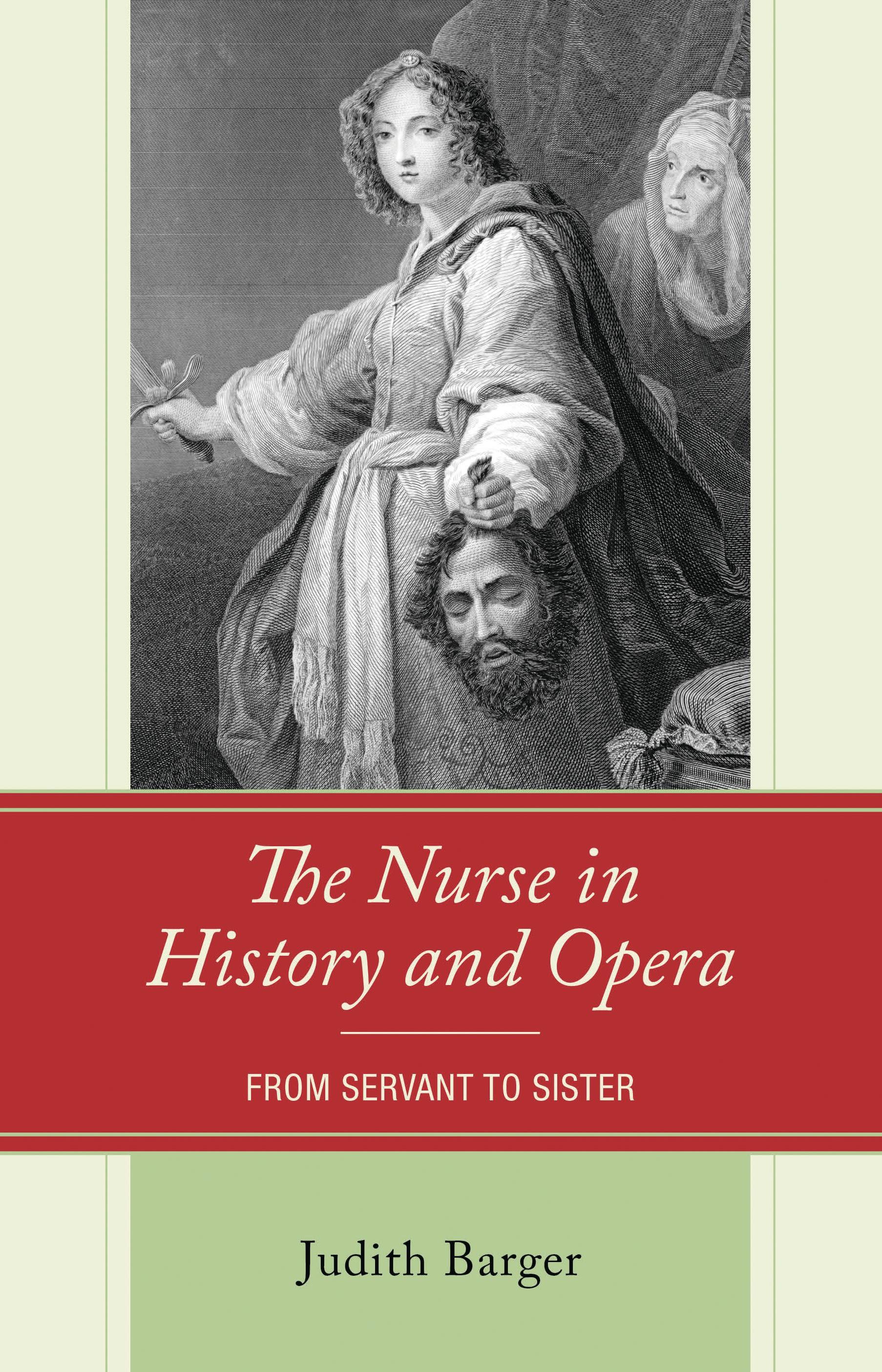
From Scarabea, Artusa’s old nurse in Francesco Mannelli’s La Maga Fuminata (1638 Venice) through the Canadian nursing sisters in Stephanie Martin’s Llandovery Castle (2018 Toronto), over one hundred nurse characters appear in opera roles ranging from silent cast extra to principal singer. The Nurse in History and Opera: From Servant to Sister explores that role over the span of opera’s existence.
Judith Barger examines the nurse character in opera within the sociohistorical context of her real-life counterparts off stage; the progression of the nurse from servant to sister, both inside and outside the opera house, is a commentary on how society has viewed its women. The book then discusses textual and musical interactions between opera’s nurses and other characters with attention to what the nurse’s role contributes to opera in six categories identified as common to opera’s nurses – Comic, Former, Knowledgeable, Motherly, Scheming, and Specialized.
When viewed through the lens of social history, opera’s nurse characters merit attention for the glimpse that they offer of a unique musical and dramatic journey from servant to sister, and for the commentary that they offer on women’s perceived place and status not only on the opera stage, but in society as well.
View the author’s website here: Judith Barger | Author, Nurse Historian & Music Scholar
Judith Barger examines the nurse character in opera within the sociohistorical context of her real-life counterparts off stage; the progression of the nurse from servant to sister, both inside and outside the opera house, is a commentary on how society has viewed its women. The book then discusses textual and musical interactions between opera’s nurses and other characters with attention to what the nurse’s role contributes to opera in six categories identified as common to opera’s nurses – Comic, Former, Knowledgeable, Motherly, Scheming, and Specialized.
When viewed through the lens of social history, opera’s nurse characters merit attention for the glimpse that they offer of a unique musical and dramatic journey from servant to sister, and for the commentary that they offer on women’s perceived place and status not only on the opera stage, but in society as well.
View the author’s website here: Judith Barger | Author, Nurse Historian & Music Scholar
Pay easily by card, Klarna, Apple Pay or Google Pay. Not happy? You always have a 14-day money-back guarantee. Read more in our terms. If you have any questions, email us at hello@memmo.org.
Memmo makes studying easier – wherever you are in the world. We bring your course books and smart study tools together in one place: summaries, quizzes, podcasts and flashcards. Plus Ted, your study buddy who answers anything you wonder. Over 50,000 students already study here – built to help you learn faster and stress less.