
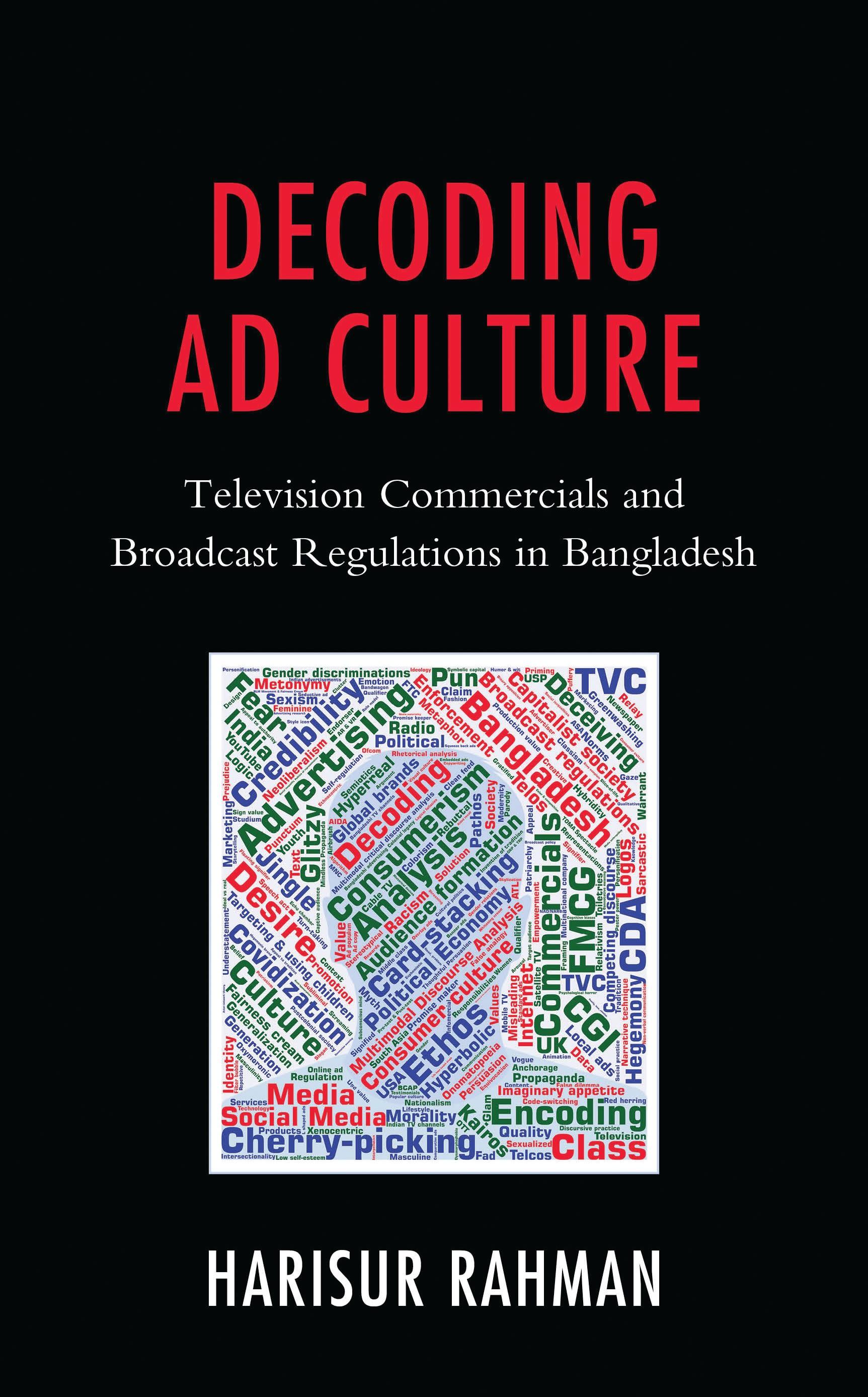
Decoding Ad Culture: Television Commercials and Broadcast Regulations in Bangladesh critically examines the pervasive influence of Western multinational companies in South Asia, focusing on Bangladesh. Harisur Rahman argues that these corporations exploit cultural differences to execute deceptive advertising in developing countries, a practice curtailed in more regulated developed nations. This book reveals a symbiotic relationship between local and multinational companies, media production houses, and television channels, which, Rahman posits, facilitates this exploitation. Adopting a qualitative methodology, this study delves into social backgrounds, cultural capital, and consumption habits in Bangladesh and utilizes multimodal critical discourse analysis and rhetorical analysis to evaluate television commercials (TVCs). These analyses reveal the propagation of racism, sexism, classism, and patriarchal values through this form, along with a disregard for ethical standards and social responsibilities. Highlighting the disillusionment among Bangladeshi audiences towards advertisers' unmet promises, Rahman contrasts TVC regulations in developing and developed countries. The book concludes with policy recommendations to foster ethical advertising practices against mindless propaganda in Bangladesh, underscoring the need for equity, equality, and inclusivity in advertising standards.
Pay easily by card, Klarna, Apple Pay or Google Pay. Not happy? You always have a 14-day money-back guarantee. Read more in our terms. If you have any questions, email us at hello@memmo.org.
Memmo makes studying easier – wherever you are in the world. We bring your course books and smart study tools together in one place: summaries, quizzes, podcasts and flashcards. Plus Ted, your study buddy who answers anything you wonder. Over 50,000 students already study here – built to help you learn faster and stress less.