
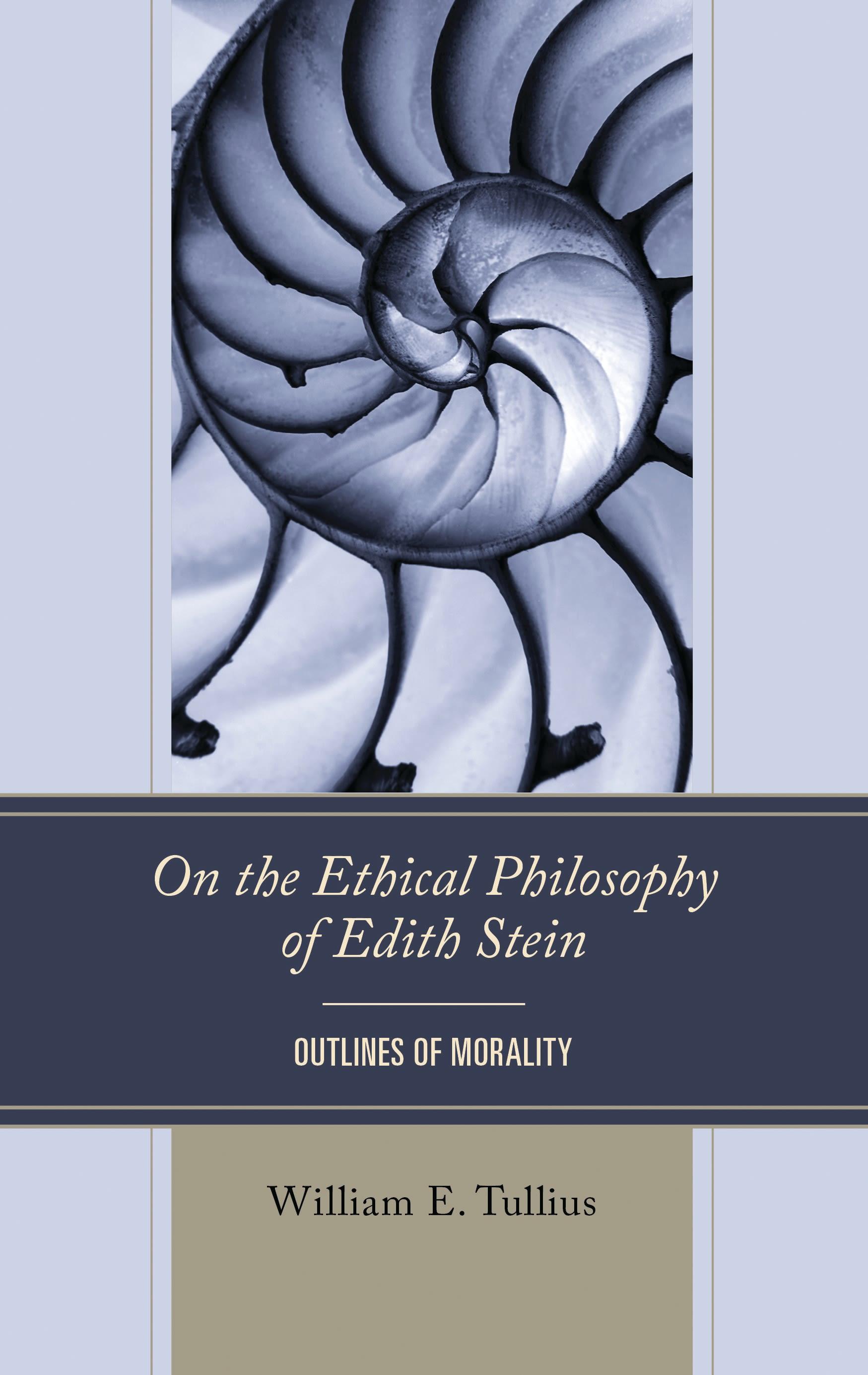
Although she never penned a text dedicated exclusively to ethics, Edith Stein’s work encompasses an implicit, but self-consciously developed, moral philosophy not yet sufficiently developed in the current English-language literature. However, comparison of Stein’s anthropological and metaphysical theories against the ethical philosophy of other early phenomenological thinkers, such as Max Scheler and Edmund Husserl, reveals lines of moral theory woven throughout her texts. In On the Ethical Philosophy of Edith Stein: Outlines of Morality, William E. Tullius endeavors to present a systematic account of Stein’s moral thought as it takes shape in conversation with neo-scholasticism and develops across her corpus in conversation with her philosophical anthropology, axiological theory, and metaphysics. The ethics which emerge from these sources is oriented around the moral project of the development of personality through the unfolding of one’s personal core and which entails a call to the development of an ethical community reflective of and oriented by its responsiveness to the highest values and to the communal destiny of all humanity in God
Pay easily by card, Klarna, Apple Pay or Google Pay. Not happy? You always have a 14-day money-back guarantee. Read more in our terms. If you have any questions, email us at hello@memmo.org.
Memmo makes studying easier – wherever you are in the world. We bring your course books and smart study tools together in one place: summaries, quizzes, podcasts and flashcards. Plus Ted, your study buddy who answers anything you wonder. Over 50,000 students already study here – built to help you learn faster and stress less.