
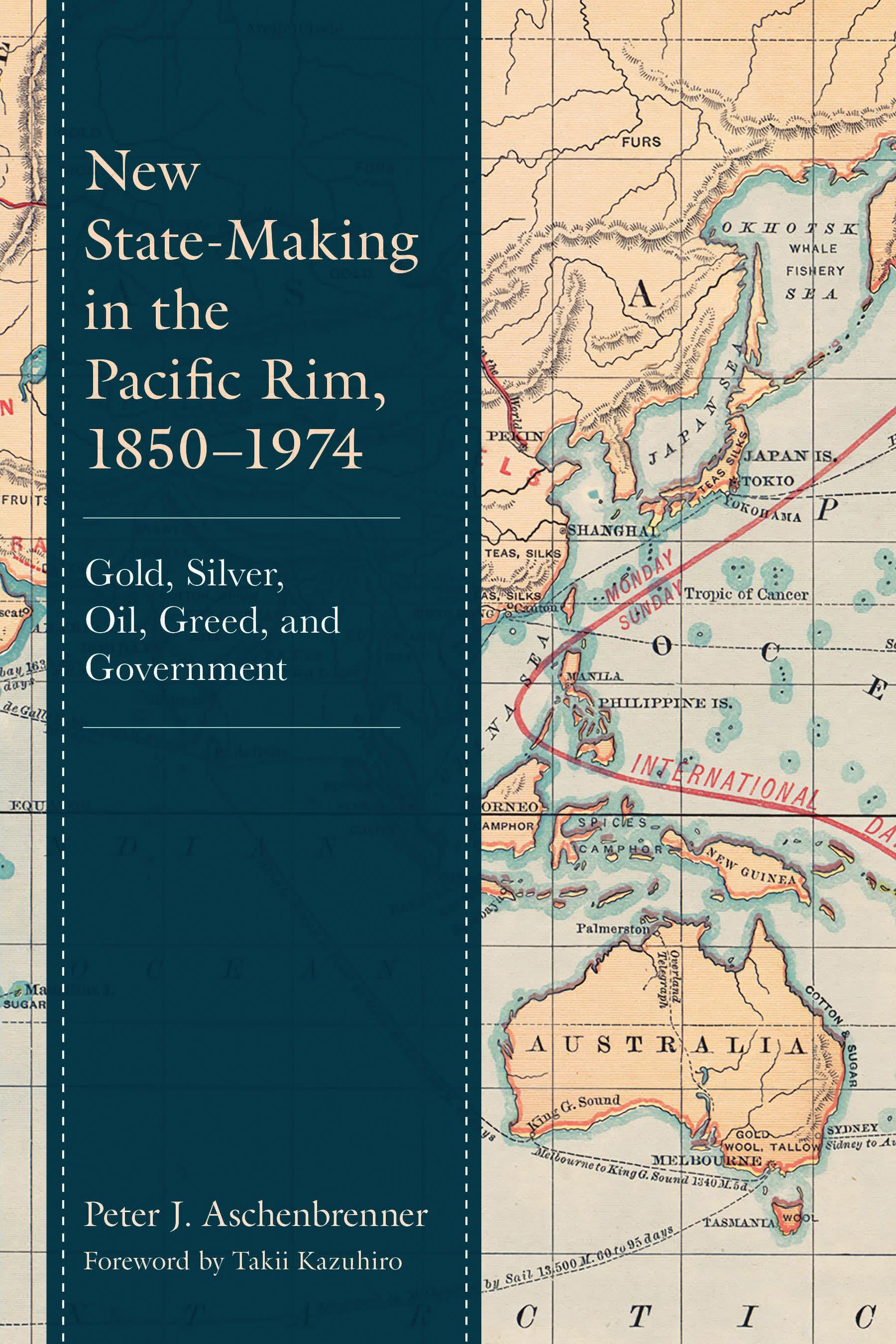
European colonial empires were built on private wealth-seeking (gold, silver and oil). These extractive activities required massive public subsidies. Drawing on the experience of three Pacific Rim nations — Australia, Japan and Canada and two territories in the US (Hawaii and Alaska) — New State-Making in the Pacific Rim, 1850-1974: Gold, Silver, Oil, Greed and Government demonstrates how 19th century colonialism contained the seeds of its own destruction. Peter J. Aschenbrenner identifies three factors that marked the turning point in the history of colonialism. First, governments demanded a greater return to the public treasury from private extractive activities and a reduced footprint (measured in environmental devastation and obliteration of local cultures. Second, first residents acquired considerable skill in ‘adaptation for survival,’ that is, fighting back against oppression (manifested in programs of extermination, forced population movement and hostility to language, religion and traditional subsistence practices). Third, colonial nations’ participation in World War I required their armed forces to fill manpower needs by calling on minorities to perform military service. This gave minorities significant leverage in their struggle to achieve equal political rights and access to their fair share of government benefits. Rethinking colonial practices became a realistic option, once national survival was at risk.
Pay easily by card, Klarna, Apple Pay or Google Pay. Not happy? You always have a 14-day money-back guarantee. Read more in our terms. If you have any questions, email us at hello@memmo.org.
Memmo makes studying easier – wherever you are in the world. We bring your course books and smart study tools together in one place: summaries, quizzes, podcasts and flashcards. Plus Ted, your study buddy who answers anything you wonder. Over 50,000 students already study here – built to help you learn faster and stress less.