
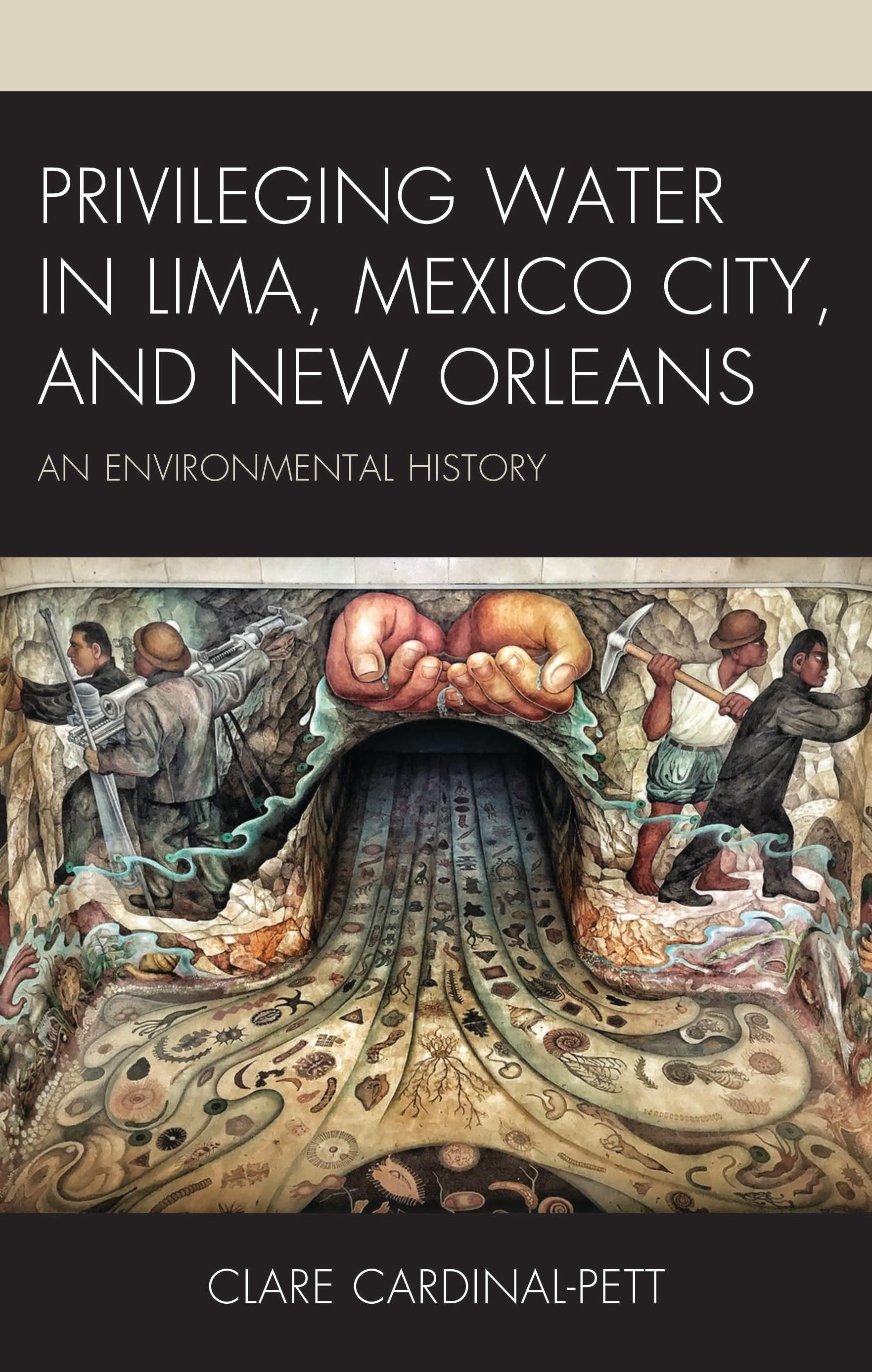
Privileging Water in Lima, Mexico City, and New Orleans: An Environmental History charts the development of the indigenous hydro-social territories and their colonial transformations into “modern” political ecologies. This book begins with a summary of the environmental histories of these regions before the arrival of people. To give water its due as an agent of historical processes, it is important to understand its role in shaping these three distinct ecosystems – a role it still plays today despite thousands of years of human intervention in the hydrological nature of those systems. It is certain that, as human-caused climate changes rework ecosystems worldwide, surviving the Anthropocene in Mexico City, New Orleans, and Lima will require other ways of knowing water – as hydro-social territories that challenge modern notions of urbanism and foreground ways of knowing formerly considered archaic. Following the inextricable histories of water and anthropogenic landscapes provokes many questions about the nature of cities, especially questions of environmental justice. The answers should not be abstract or universal. Instead, Clare Cardinal-Pett argues that urbanization on the planet must be reimagined and reconstructed as bio-regional systems and hydro-social territories that can be best defined more comprehensively as political ecologies.
Pay easily by card, Klarna, Apple Pay or Google Pay. Not happy? You always have a 14-day money-back guarantee. Read more in our terms. If you have any questions, email us at hello@memmo.org.
Memmo makes studying easier – wherever you are in the world. We bring your course books and smart study tools together in one place: summaries, quizzes, podcasts and flashcards. Plus Ted, your study buddy who answers anything you wonder. Over 75,000 students already study here – built to help you learn faster and stress less.