
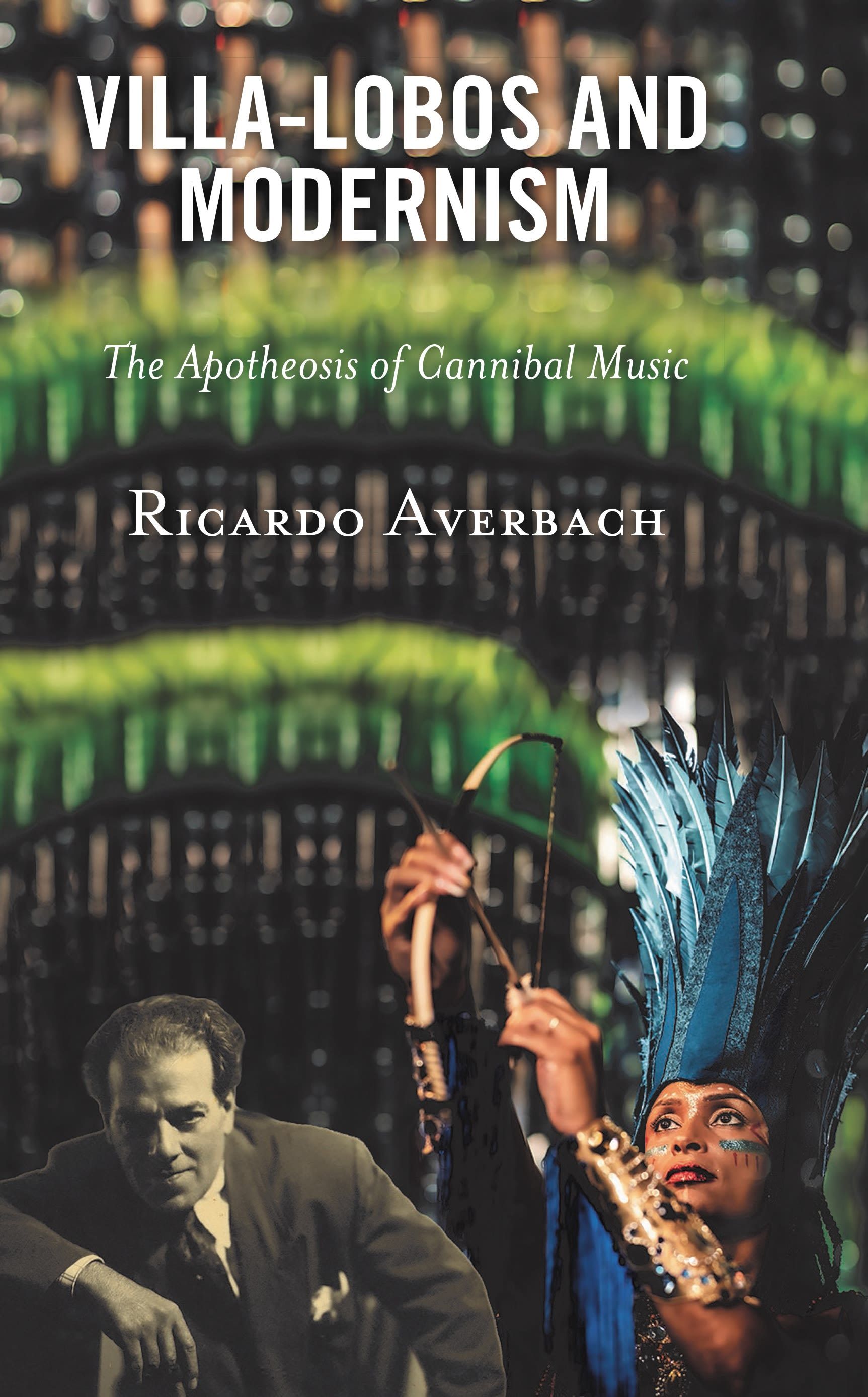
Villa-Lobos and Modernism: The Apotheosis of Cannibal Music provides a new assessment of the Brazilian composer Heitor Villa-Lobos in terms of his contributions to the Modernist Movement of the twentieth century. In this profound study, Ricardo Averbach elevates Cultural Cannibalism as a major manifestation of the Modernist aesthetics and Villa-Lobos as its top exponent in the music field. Villa-Lobos’s anthropophagic appetite for multiple opposing aesthetics enlightens through the juxtaposition of contradictory elements, leaving a legacy of unmatched originality, a glittering kaleidoscope of sounds that draw from the radical power of Josephine Baker to the outrageous extravagance of Carmen Miranda, from Dada to Einstein’s counterintuitive scientific findings, from folklorism to atonality. The constructed analyses use the works of Stravinsky as a familiar and popular touchstone for accessing Villa-Lobos as the leading exponent of an aesthetic movement that has been neglected due to a traditional Eurocentric view of Modernism. Averbach opens up new possibilities for the study of twentieth-century music, in general, while unveiling how much our present aesthetics owes to the Modernist ideas introduced by the Brazilian composer.
Pay easily by card, Klarna, Apple Pay or Google Pay. Not happy? You always have a 14-day money-back guarantee. Read more in our terms. If you have any questions, email us at hello@memmo.org.
Memmo makes studying easier – wherever you are in the world. We bring your course books and smart study tools together in one place: summaries, quizzes, podcasts and flashcards. Plus Ted, your study buddy who answers anything you wonder. Over 50,000 students already study here – built to help you learn faster and stress less.