
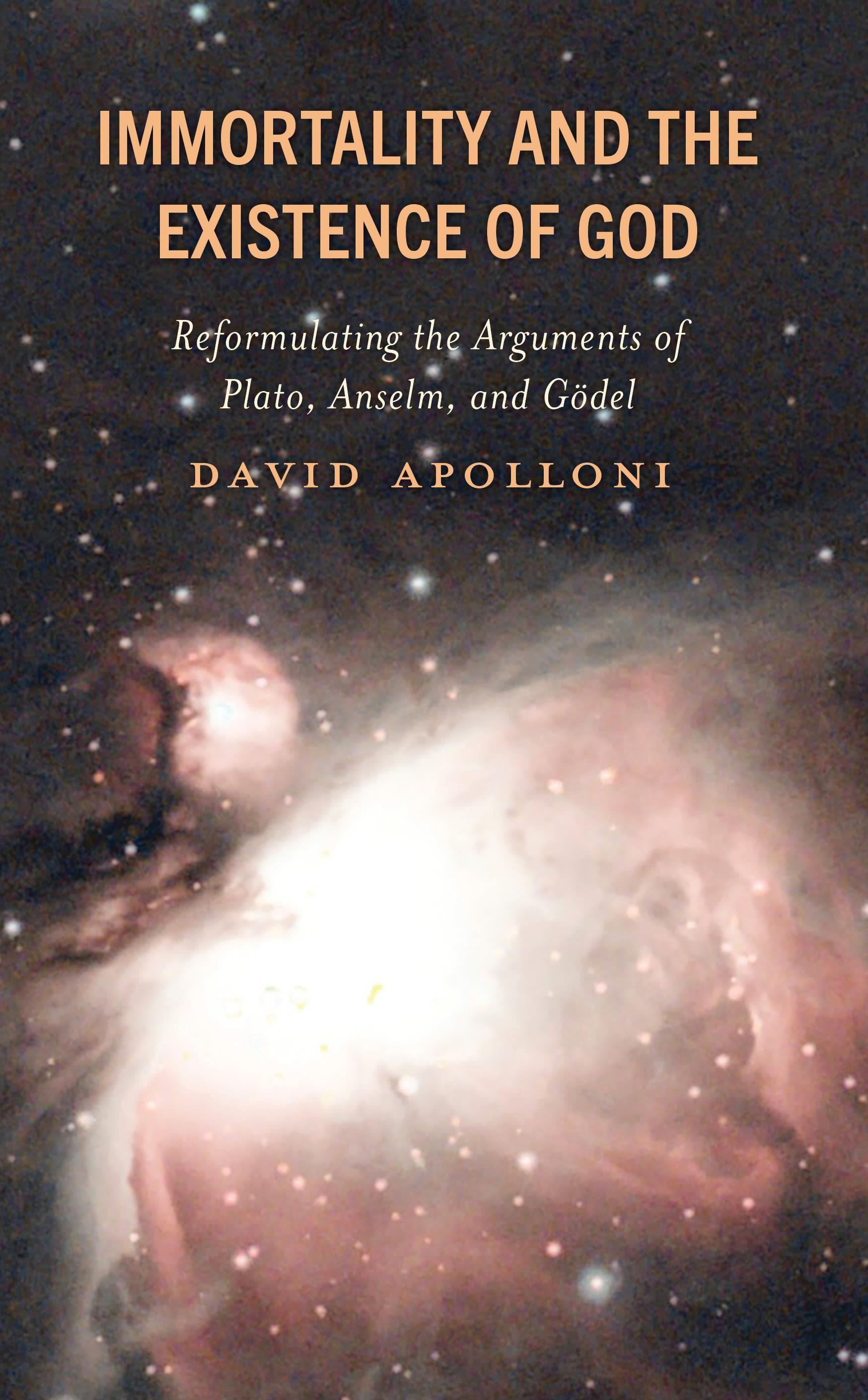
Immortality and the Existence of God: Reformulating the Arguments of Plato, Anselm, and Gödel defends a modern version of Plato’s argument for the immortality of the soul. The self is essentially conscious and hence essentially living. It is therefore “deathless” and cannot receive death. But then, it also cannot become something else, nor can it be destroyed, since that would be receiving death also. So, the self or immortal, and immaterial. The book then considers materialist theories of the mind and rejects them. It formulates an argument from introspection which the author believes establishes substance dualism.
The argument for immortality and the Ontological Argument for the existence of God are parallel in that attempt to establish the existence of necessary beings. Since immortality makes sense within a theistic context, the second half of the book defends a version of Gödel’s Ontological Argument for God’s existence, utilizing experience of the moral good and the mutual entailment of the attributes of God to argue that these attributes, including necessary existence, are logically coherent.
In the final chapter, the author uses the central arguments in the book to support accounts of the afterlife from those who have had near-death experiences.
The argument for immortality and the Ontological Argument for the existence of God are parallel in that attempt to establish the existence of necessary beings. Since immortality makes sense within a theistic context, the second half of the book defends a version of Gödel’s Ontological Argument for God’s existence, utilizing experience of the moral good and the mutual entailment of the attributes of God to argue that these attributes, including necessary existence, are logically coherent.
In the final chapter, the author uses the central arguments in the book to support accounts of the afterlife from those who have had near-death experiences.
Pay easily by card, Klarna, Apple Pay or Google Pay. Not happy? You always have a 14-day money-back guarantee. Read more in our terms. If you have any questions, email us at hello@memmo.org.
Memmo makes studying easier – wherever you are in the world. We bring your course books and smart study tools together in one place: summaries, quizzes, podcasts and flashcards. Plus Ted, your study buddy who answers anything you wonder. Over 50,000 students already study here – built to help you learn faster and stress less.