
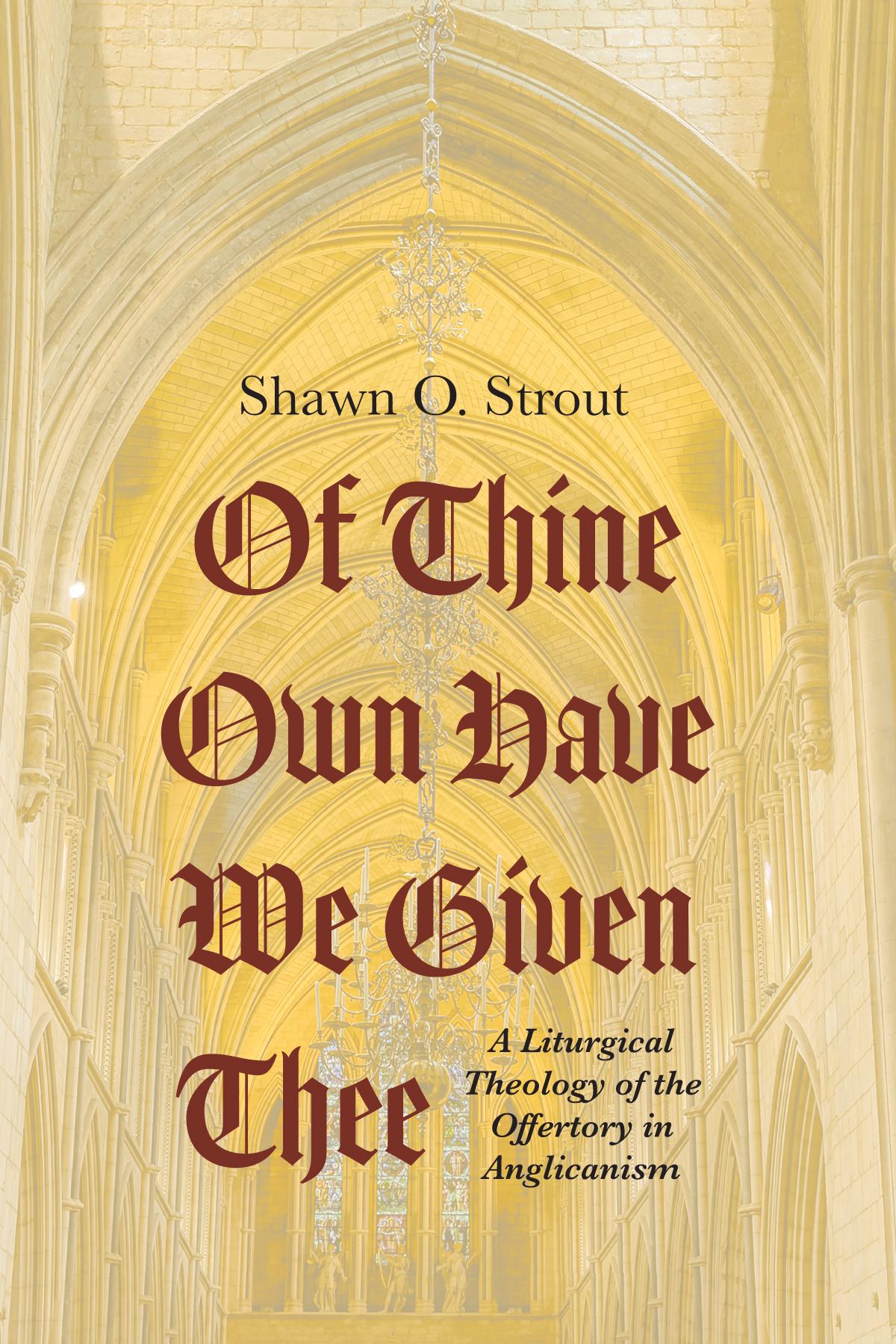
Every Sunday around the world, Christians offer money and in-kind gifts to the church, traditionally known as alms. For communities that celebrate the Eucharist regularly, bread and wine, traditionally known as oblations, often accompany these gifts. What does it mean theologically for Christians to offer gifts to God, who first offered the greatest gift of Jesus Christ? This question regarding the role of alms and oblations in the liturgy was among the most controversial questions of the English Reformations in the sixteenth century. While the eucharistic prayer proper has often been the site of this theological controversy, the offertory rite has also received great attention. The 1552 English Book of Common Prayer excised all references to oblation in the offertory rite, but oblationary language and actions, such as the offertory procession, returned in full force by the twentieth century. The movement from the near elimination of oblation in the offertory rite to its widespread usage in the churches of the Anglican Communion is a remarkable liturgical and theological development. Using liturgical theology's tools of historical, textual, and contextual analyses, this book explores how this development occurred and why it is important for the church today.
Pages: 282
Category: Religion & Teologi
e-ISBN: 9781666793451
Shipping weight: 1.2 kg
Ships in: 1-2 days
Pay easily by card, Klarna, Apple Pay or Google Pay. Not happy? You always have a 14-day money-back guarantee. Read more in our terms. If you have any questions, email us at hello@memmo.org.
Memmo makes studying easier – wherever you are in the world. We bring your course books and smart study tools together in one place: summaries, quizzes, podcasts and flashcards. Plus Ted, your study buddy who answers anything you wonder. Over 50,000 students already study here – built to help you learn faster and stress less.
You might also like
Buy the book0