
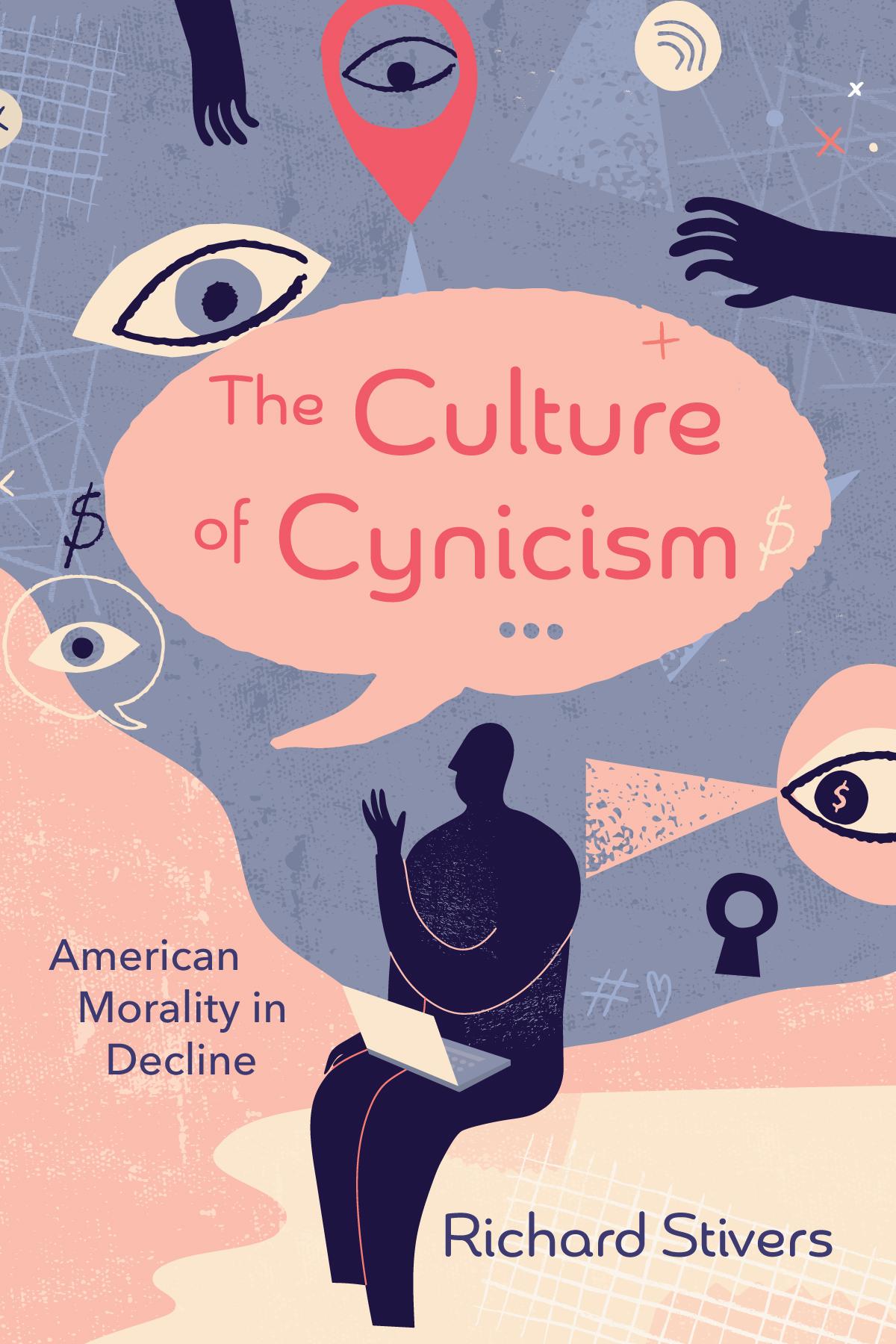
Richard Stivers received an Earhart Foundation research fellowship to write this wide-ranging and thought-provoking book on American morality. The book places American morality in its historical and cultural context.
His research uncovered an ersatz morality that has supplanted traditional Judaic-Christian and humanistic moralities, which placed some limitations on the exercises of power. It consists of technical and bureaucratic rules, public opinion and peer group norms, and visual images in the media. Technical and bureaucratic rules are technology's power to organize society. Public opinion and peer group norms work to transform the normal into the moral, and visual images in the media make tangible what is normal and what is possible, both of which follow the lead of technology.
This technological morality is exclusively about unleashing power and has no moral purposes: it is solely about efficiency and effectiveness. Finally, he discusses the social and psychological costs of living without a common morality.
Pay easily by card, Klarna, Apple Pay or Google Pay. Not happy? You always have a 14-day money-back guarantee. Read more in our terms. If you have any questions, email us at hello@memmo.org.
Memmo makes studying easier – wherever you are in the world. We bring your course books and smart study tools together in one place: summaries, quizzes, podcasts and flashcards. Plus Ted, your study buddy who answers anything you wonder. Over 50,000 students already study here – built to help you learn faster and stress less.
You might also like
Buy the book0