
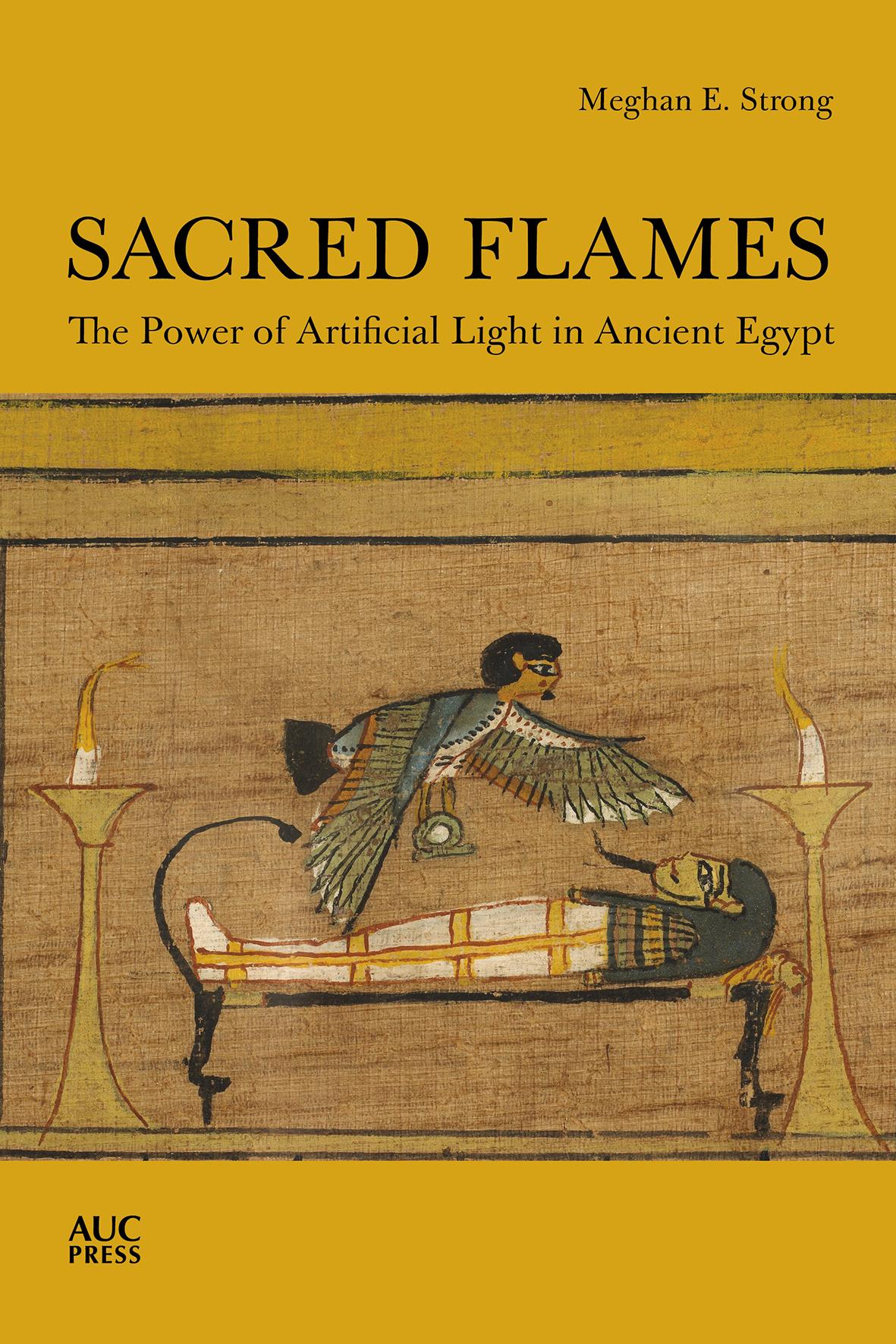
A fascinating examination of the role of lighting in ancient Egyptian culture
Artificial lighting is one of the earliest tools used by humans. By the time we began to paint cave walls, we were producing lamps consisting of an illuminant, a fat or oil, and a wick, such as a strip of fabric or a piece of reed or wood.
Drawing on archaeological, textual, and iconographic sources, Meghan Strong examines the symbolic part that artificial lighting played in religious, economic, and social spheres in ancient Egyptian culture. From the earliest identifiable examples of lighting devices to the infiltration of Hellenistic lamps in the seventh century BC, Sacred Flames explores the sensory experience of illumination in ancient Egypt, the shadows, sheen, color, and movement that resulted when lighting interacted with different spaces and surfaces. The soft, flickering light from lamps or hand-held lighting devices not only facilitated the navigation of darkened environments, such as allowing workers to see in underground chambers in the Valley of the Kings, or served as temple offerings, but also impacted upon the viewer’s perception of a space and the objects within it.
Sacred Flames illustrates the active role that lighting played in Egyptian society, providing a richer understanding of the symbolic and social value of artificial light and the role of lighting in ritual space and performance in ancient Egyptian culture, while serving as a case study of the broader impact of artificial light in the ancient world.
Pay easily by card, Klarna, Apple Pay or Google Pay. Not happy? You always have a 14-day money-back guarantee. Read more in our terms. If you have any questions, email us at hello@memmo.org.
Memmo makes studying easier – wherever you are in the world. We bring your course books and smart study tools together in one place: summaries, quizzes, podcasts and flashcards. Plus Ted, your study buddy who answers anything you wonder. Over 75,000 students already study here – built to help you learn faster and stress less.