
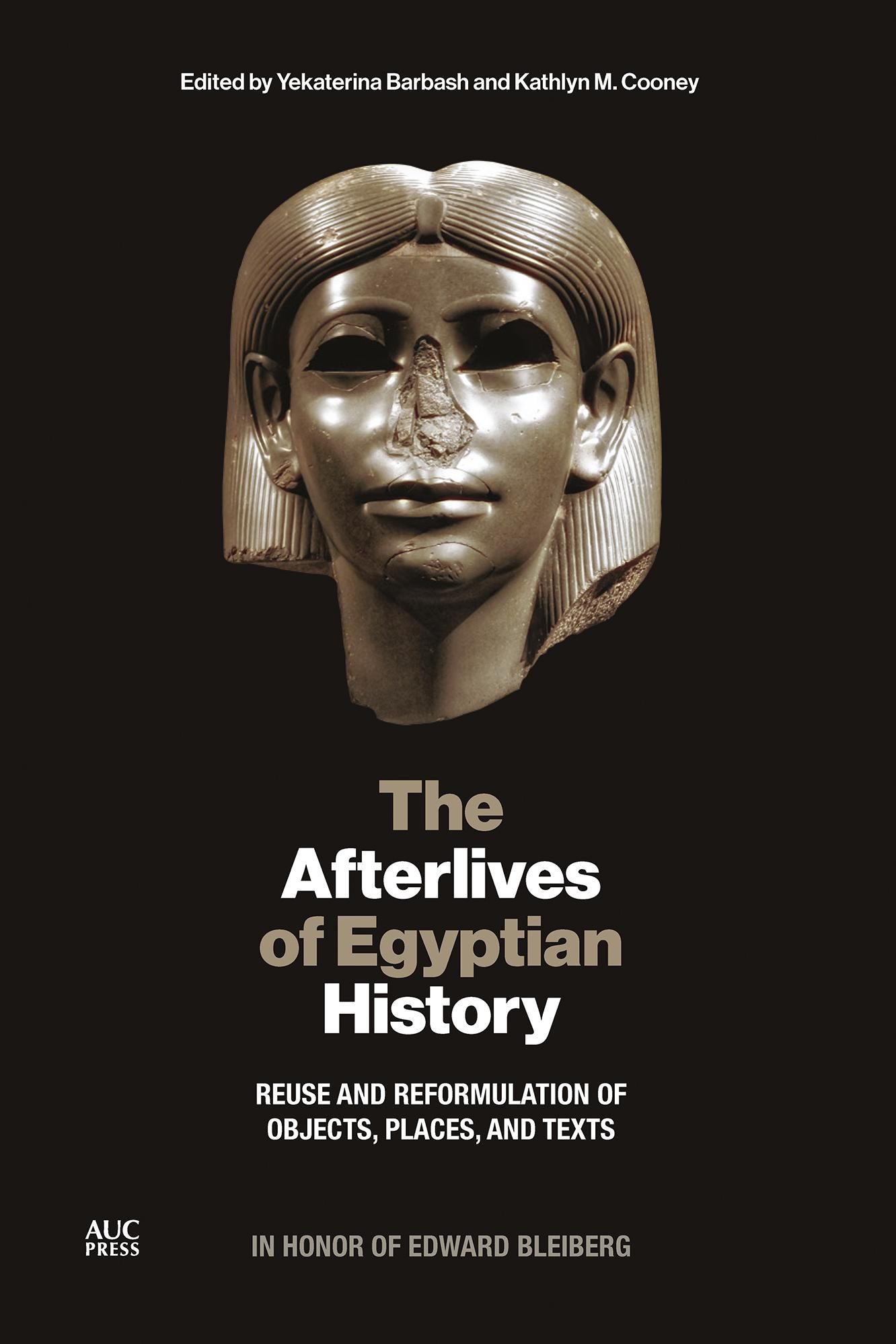
An examination of the myriad lifetimes lived by ancient Egyptian artifacts
Egypt has a particular longue durée, a continuity of preservation in deep time, not seen in other parts of the world. Over the centuries, ancient buildings have been adopted for purposes that differed from the original. Temple sites have been transformed into places of worship for new deities or turned into houses and tombs. Tombs, in turn, have been adapted to function as human dwellings already in the Late Antique Period.
The Afterlives of Egyptian History expands on the traditional academic approach of studying the original function and sociopolitical circumstances of ancient Egyptian objects, texts, and sites to examine their secondary lives by exploring their reuse, modification, and reinterpretation.
Written in honor of the Egyptologist, Edward Bleiberg, this volume brings together a group of luminous scholars from a wide range of fields, including Egyptian archaeology, philology, conservation, and art, to explore the historical circumstances, as well as political and economic situations, of people who have come into contact with ancient Egypt, both in antiquity and in more recent times.
Contributor Affiliations:
Yekaterina Barbash, Brooklyn Museum, Brooklyn, NY USA
Lisa Bruno, Brooklyn Museum, Brooklyn, NY USA
Simon Connor, F.R.S.–FNRS, Brussels, Belgium and University of Liege, Liege, Belgium
Kathlyn (Kara) Cooney, UCLA, Los Angeles, CA USA
Richard Fazzini, Brooklyn Museum, Brooklyn, NY USA
Peter Lacovara, Ancient Egyptian Archaeology and Heritage Fund, Albany, NY USA
Ronald J. Leprohon, University of Toronto, Canada
Mary McKercher, Brooklyn Museum, Brooklyn, NY USA
Edmund Meltzer, Pacifica Graduate Institute, Carpinteria, California USA
Joachim Friedrich Quack, Heidelberg University, Tiffin, Ohio USA
Paul Edmund Stanwick, independent scholar, New York, NY USA
Emily Teeter, University of Chicago, Chicago, IL USA
Kathy Zurek-Doule, Brooklyn Museum, Brooklyn, NY USA
Pay easily by card, Klarna, Apple Pay or Google Pay. Not happy? You always have a 14-day money-back guarantee. Read more in our terms. If you have any questions, email us at hello@memmo.org.
Memmo makes studying easier – wherever you are in the world. We bring your course books and smart study tools together in one place: summaries, quizzes, podcasts and flashcards. Plus Ted, your study buddy who answers anything you wonder. Over 75,000 students already study here – built to help you learn faster and stress less.