
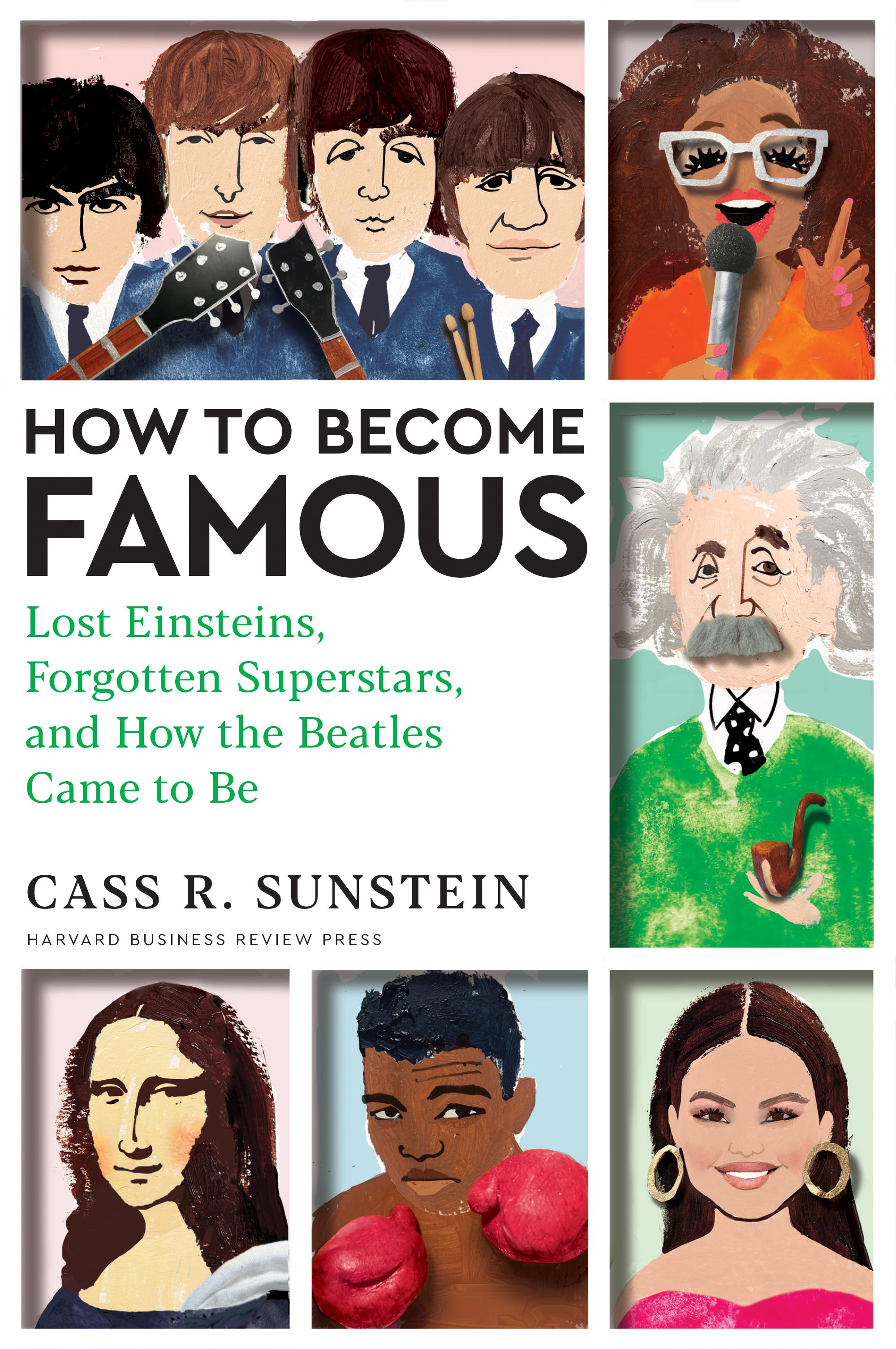
Fame is like lightning. Taylor Swift, Bob Dylan, Leonardo da Vinci, Jane Austen, Oprah Winfrey—all of them were struck. Why? What if they hadn't been?
Consider the most famous music group in history. What would the world be like if the Beatles never existed? This was the question posed by the playful, thought-provoking, 2019 film Yesterday, in which a young, completely unknown singer starts performing Beatles hits to a world that has never heard them. Would the Fab Four's songs be as phenomenally popular as they are in our own Beatle-infused world? The movie asserts that they would, but is that true? Was the success of the Beatles inevitable due to their amazing, matchless talent?
Maybe. It's hard to imagine our world without its stars, icons, and celebrities. They are part of our culture and history, seeming permanent and preordained. But as Harvard law professor (and passionate Beatles fan) Cass Sunstein shows in this startling book, that is far from the case. Focusing on both famous and forgotten (or simply overlooked) artists and luminaries in music, literature, business, science, politics, and other fields, he explores why some individuals become famous and others don't and offers a new understanding of the roles played by greatness, luck, and contingency in the achievement of fame.
Sunstein examines recent research on informational cascades, network effects, and group polarization to probe the question of how people become famous. He explores what ends up in the history books and in the literary canon and how that changes radically over time. He delves into the rich and entertaining stories of a diverse cast of famous characters, from John Keats, William Blake, and Jane Austen to Bob Dylan, Ayn Rand, and Stan Lee—as well as John, Paul, George, and Ringo.
How to Become Famous takes you on a fun, captivating, and at times profound journey that will forever change your perspective on the latest celebrity's "fifteen minutes of fame" and on what vaults some to the top—and leaves others in the dust.
Pay easily by card, Klarna, Apple Pay or Google Pay. Not happy? You always have a 14-day money-back guarantee. Read more in our terms. If you have any questions, email us at hello@memmo.org.
Memmo makes studying easier – wherever you are in the world. We bring your course books and smart study tools together in one place: summaries, quizzes, podcasts and flashcards. Plus Ted, your study buddy who answers anything you wonder. Over 50,000 students already study here – built to help you learn faster and stress less.