
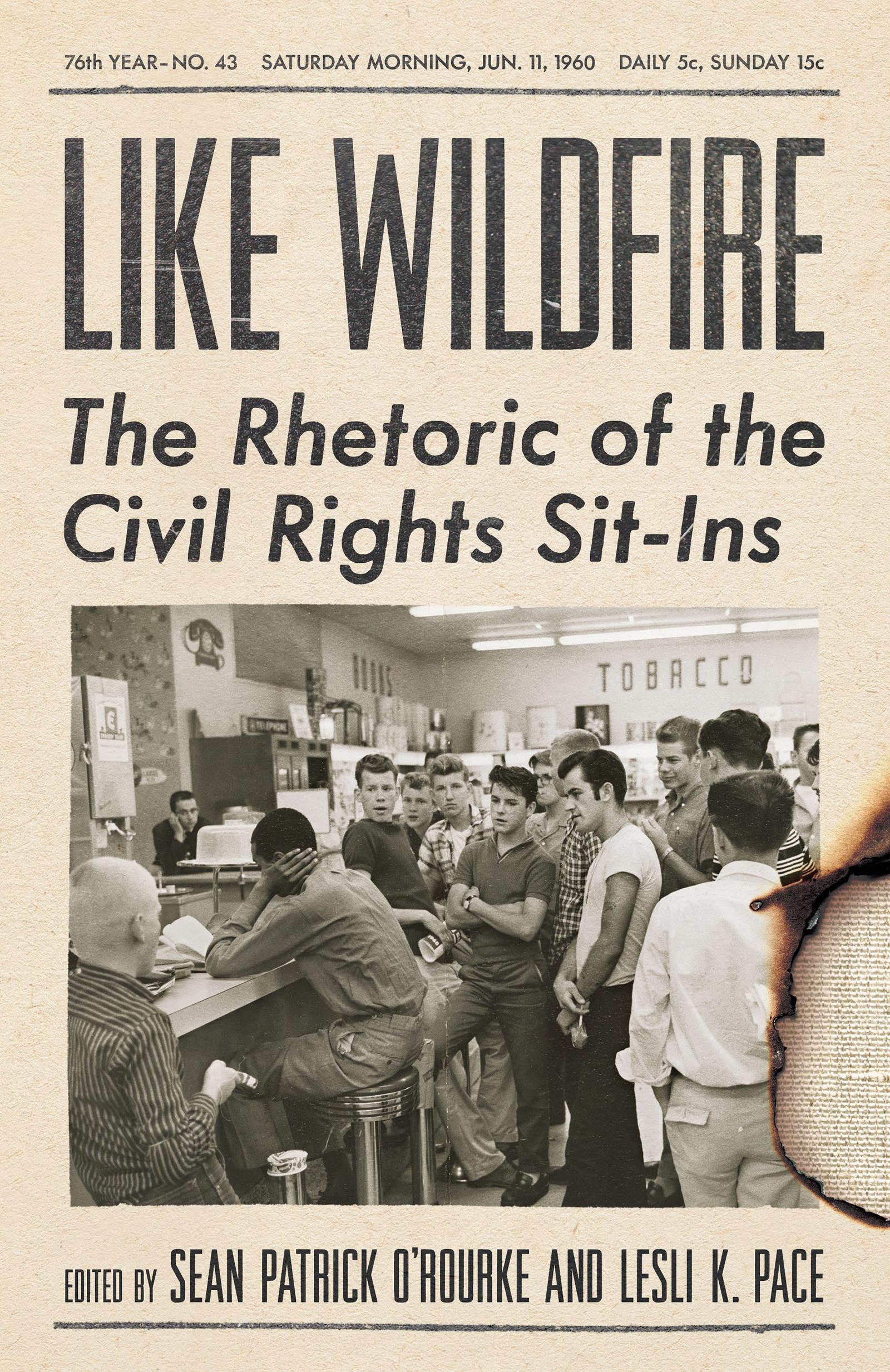
How civil rights sit-ins sparked social change in America
The sit-ins of the American civil rights movement were extraordinary acts of dissent in an age marked by protest. By sitting in at "whites only" lunch counters, libraries, beaches, swimming pools, skating rinks, and churches, young African Americans and their allies put their lives on the line, fully aware that their actions would almost inevitably incite hateful, violent responses from entrenched and increasingly desperate white segregationists. And yet they did so in great numbers: most estimates suggest that in 1960 alone more than seventy thousand young people participated in sit-ins across the American South and more than three thousand were arrested. The simplicity and purity of the act of sitting in, coupled with the dignity and grace exhibited by participants, lent to the sit-in movement's sanctity and peaceful power.
In Like Wildfire, editors Sean Patrick O'Rourke and Lesli K. Pace seek to clarify and analyze the power of civil rights sit-ins as rhetorical acts—persuasive campaigns designed to alter perceptions of apartheid social structures and to change the attitudes, laws, and policies that supported those structures. These cohesive essays from leading scholars offer a new appraisal of the origins, growth, and legacy of the sit-ins, which has gone largely ignored in scholarly literature. The authors examine different forms of sitting-in and the evolution of the rhetorical dynamics of sit-in protests, detailing the organizational strategies they employed and connecting them to later protests. By focusing on the persuasive power of demanding space, the contributors articulate the ways in which the protestors' battle for basic civil rights shaped social practices, laws, and the national dialogue. O'Rourke and Pace maintain that the legacies of the civil rights sit-ins have been many, complicated, and at times undervalued.
Pay easily by card, Klarna, Apple Pay or Google Pay. Not happy? You always have a 14-day money-back guarantee. Read more in our terms. If you have any questions, email us at hello@memmo.org.
Memmo makes studying easier – wherever you are in the world. We bring your course books and smart study tools together in one place: summaries, quizzes, podcasts and flashcards. Plus Ted, your study buddy who answers anything you wonder. Over 75,000 students already study here – built to help you learn faster and stress less.