
“Seventy years of a car-only approach—not car-centric, it’s car-only—is actually not just non-driver hostile, it’s driver hostile. No one benefits.” —Beth Osborne, Director, Transportation for America
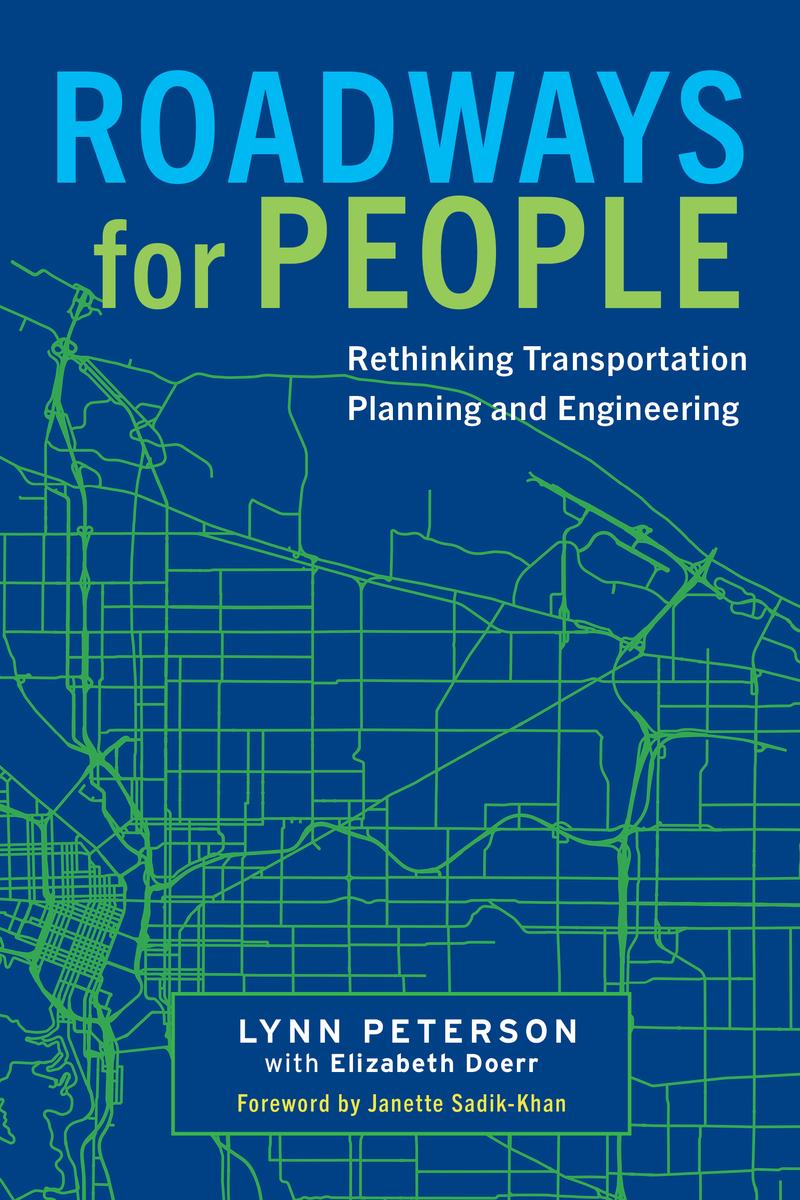
The car-only approach in transportation planning and engineering has led to the construction of roadways that have torn apart and devalued communities, especially Black and Brown communities. Forging a new path to repair this damage requires a community solutions-based approach to planning, designing, and building our roadways. When Lynn Peterson began working as a transportation engineer, she was taught to evaluate roadway projects based only on metrics related to driver safety, allowable speed for the highest number of cars, project schedule, and budget. Involving the community and collaborating with peers were never part of the discussion. Today, Peterson is a recognized leader in transportation planning and engineering, known for her approach that is rooted in racial equity, guided by a process of community engagement, and includes collaboration with other professionals.
In Roadways for People, Lynn Peterson draws from her personal experience and interviews with leaders in the field to showcase new possibilities within transportation engineering and planning. She incorporated a community-solutions based approach in her work at Metro, TriMet, and while running the Washington State Department of Transportation, where she played an instrumental role in the largest transportation bill in that state’s history. The community solutions-based approach moves away from the narrow standards of traditional transportation design and focuses instead on a process that involves consistent feedback, learning loops, and meaningful and regular community engagement. This approach seeks to address the transportation needs of the most historically marginalized members of the community.
Roadways for People is written to empower professionals and policymakers to create transportation solutions that serve people rather than cars. Examples across the U.S.—from Portland, Oregon to Baltimore, Maryland—show what is possible with a community-centered approach. As traditional highway expansions are put on pause around the country, professionals and policymakers have an opportunity to move forward with a better approach. Peterson shows them how.
Pay easily by card, Klarna, Apple Pay or Google Pay. Not happy? You always have a 14-day money-back guarantee. Read more in our terms. If you have any questions, email us at hello@memmo.org.
Memmo makes studying easier – wherever you are in the world. We bring your course books and smart study tools together in one place: summaries, quizzes, podcasts and flashcards. Plus Ted, your study buddy who answers anything you wonder. Over 75,000 students already study here – built to help you learn faster and stress less.