
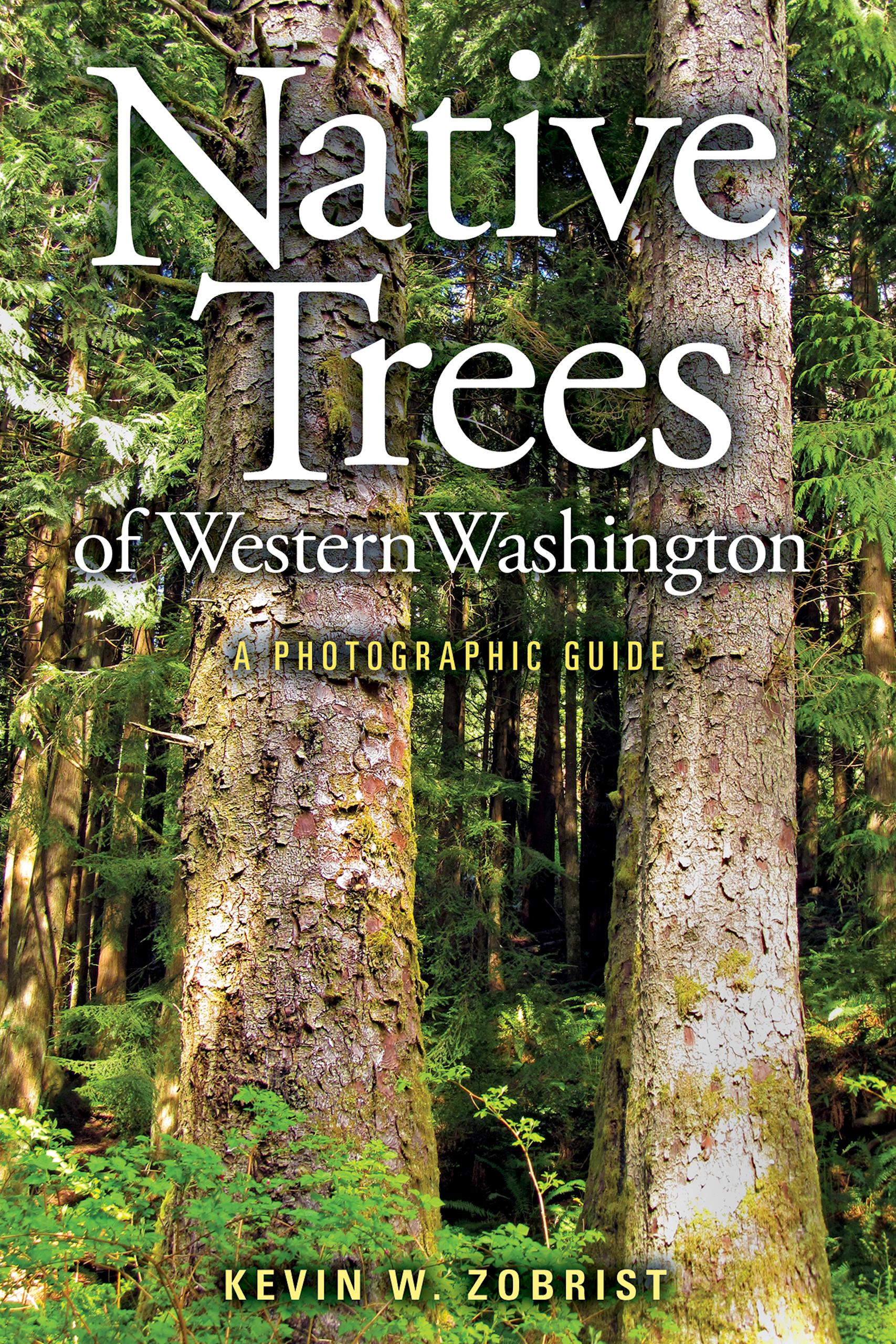
Soft layers of moss and pine needles carpet the ground as dappled sunlight or misty rain filters through the forest canopy’s branches. Western Washington woodlands can be enchanting. Fortunately these magical places are abundant, covering half the state’s soil. Affording beauty and recreation as well as economic value, they endure as one of the area’s most important natural assets.
In Native Trees of Western Washington, Washington State University’s Kevin Zobrist examines regional indigenous trees from a forestry specialist’s unique perspective. He explains basic tree physiology and a key part of their ecology--forest stand dynamics. He groups distinctive varieties into sections, describing common lowland conifers and broadleaved trees, high-elevation species found in the Olympic Mountains and western side of the Cascades, and finally, those with a very limited natural range and small, isolated populations. Numerous full-color photographs illustrate key traits.
In addition, Zobrist discusses notable features, offering information about where to find particular species. He includes brief lists of some common human uses, citing Native American medicines, food, and materials, as well as commercial utilization from the time of European settlement to the present day. The result is a delightful and enlightening exploration of western Washington timberlands.
Pay easily by card, Klarna, Apple Pay or Google Pay. Not happy? You always have a 14-day money-back guarantee. Read more in our terms. If you have any questions, email us at hello@memmo.org.
Memmo makes studying easier – wherever you are in the world. We bring your course books and smart study tools together in one place: summaries, quizzes, podcasts and flashcards. Plus Ted, your study buddy who answers anything you wonder. Over 50,000 students already study here – built to help you learn faster and stress less.