
“Confront personal losses as well as the numerous harbingers of environmental collapse, from birds to beavers to beetles along Red River or beside Lake Marie, eddies and currents evoking social, economic, and political conflicts beyond the trails hiked in many of these poems.”—James Scruton, author of The Rules
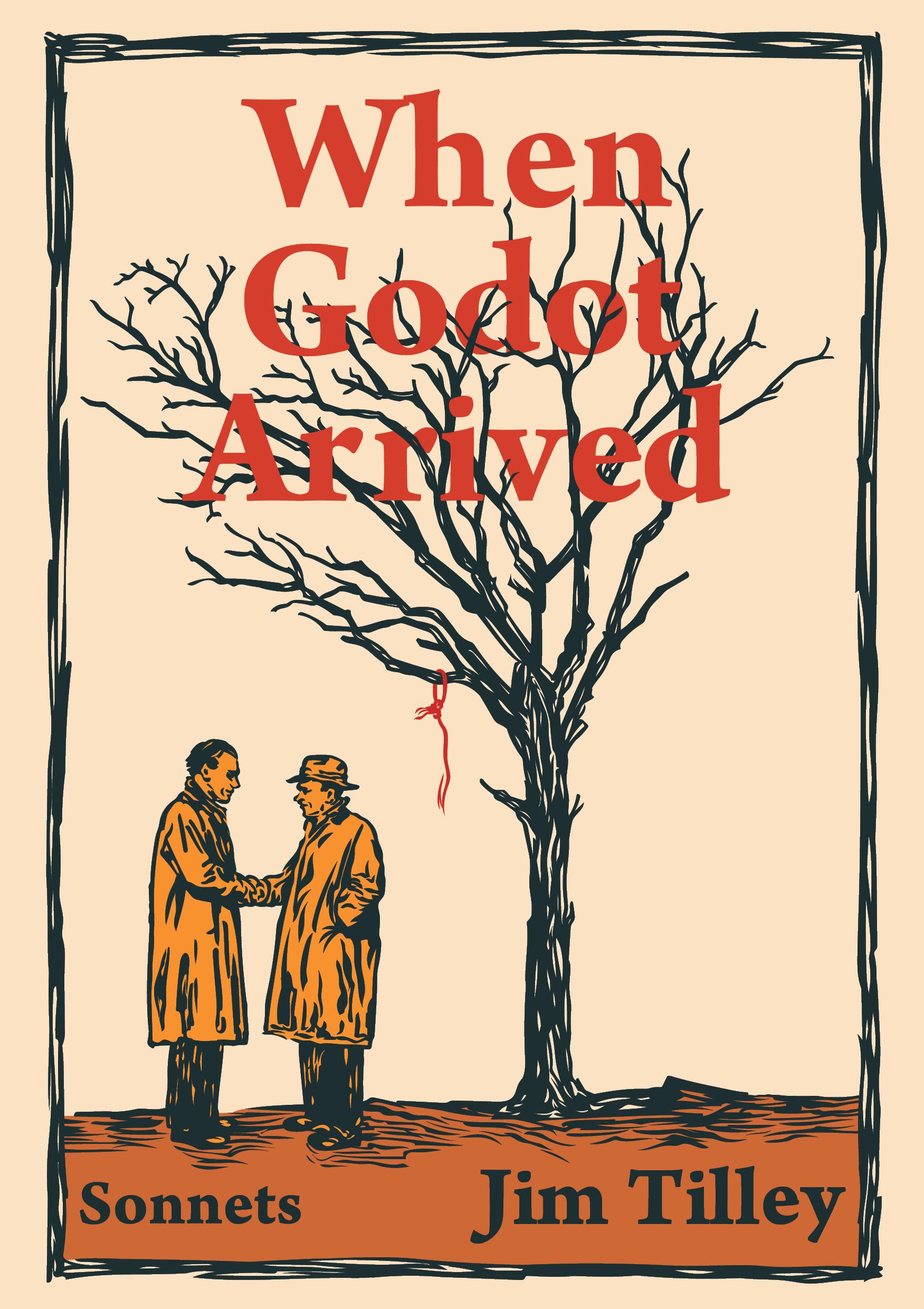
When Godot Arrived uses eighty-one free-verse sonnets to explore the intersections of family, environment, politics, and the human condition, balancing contemplative reflection with dark humor and lyrical precision in a world of uncertainty.
Jim Tilley's latest poetry collection, When Godot Arrived, eighty-one free-verse sonnets, continues the explorations from the set of new poems in his previous book, Ripples in the Fabric of the Universe. As in that previous book, he draws on his experience as a poet and mathematician to fix a lens on the current raw state of the country and the world and on interpersonal relationships. At times, his mood is merely contemplative, especially in his testaments to family, but as he delves relentlessly into matters political, ecological, and environmental, that mood turns darker, even ominous, infused occasionally with humor to present a more optimistic outlook. Together with Ripples in the Fabric of the Universe, When Godot Arrived is a most expansive read.
Pay easily by card, Klarna, Apple Pay or Google Pay. Not happy? You always have a 14-day money-back guarantee. Read more in our terms. If you have any questions, email us at hello@memmo.org.
Memmo makes studying easier – wherever you are in the world. We bring your course books and smart study tools together in one place: summaries, quizzes, podcasts and flashcards. Plus Ted, your study buddy who answers anything you wonder. Over 50,000 students already study here – built to help you learn faster and stress less.