
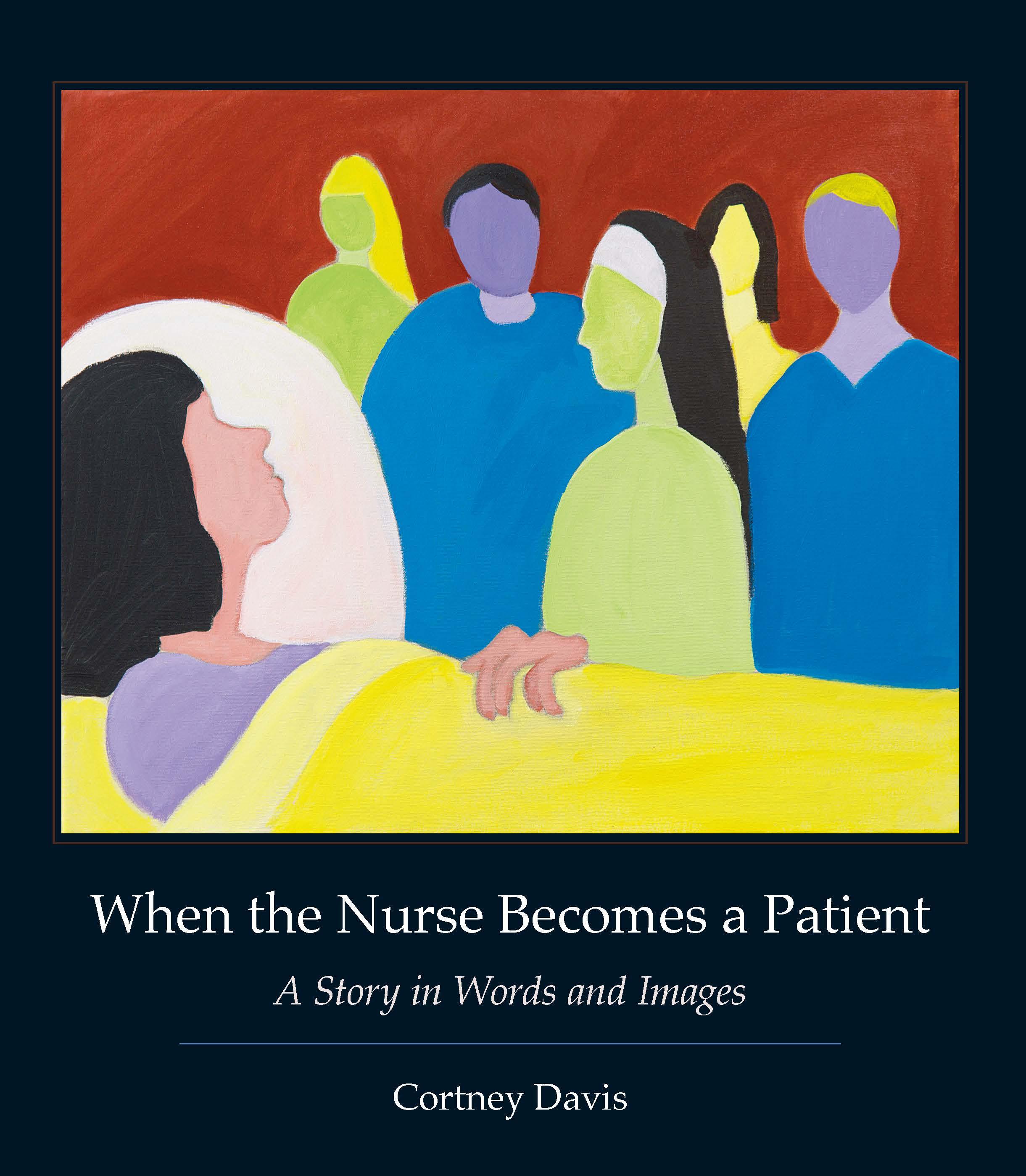
In the summer of 2013, Cortney Davis, a nurse practitioner and author who often writes about her interactions with patients, underwent routine one-day surgery. A surgical mishap led to a series of life-altering and life-threatening complications, resulting in two prolonged hospital stays and a lengthy recovery. During twenty-six days in the hospital, Davis experienced how suddenly a caregiver can become a care receiver and what it’s like to be “on the other side of the sickbed.” As a nurse, she was accustomed to suffering and to the empathy such witnessing can evoke, but as a patient she learned new and transforming lessons in pain, fear, loneliness, abandonment, and dependency; in the fragility of health and life; in the necessity of family support; and, ultimately, in the importance of gratitude.
Once at home, Davis wanted to respond to her illness creatively through her writing, but the details seemed too intense, too raw for words. As her recovery progressed, she found release in painting, discovering an immediate connection between heart and hand, between memory and canvas. In a series of twelve paintings, she reenvisioned episodes of her illness, moments that remained and replayed in her consciousness, ultimately providing an education in health care more resonant and more authentic than what she had found in nursing textbooks. Before, serving as a nurse in intensive care, oncology, and women’s health, Davis believed that she understood what hospitalized patients might be experiencing and how they might be coping. Her own illness taught her how little she truly knew and how important it is that all caregivers—professionals and family members alike—become aware of the physical and the inner emotional needs of their seriously ill patients.
After the twelve paintings were completed, Davis wrote brief commentaries for each image. She used her remembrances to clarify and expand on her artwork, thereby making her personal story accessible to others.
While every patient’s journey and every caregiver’s challenges are unique, these intimate and revealing paintings and reflections offer a glimpse into the universal aspects of illness and recovery.
Pay easily by card, Klarna, Apple Pay or Google Pay. Not happy? You always have a 14-day money-back guarantee. Read more in our terms. If you have any questions, email us at hello@memmo.org.
Memmo makes studying easier – wherever you are in the world. We bring your course books and smart study tools together in one place: summaries, quizzes, podcasts and flashcards. Plus Ted, your study buddy who answers anything you wonder. Over 50,000 students already study here – built to help you learn faster and stress less.