
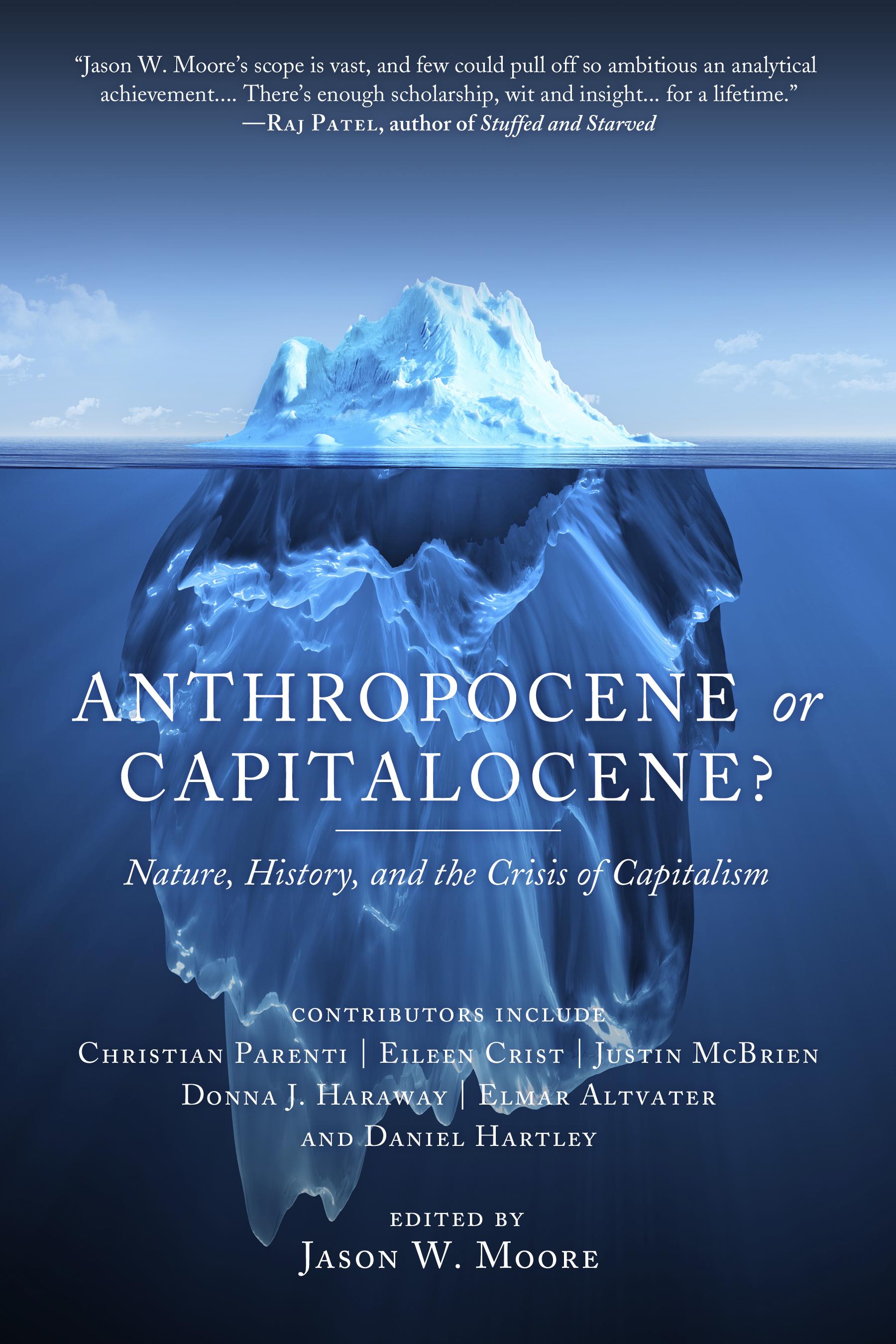
The Earth has reached a tipping point. Runaway climate change, the sixth great extinction of planetary life, the acidification of the oceans—all point toward an era of unprecedented turbulence in humanity’s relationship within the web of life. But just what is that relationship, and how do we make sense of this extraordinary transition?
Anthropocene or Capitalocene? offers answers to these questions from a dynamic group of leading critical scholars. They challenge the theory and history offered by the most significant environmental concept of our times: the Anthropocene. But are we living in the Anthropocene, literally the “Age of Man”? Is a different response more compelling, and better suited to the strange—and often terrifying—times in which we live? The contributors to this book diagnose the problems of Anthropocene thinking and propose an alternative: the global crises of the twenty-first century are rooted in the Capitalocene, the Age of Capital.
Anthropocene or Capitalocene? offers a series of provocative essays on nature and power, humanity, and capitalism. Including both well-established voices and younger scholars, the book challenges the conventional practice of dividing historical change and contemporary reality into “Nature” and “Society,” demonstrating the possibilities offered by a more nuanced and connective view of human environment-making, joined at every step with and within the biosphere. In distinct registers, the authors frame their discussions within a politics of hope that signal the possibilities for transcending capitalism, broadly understood as a “world-ecology” that joins nature, capital, and power as a historically evolving whole.
Contributors include Jason W. Moore, Eileen Crist, Donna J. Haraway, Justin McBrien, Elmar Altvater, Daniel Hartley, and Christian Parenti.
Pay easily by card, Klarna, Apple Pay or Google Pay. Not happy? You always have a 14-day money-back guarantee. Read more in our terms. If you have any questions, email us at hello@memmo.org.
Memmo makes studying easier – wherever you are in the world. We bring your course books and smart study tools together in one place: summaries, quizzes, podcasts and flashcards. Plus Ted, your study buddy who answers anything you wonder. Over 50,000 students already study here – built to help you learn faster and stress less.