
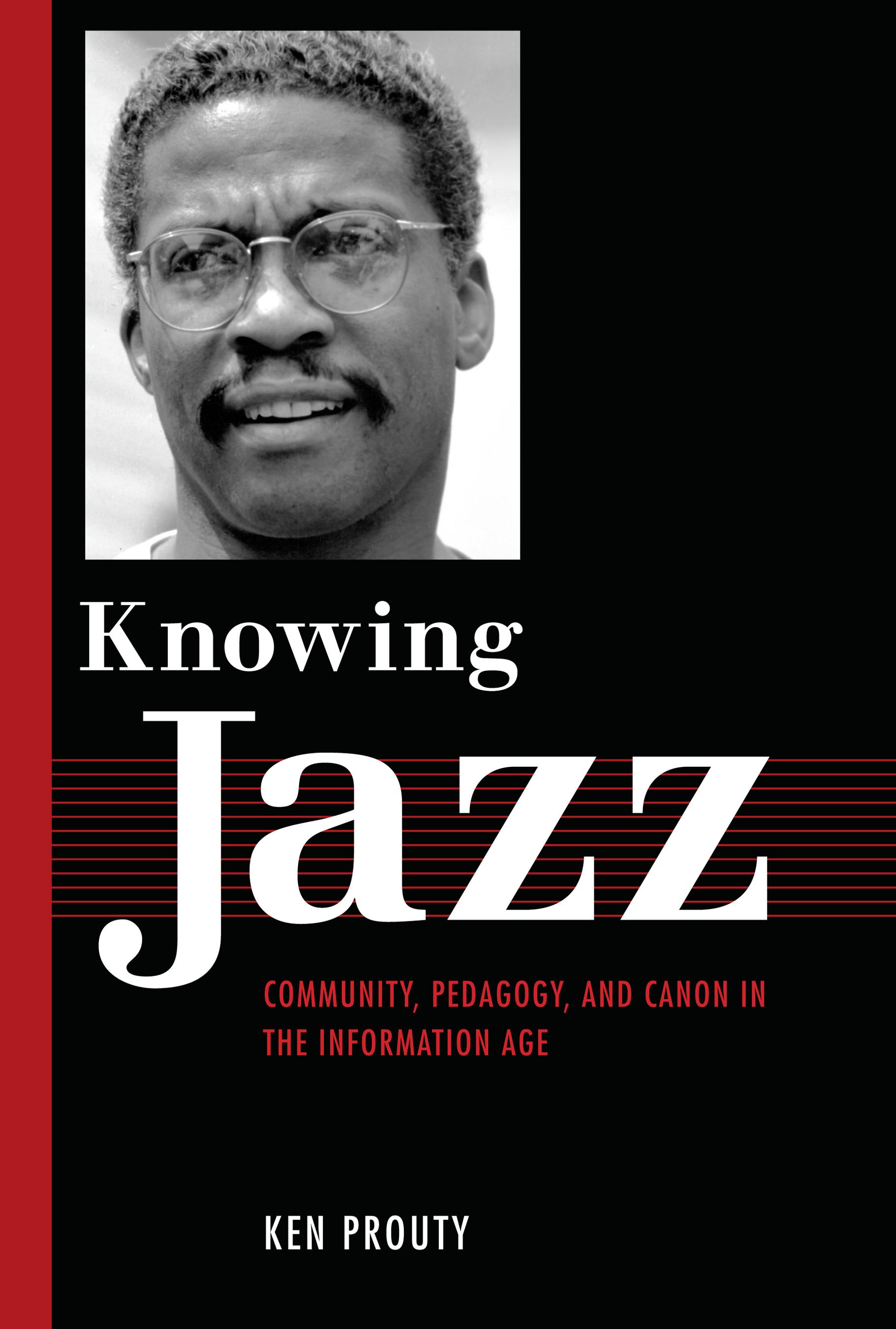
Ken Prouty argues that knowledge of jazz, or more to the point, claims to knowledge of jazz, are the prime movers in forming jazz's identity, its canon, and its community. Every jazz artist, critic, or fan understands jazz differently, based on each individual's unique experiences and insights. Through playing, listening, reading, and talking about jazz, both as a form of musical expression and as a marker of identity, each aficionado develops a personalized relationship to the larger jazz world. Through the increasingly important role of media, listeners also engage in the formation of different communities that not only transcend traditional boundaries of geography, but increasingly exist only in the virtual world.
The relationships of "jazz people" within and between these communities is at the center of Knowing Jazz. Some groups, such as those in academia, reflect a clash of sensibilities between historical traditions. Others, particularly online communities, represent new and exciting avenues for everyday fans, whose involvement in jazz has often been ignored. Other communities seek to define themselves as expressions of national or global sensibility, pointing to the ever-changing nature of jazz's identity as an American art form in an international setting. What all these communities share, however, is an intimate, visceral link to the music and the artists who make it, brought to life through the medium of recording. Informed by an interdisciplinary approach and approaching the topic from a number of perspectives, Knowing Jazz charts a philosophical course in which many disparate perspectives and varied opinions on jazz can find common ground.
The relationships of "jazz people" within and between these communities is at the center of Knowing Jazz. Some groups, such as those in academia, reflect a clash of sensibilities between historical traditions. Others, particularly online communities, represent new and exciting avenues for everyday fans, whose involvement in jazz has often been ignored. Other communities seek to define themselves as expressions of national or global sensibility, pointing to the ever-changing nature of jazz's identity as an American art form in an international setting. What all these communities share, however, is an intimate, visceral link to the music and the artists who make it, brought to life through the medium of recording. Informed by an interdisciplinary approach and approaching the topic from a number of perspectives, Knowing Jazz charts a philosophical course in which many disparate perspectives and varied opinions on jazz can find common ground.
Pay easily by card, Klarna, Apple Pay or Google Pay. Not happy? You always have a 14-day money-back guarantee. Read more in our terms. If you have any questions, email us at hello@memmo.org.
Memmo makes studying easier – wherever you are in the world. We bring your course books and smart study tools together in one place: summaries, quizzes, podcasts and flashcards. Plus Ted, your study buddy who answers anything you wonder. Over 50,000 students already study here – built to help you learn faster and stress less.
You might also like
Buy the book0