
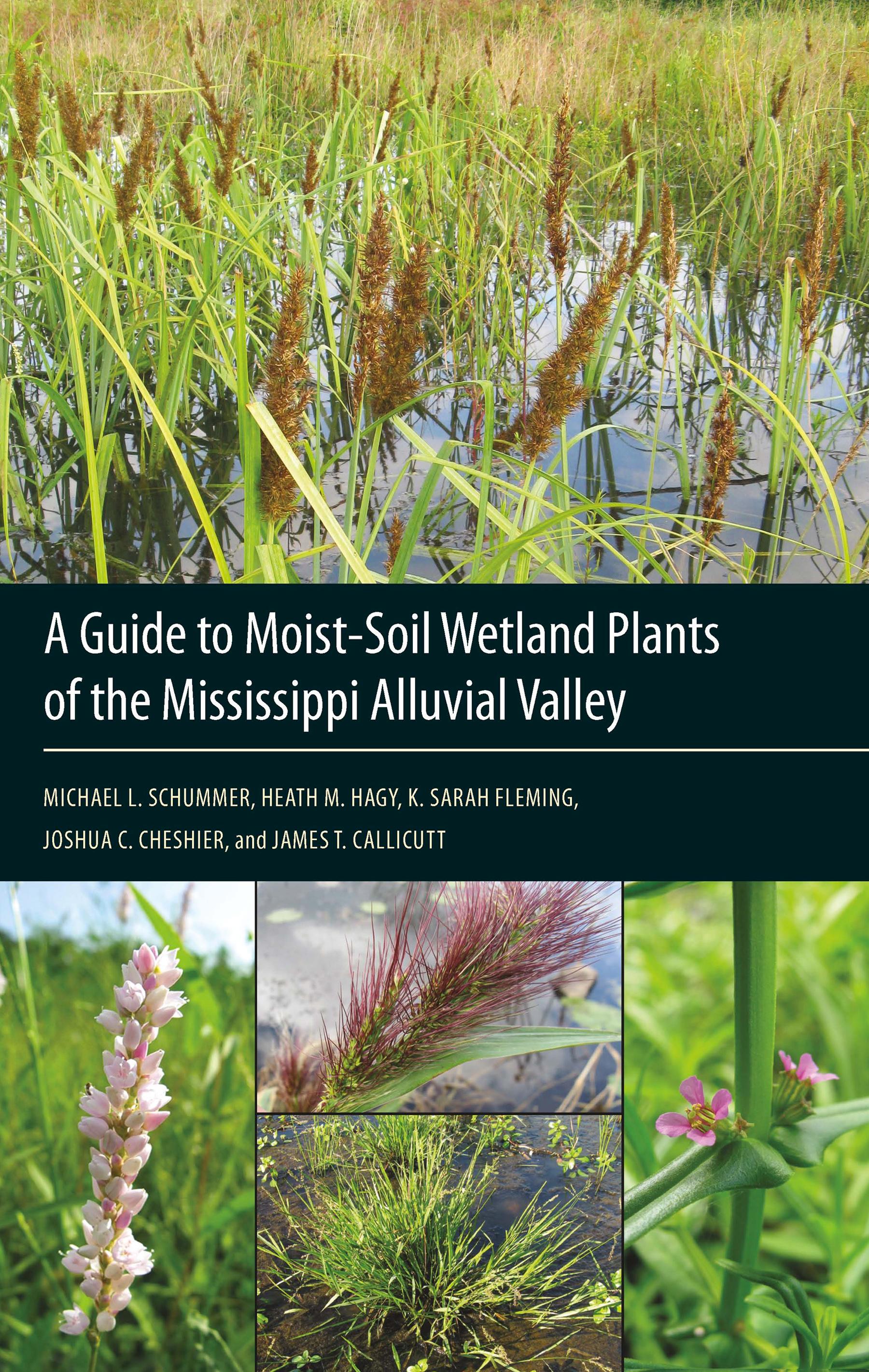
Moist-soil wetlands are seasonally flooded areas that produce early-succession plant communities of grasses, sedges, and other herbaceous plants. Moist-soil wetland plants provide food and cover for a diversity of wildlife species, including waterfowl and other waterbirds. Thus, conservation and management of moist-soil plants has become a major component of wildlife conservation efforts in the Mississippi Alluvial Valley and elsewhere in North America. The authors combined their extensive experience working in managed and unmanaged wetlands from southern Missouri to southern Louisiana to produce this beautifully illustrated identification guide. A detailed, yet user friendly field guide to identify moist-soil plants of the Mississippi Alluvial Valley has not been available until now.
Management to encourage the growth of moist-soil plants is a common conservation strategy used by state, federal, and private landowners to increase food and cover for wildlife. Thus, landowners must be able to identify moist-soil plants to meet their wildlife conservation goals. Landowners, scientists, wildlife biologists, and students alike will welcome this useful resource which includes 600 detailed color photographs of plants, images of seeds and tubers, and other helpful information to aid in identification. The book includes subsections of major plant groups occurring in moist-soil wetlands including aquatics, grasses, broadleaves, sedges and rushes, trees and shrubs, vines, and agricultural crops.
Management to encourage the growth of moist-soil plants is a common conservation strategy used by state, federal, and private landowners to increase food and cover for wildlife. Thus, landowners must be able to identify moist-soil plants to meet their wildlife conservation goals. Landowners, scientists, wildlife biologists, and students alike will welcome this useful resource which includes 600 detailed color photographs of plants, images of seeds and tubers, and other helpful information to aid in identification. The book includes subsections of major plant groups occurring in moist-soil wetlands including aquatics, grasses, broadleaves, sedges and rushes, trees and shrubs, vines, and agricultural crops.
Pay easily by card, Klarna, Apple Pay or Google Pay. Not happy? You always have a 14-day money-back guarantee. Read more in our terms. If you have any questions, email us at hello@memmo.org.
Memmo makes studying easier – wherever you are in the world. We bring your course books and smart study tools together in one place: summaries, quizzes, podcasts and flashcards. Plus Ted, your study buddy who answers anything you wonder. Over 50,000 students already study here – built to help you learn faster and stress less.
You might also like
Buy the book0