
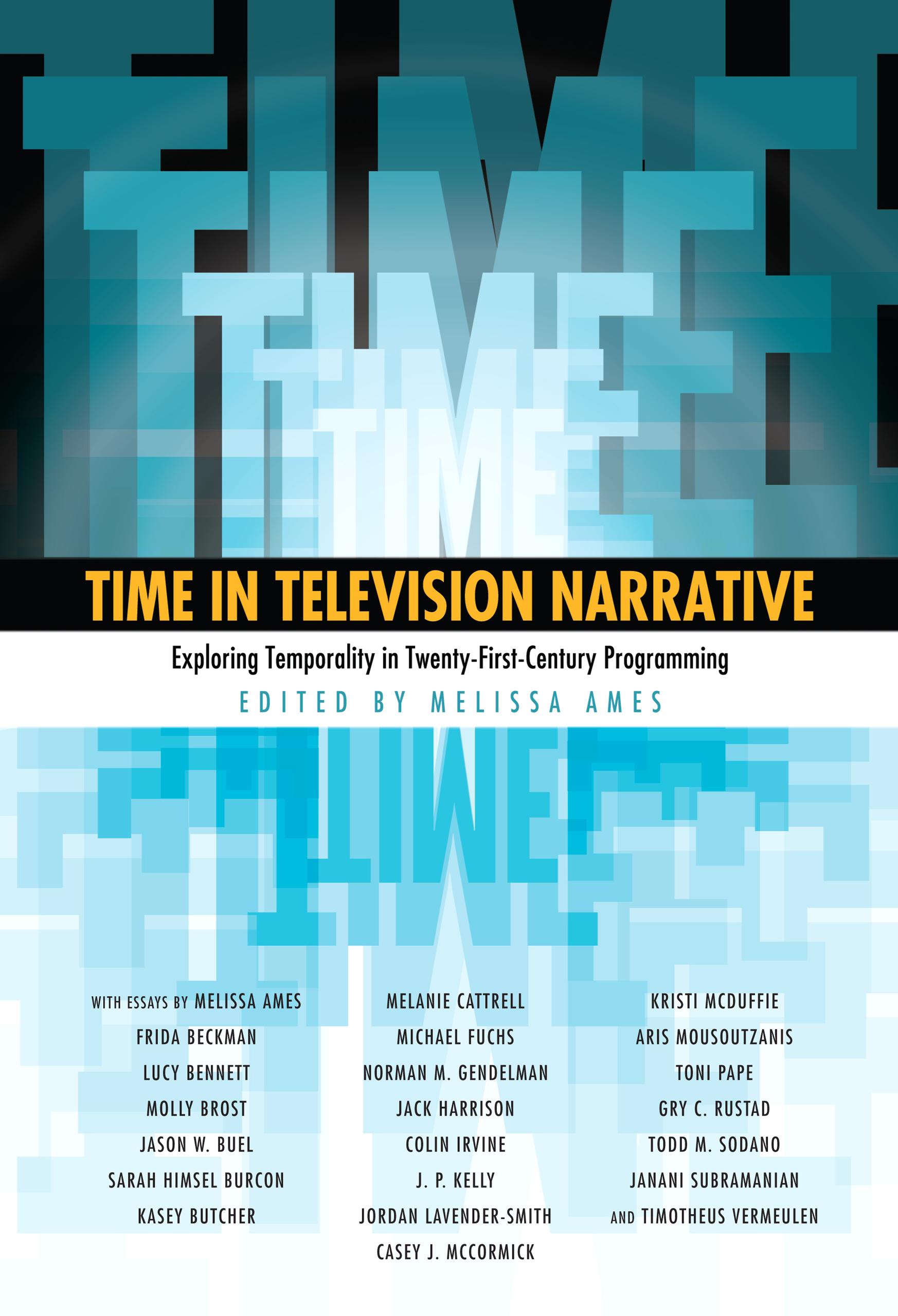
This collection analyzes twenty-first-century American television programs that employ temporal and narrative experimentation. These shows play with time, slowing it down to unfold narrative through time retardation and compression. They disrupt the chronological flow of time itself, using flashbacks and insisting that viewers be able to situate themselves in both the present and the past narrative threads. Although temporal play has existed on the small screen prior to the new millennium, never before has narrative time been so freely adapted in mainstream television. The essayists offer explanations for not only the frequency of time-play in contemporary programming, but also the implications of its sometimes disorienting presence.
Drawing upon the fields of cultural studies, television scholarship, and literary studies, as well as overarching theories concerning postmodernity and narratology, Time in Television Narrative offers some critical suggestions. The increasing number of television programs concerned with time may stem from any and all of the following: recent scientific approaches to quantum physics and temporality; new conceptions of history and post history; or trends in late-capitalistic production and consumption, in the new culture of instantaneity, or in the recent trauma culture amplified after the September 11 attacks. In short, these televisual time experiments may very well be an aesthetic response to the climate from which they derive. These essays analyze both ends of this continuum and also attend to another crucial variable: the television viewer watching this new temporal play.
Pay easily by card, Klarna, Apple Pay or Google Pay. Not happy? You always have a 14-day money-back guarantee. Read more in our terms. If you have any questions, email us at hello@memmo.org.
Memmo makes studying easier – wherever you are in the world. We bring your course books and smart study tools together in one place: summaries, quizzes, podcasts and flashcards. Plus Ted, your study buddy who answers anything you wonder. Over 50,000 students already study here – built to help you learn faster and stress less.