
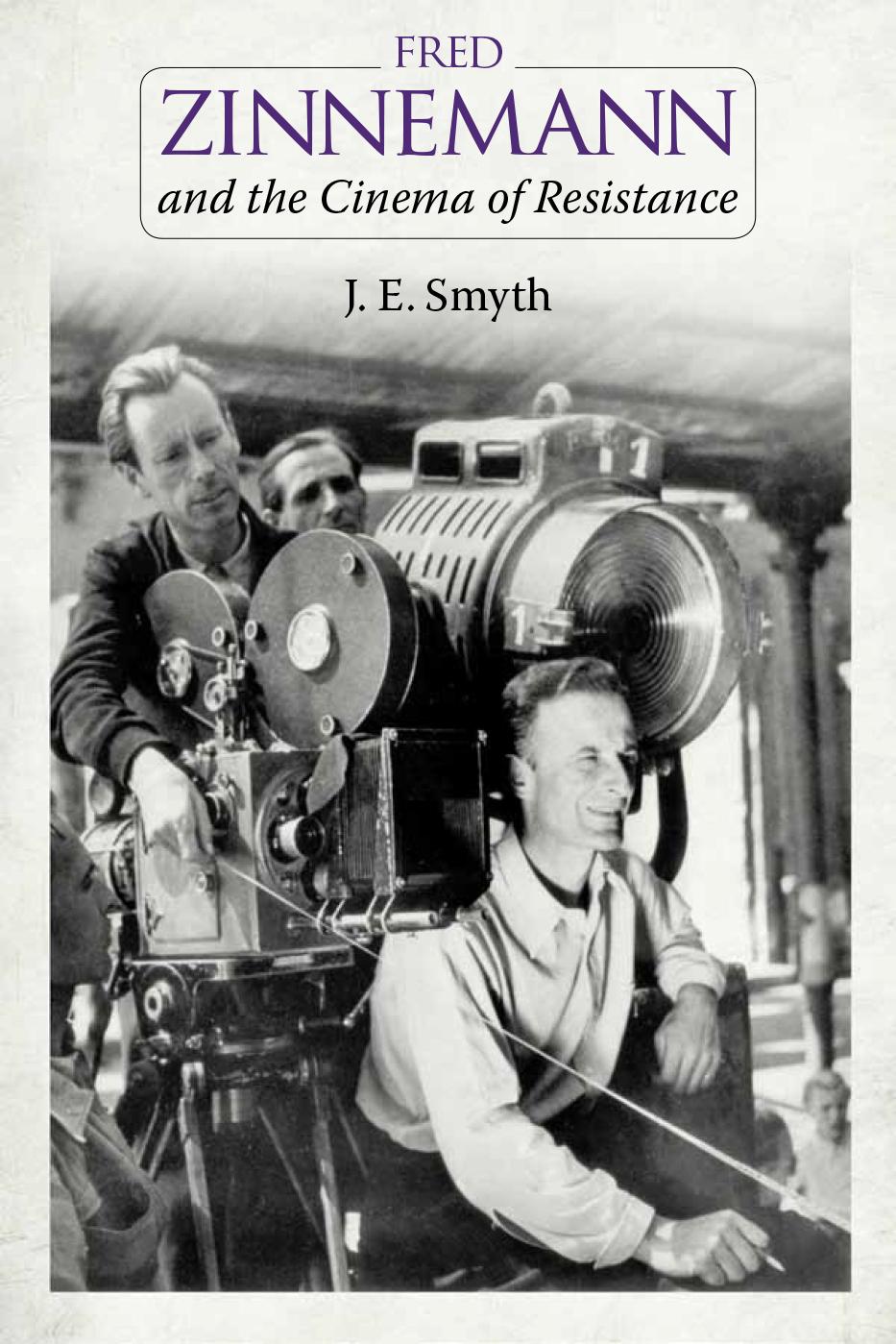
Fred Zinnemann directed some of the most acclaimed and controversial films of the twentieth century, yet he has been a shadowy presence in Hollywood history. In Fred Zinnemann and the Cinema of Resistance, J. E. Smyth reveals the intellectual passion behind some of the most powerful films ever made about the rise and resistance to fascism and the legacy of the Second World War, from The Seventh Cross and The Search to High Noon, From Here to Eternity, and Julia. Smyth's book is the first to draw upon Zinnemann's extensive papers at the Academy of Motion Picture Arts and Sciences and brings Fred Zinnemann's vision, voice, and film practice to life.
In his engagement with the defining historical struggles of the twentieth century, Zinnemann fought his own battles with the Hollywood studio system, the critics, and a public bent on forgetting. Zinnemann's films explore the role of women and communists in the antifascist resistance, the West's support of Franco after the Spanish Civil War, and the darker side of America's national heritage. Smyth reconstructs a complex and conflicted portrait of Zinnemann's cinema of resistance, examining his sketches, script annotations, editing and production notes, and personal letters. Illustrated with seventy black-and-white images from Zinnemann's collection, Fred Zinnemann and the Cinema of Resistance discusses the director's professional and personal relationships with Spencer Tracy, Montgomery Clift, Audrey Hepburn, Vanessa Redgrave, and Gary Cooper; the critical reaction to his revisionist Western, High Noon; his battles over the censorship of From Here to Eternity, The Nun's Story, and Behold a Pale Horse; his unrealized history of the Communist Revolution in China, Man's Fate; and the controversial study of political assassination, The Day of the Jackal. In this intense, richly textured narrative, Smyth enters the mind of one of Hollywood's master directors, redefining our knowledge of his artistic vision and practice.
In his engagement with the defining historical struggles of the twentieth century, Zinnemann fought his own battles with the Hollywood studio system, the critics, and a public bent on forgetting. Zinnemann's films explore the role of women and communists in the antifascist resistance, the West's support of Franco after the Spanish Civil War, and the darker side of America's national heritage. Smyth reconstructs a complex and conflicted portrait of Zinnemann's cinema of resistance, examining his sketches, script annotations, editing and production notes, and personal letters. Illustrated with seventy black-and-white images from Zinnemann's collection, Fred Zinnemann and the Cinema of Resistance discusses the director's professional and personal relationships with Spencer Tracy, Montgomery Clift, Audrey Hepburn, Vanessa Redgrave, and Gary Cooper; the critical reaction to his revisionist Western, High Noon; his battles over the censorship of From Here to Eternity, The Nun's Story, and Behold a Pale Horse; his unrealized history of the Communist Revolution in China, Man's Fate; and the controversial study of political assassination, The Day of the Jackal. In this intense, richly textured narrative, Smyth enters the mind of one of Hollywood's master directors, redefining our knowledge of his artistic vision and practice.
Pages: 330
Category: Film- & Medievetenskap
e-ISBN: 9781626742345
Shipping weight: 1.2 kg
Ships in: 1-2 days
Pay easily by card, Klarna, Apple Pay or Google Pay. Not happy? You always have a 14-day money-back guarantee. Read more in our terms. If you have any questions, email us at hello@memmo.org.
Memmo makes studying easier – wherever you are in the world. We bring your course books and smart study tools together in one place: summaries, quizzes, podcasts and flashcards. Plus Ted, your study buddy who answers anything you wonder. Over 50,000 students already study here – built to help you learn faster and stress less.
You might also like
Buy the book0