
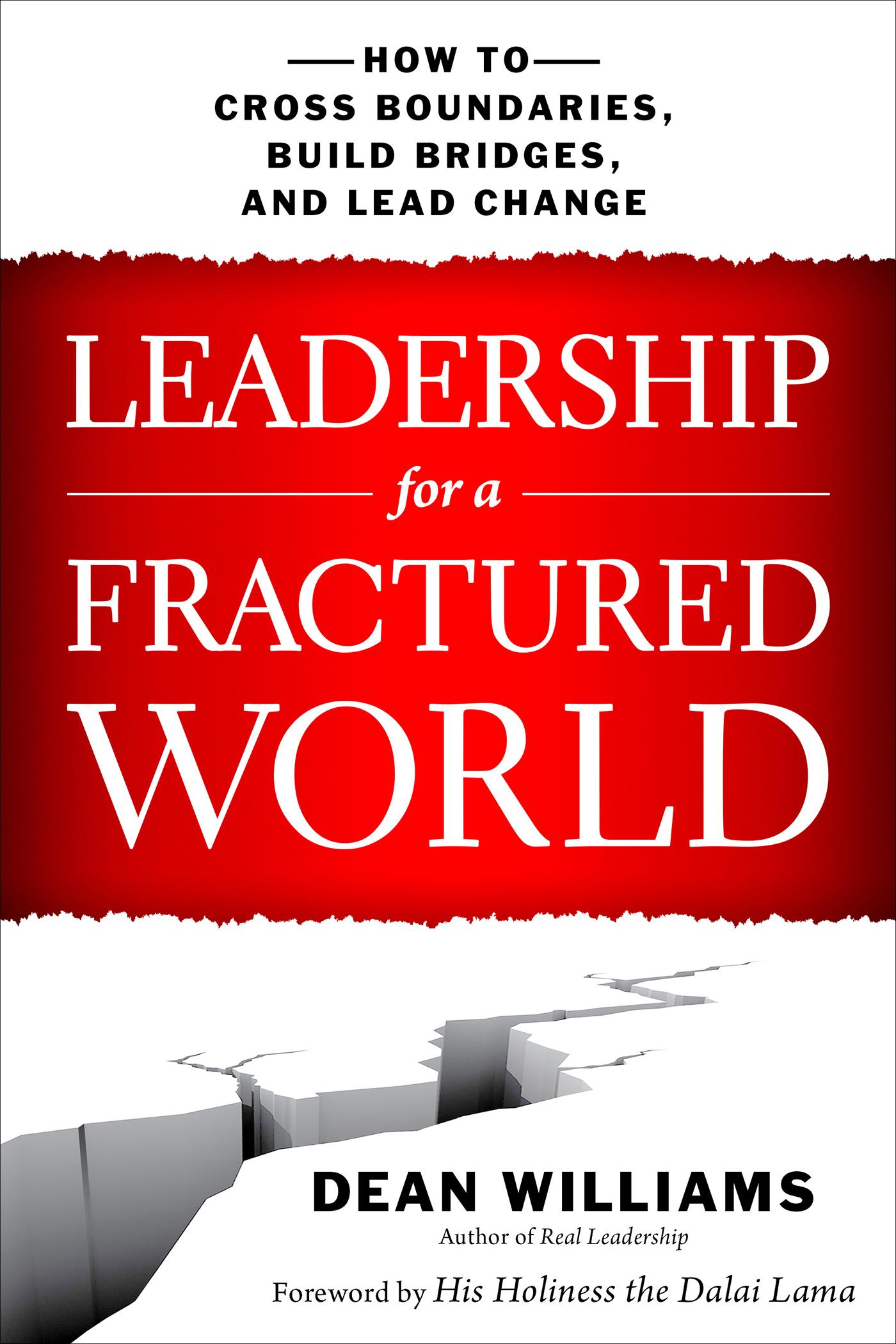
Leaders today—whether in corporations or associations, nonprofits or nations—face massive, messy, multidimensional problems. No one person or group can possibly solve them—they require the broadest possible cooperation.
But, says Harvard scholar Dean Williams, our leadership models are still essentially tribal: individuals with formal authority leading in the interest of their own group. In this deeply needed new book, he outlines an approach that enables leaders to transcend internal and external boundaries and help people to collaborate, even people over whom they technically have no power.
Drawing on what he’s learned from years of working in countries and organizations around the world, Williams shows leaders how to approach the delicate and creative work of boundary spanning, whether those boundaries are cultural, organizational, political, geographic, religious, or structural.
Sometimes leaders themselves have to be the ones who cross the boundaries between groups. Other times, a leader’s job is to build relational bridges between divided groups or even to completely break down the boundaries that block collaborative problem solving. By thinking about power and authority in a different way, leaders will become genuine change agents, able to heal wounds, resolve conflicts, and bring a fractured world together.
But, says Harvard scholar Dean Williams, our leadership models are still essentially tribal: individuals with formal authority leading in the interest of their own group. In this deeply needed new book, he outlines an approach that enables leaders to transcend internal and external boundaries and help people to collaborate, even people over whom they technically have no power.
Drawing on what he’s learned from years of working in countries and organizations around the world, Williams shows leaders how to approach the delicate and creative work of boundary spanning, whether those boundaries are cultural, organizational, political, geographic, religious, or structural.
Sometimes leaders themselves have to be the ones who cross the boundaries between groups. Other times, a leader’s job is to build relational bridges between divided groups or even to completely break down the boundaries that block collaborative problem solving. By thinking about power and authority in a different way, leaders will become genuine change agents, able to heal wounds, resolve conflicts, and bring a fractured world together.
Pay easily by card, Klarna, Apple Pay or Google Pay. Not happy? You always have a 14-day money-back guarantee. Read more in our terms. If you have any questions, email us at hello@memmo.org.
Memmo makes studying easier – wherever you are in the world. We bring your course books and smart study tools together in one place: summaries, quizzes, podcasts and flashcards. Plus Ted, your study buddy who answers anything you wonder. Over 75,000 students already study here – built to help you learn faster and stress less.
You might also like
Buy the book0