
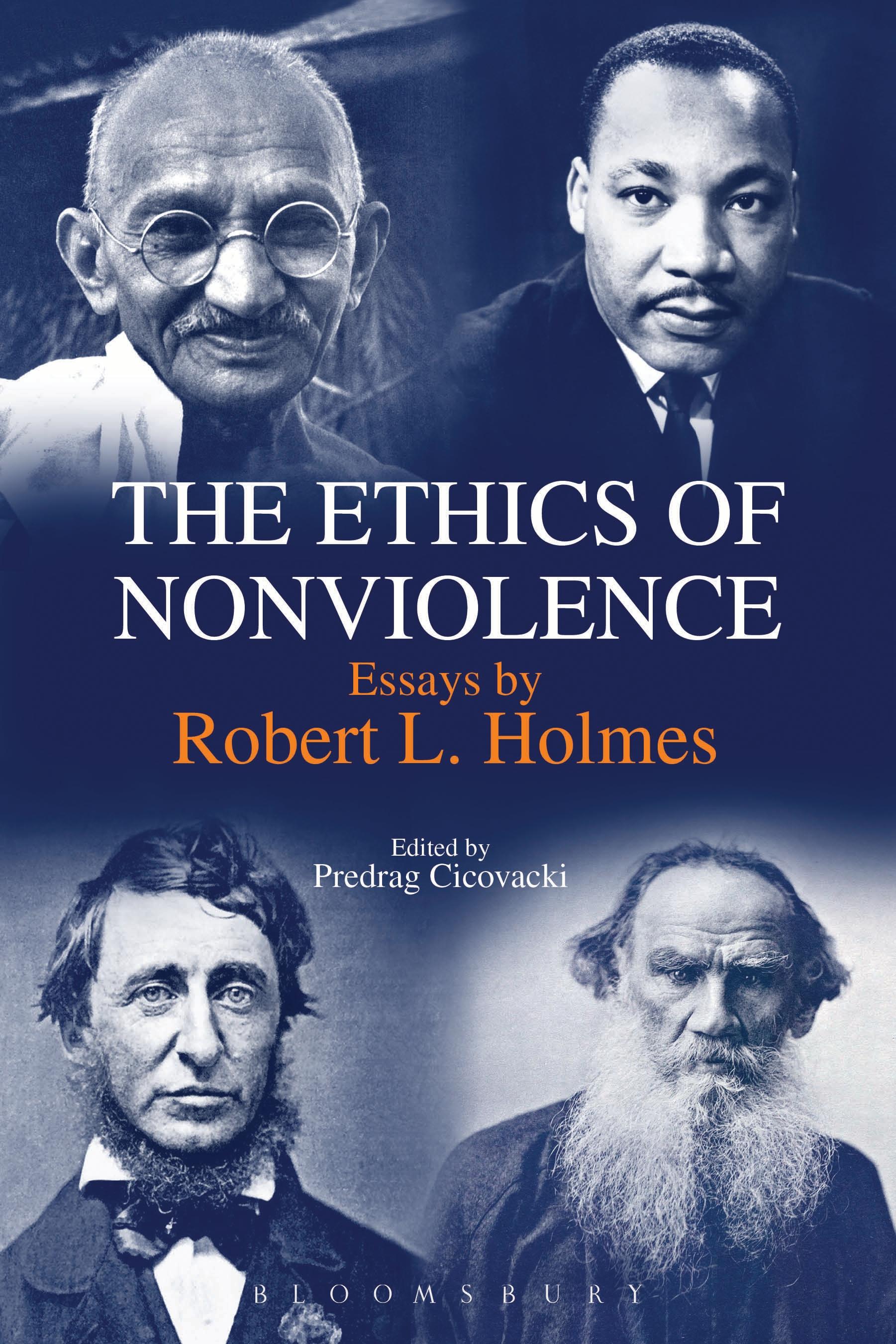
Robert Holmes is one of the leading proponents of nonviolence in the United States, and his influence extends to the rest of the world. However, he has never presented his views on nonviolence in full-length book form. The Ethics of Nonviolence brings together his best essays on the topic, both classic works and more obscure pieces, as well as several important essays that have never been published.
Holmes started his career by following Dewey and James, and then turned toward metaethics. The Vietnam War finally led him toward moral problems related to war and violence. For the last forty years he has been a great proponent of nonviolence and pacifism in the style of Tolstoy and Gandhi.
If ethics is meant to be more than a purely academic exercise, the theoretical ethics of philosophy must be shown to be relevant to applied morality; the ongoing process of making moral judgments must add value to the world we live in. For Robert Holmes, no aspect of reality is more in need of ethical thinking and reform than the culture of war and violence that cannot be ignored. There are morally viable alternatives to this violence, Holmes argues, and he scrutinizes the sources and implications of such positions. Holmes shows that nonviolence and pacifism can lead us toward a more peaceful and humanely dignified world.
Holmes started his career by following Dewey and James, and then turned toward metaethics. The Vietnam War finally led him toward moral problems related to war and violence. For the last forty years he has been a great proponent of nonviolence and pacifism in the style of Tolstoy and Gandhi.
If ethics is meant to be more than a purely academic exercise, the theoretical ethics of philosophy must be shown to be relevant to applied morality; the ongoing process of making moral judgments must add value to the world we live in. For Robert Holmes, no aspect of reality is more in need of ethical thinking and reform than the culture of war and violence that cannot be ignored. There are morally viable alternatives to this violence, Holmes argues, and he scrutinizes the sources and implications of such positions. Holmes shows that nonviolence and pacifism can lead us toward a more peaceful and humanely dignified world.
Pay easily by card, Klarna, Apple Pay or Google Pay. Not happy? You always have a 14-day money-back guarantee. Read more in our terms. If you have any questions, email us at hello@memmo.org.
Memmo makes studying easier – wherever you are in the world. We bring your course books and smart study tools together in one place: summaries, quizzes, podcasts and flashcards. Plus Ted, your study buddy who answers anything you wonder. Over 50,000 students already study here – built to help you learn faster and stress less.