
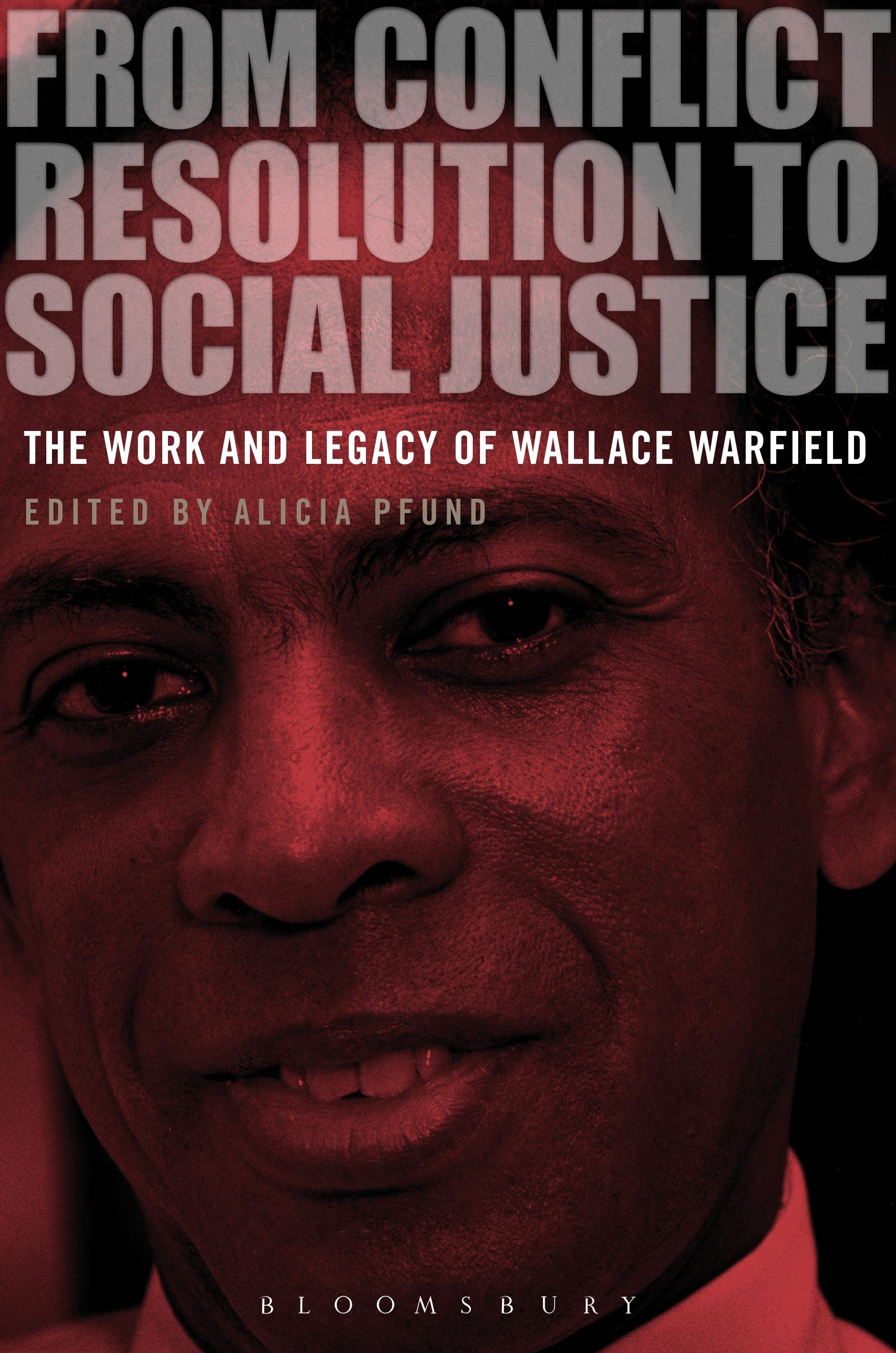
This reader brings together the writings of Wallace Warfield (1938-2010), the internationally acclaimed and influential authority on conflict resolution. The selected essays highlight the importance of social context in conflicts and the future and potential of the field of Conflict Resolution.
After introducing Warfield's thinking and background, a first section highlights the role of race, ethnicity and culture in conflict, through case studies and step-by-step methods on how to deal with such issues. It also addresses theoretical issues and policymaking. The second section focuses on the role of conflict resolution in society and how it could become the key to building just societies.
Throughout the book, it is clear that the subjects that concerned Warfield are becoming even more relevant today. World conflicts are less between countries and more within communities confronted with socio-cultural clashes as well as issues related to economic deprivation. Individuals who have been victimized by oppressors or oppressive systems are becoming aware of their rights, while globalization and electronic communication are showing them what structural changes -pacific or otherwise- are happening around the world.
Ranging from the local to the international and integrating theory with ideas and practice, this work will be a unique learning resource and reference for both students and practitioners of conflict resolution, while highlighting the legacy and contemporary relevance of a leading thinker.
After introducing Warfield's thinking and background, a first section highlights the role of race, ethnicity and culture in conflict, through case studies and step-by-step methods on how to deal with such issues. It also addresses theoretical issues and policymaking. The second section focuses on the role of conflict resolution in society and how it could become the key to building just societies.
Throughout the book, it is clear that the subjects that concerned Warfield are becoming even more relevant today. World conflicts are less between countries and more within communities confronted with socio-cultural clashes as well as issues related to economic deprivation. Individuals who have been victimized by oppressors or oppressive systems are becoming aware of their rights, while globalization and electronic communication are showing them what structural changes -pacific or otherwise- are happening around the world.
Ranging from the local to the international and integrating theory with ideas and practice, this work will be a unique learning resource and reference for both students and practitioners of conflict resolution, while highlighting the legacy and contemporary relevance of a leading thinker.
Pay easily by card, Klarna, Apple Pay or Google Pay. Not happy? You always have a 14-day money-back guarantee. Read more in our terms. If you have any questions, email us at hello@memmo.org.
Memmo makes studying easier – wherever you are in the world. We bring your course books and smart study tools together in one place: summaries, quizzes, podcasts and flashcards. Plus Ted, your study buddy who answers anything you wonder. Over 50,000 students already study here – built to help you learn faster and stress less.