
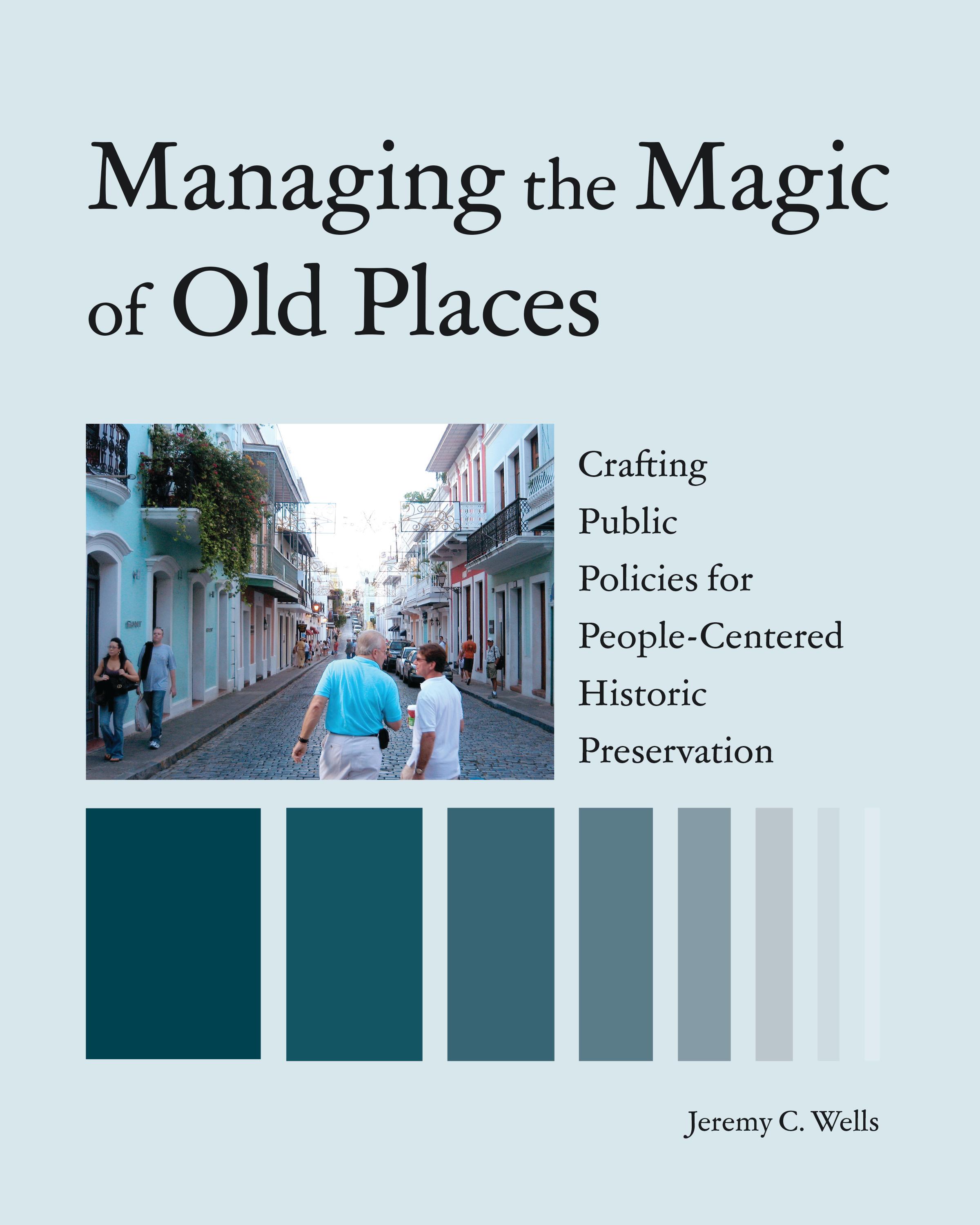
From 1849 to the early 1980s, the development of US historic preservation policy was shaped by fewer than one hundred elite White men from Europe and America. This orthodox preservation doctrine has too long silenced the vibrant, experiential relationships between everyday people and their heritage. Managing the Magic of Old Places: Crafting Public Policies for People-Centered Historic Preservation offers a radical rethinking of how historic preservation is approached in the United States.
Author Jeremy C. Wells argues for a revolutionary shift in federal preservation policy—one that embraces community-based participatory practice and draws from environmental psychology to tap into the intangible, emotional connections people have with old places. Wells highlights the experiential values that laypeople often ascribe to historic environments, which are frequently dismissed by expert-driven policies. He contends that if historic preservation policy continues to ignore these aspects, the field will lose relevance as the gap between professionals and the public widens. Drawing from interdisciplinary research in the social sciences, particularly phenomenology and environmental psychology, Wells’s vision of public preservation policy centers the lived experiences of communities, reinvigorating the field and ensuring that the preservation of historic places resonates with a wider, more inclusive audience.
Wells positions his work within the growing field of critical heritage studies, yet his focus on the psychological and emotional aspects of preservation distinguishes it as a unique contribution. By placing the needs and experiences of the public at the heart of preservation efforts, Wells critiques the historical foundations of US preservation policy while offering a bold agenda for reform.
Pay easily by card, Klarna, Apple Pay or Google Pay. Not happy? You always have a 14-day money-back guarantee. Read more in our terms. If you have any questions, email us at hello@memmo.org.
Memmo makes studying easier – wherever you are in the world. We bring your course books and smart study tools together in one place: summaries, quizzes, podcasts and flashcards. Plus Ted, your study buddy who answers anything you wonder. Over 75,000 students already study here – built to help you learn faster and stress less.