
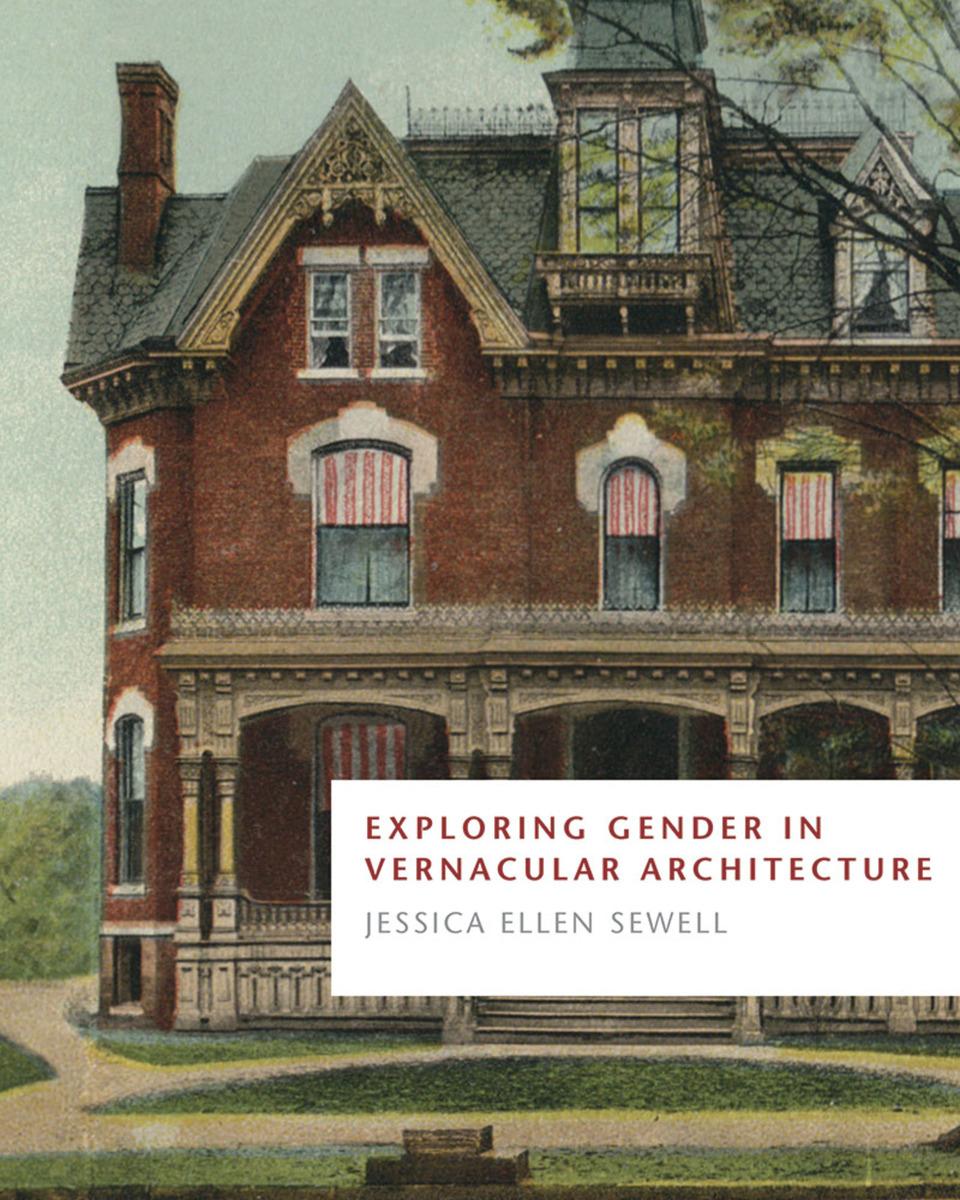
In Exploring Gender in Vernacular Architecture, Jessica Ellen Sewell considers the gender of those who create and shape spaces, how gender ideology contributes to and manifests itself in built form, and what research methods make the observation of gendered experience possible. She discusses single-gender, mixed-gender, and queer spaces, providing a comprehensive look at how gender influences the design and construction of those spaces, how those spaces are used, and the relationship between gender and the broader architectural landscape. In her study, Sewell also provides an expansive view of how gender intersects with other categories of power and difference, such as race, class, and age, and how this intersectionality contributes to the design and use of built spaces.
In addition to examining the spaces themselves, Sewell explores research methods for studying gendered experiences in architecture. She argues that traditional research methods in vernacular architecture studies, which often focus on building-based fieldwork, should be complemented by other methods—such as letters, oral histories, and diaries—that expand the understanding of buildings beyond their construction date and reveal how those buildings have been used and represented over time. Digging into primary records, Sewell posits, can help challenge our assumptions about who influences architecture and urban development, illuminating the roles of women and others in the building and shaping of space.
Thoroughly researched yet accessible for scholars new to the study of vernacular architecture, Exploring Gender in Vernacular Architecture bridges the gap between specialized scholarship and broader public understanding. Students of architectural history, gender studies, and cultural history will find it a valuable resource not only for examining the relationship between gender and architecture, but for engaging new methodological tools that may further their own research.
Pay easily by card, Klarna, Apple Pay or Google Pay. Not happy? You always have a 14-day money-back guarantee. Read more in our terms. If you have any questions, email us at hello@memmo.org.
Memmo makes studying easier – wherever you are in the world. We bring your course books and smart study tools together in one place: summaries, quizzes, podcasts and flashcards. Plus Ted, your study buddy who answers anything you wonder. Over 50,000 students already study here – built to help you learn faster and stress less.