
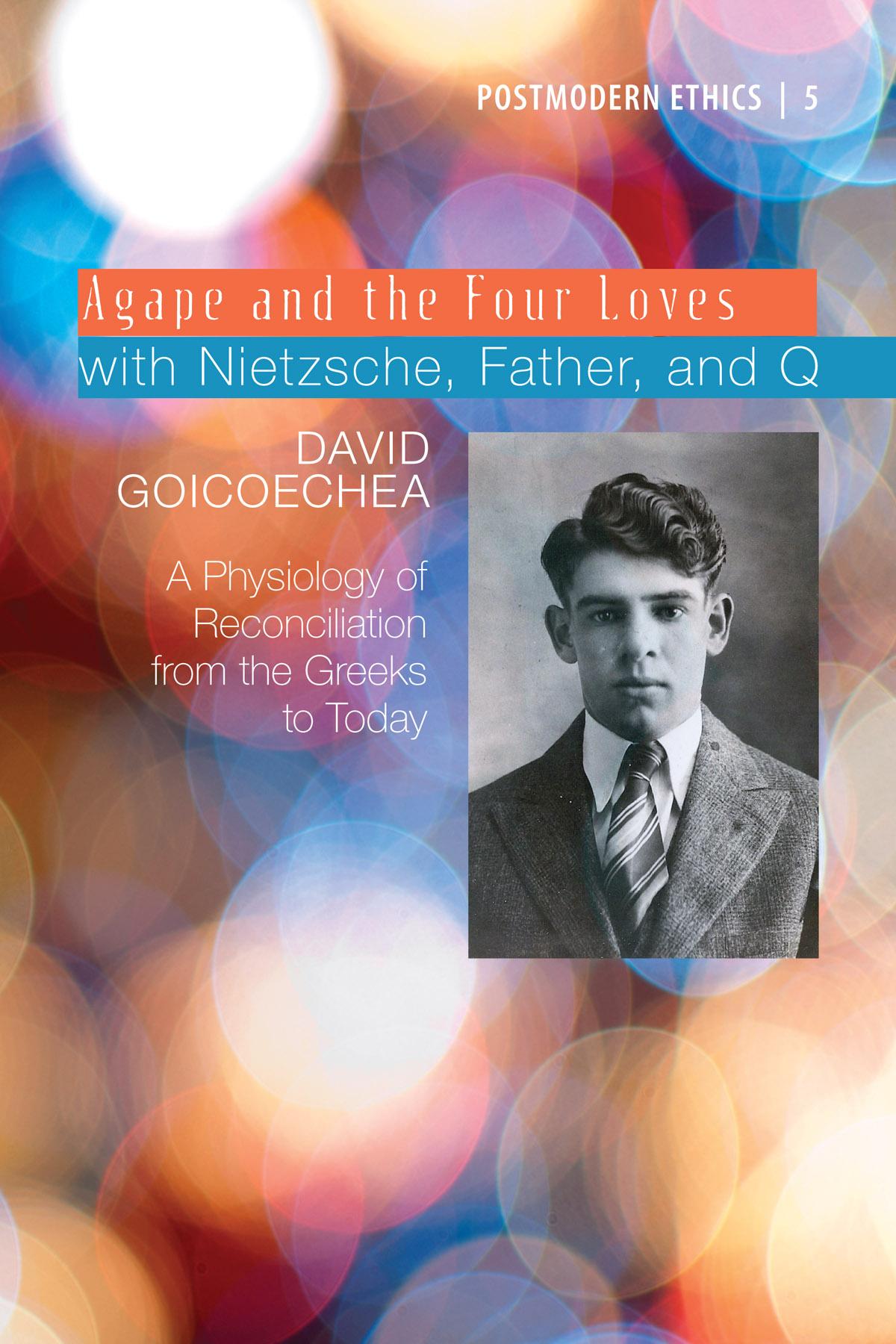
Goicoechea explains Nietzsche's thesis that the agapeic love of Jesus is humankind's highest affirmation, even for sinners like the author's father, Joe Goicoechea, who lived it out existentially. Already before the Q scholars, Nietzsche saw this love as the essence of the Sermon on the Mount and based his philosophy upon it. Throughout the Catholic tradition agape fulfilled the affection of Empedocles, the eros of Plato, the friendship of Aristotle, and the agape of Plotinus. While, as Anders Nygren shows, modernists protested such syntheses, now postmodernists once again let agape and the four loves contribute to one another.
Pay easily by card, Klarna, Apple Pay or Google Pay. Not happy? You always have a 14-day money-back guarantee. Read more in our terms. If you have any questions, email us at hello@memmo.org.
Memmo makes studying easier – wherever you are in the world. We bring your course books and smart study tools together in one place: summaries, quizzes, podcasts and flashcards. Plus Ted, your study buddy who answers anything you wonder. Over 50,000 students already study here – built to help you learn faster and stress less.
You might also like
Buy the book0