
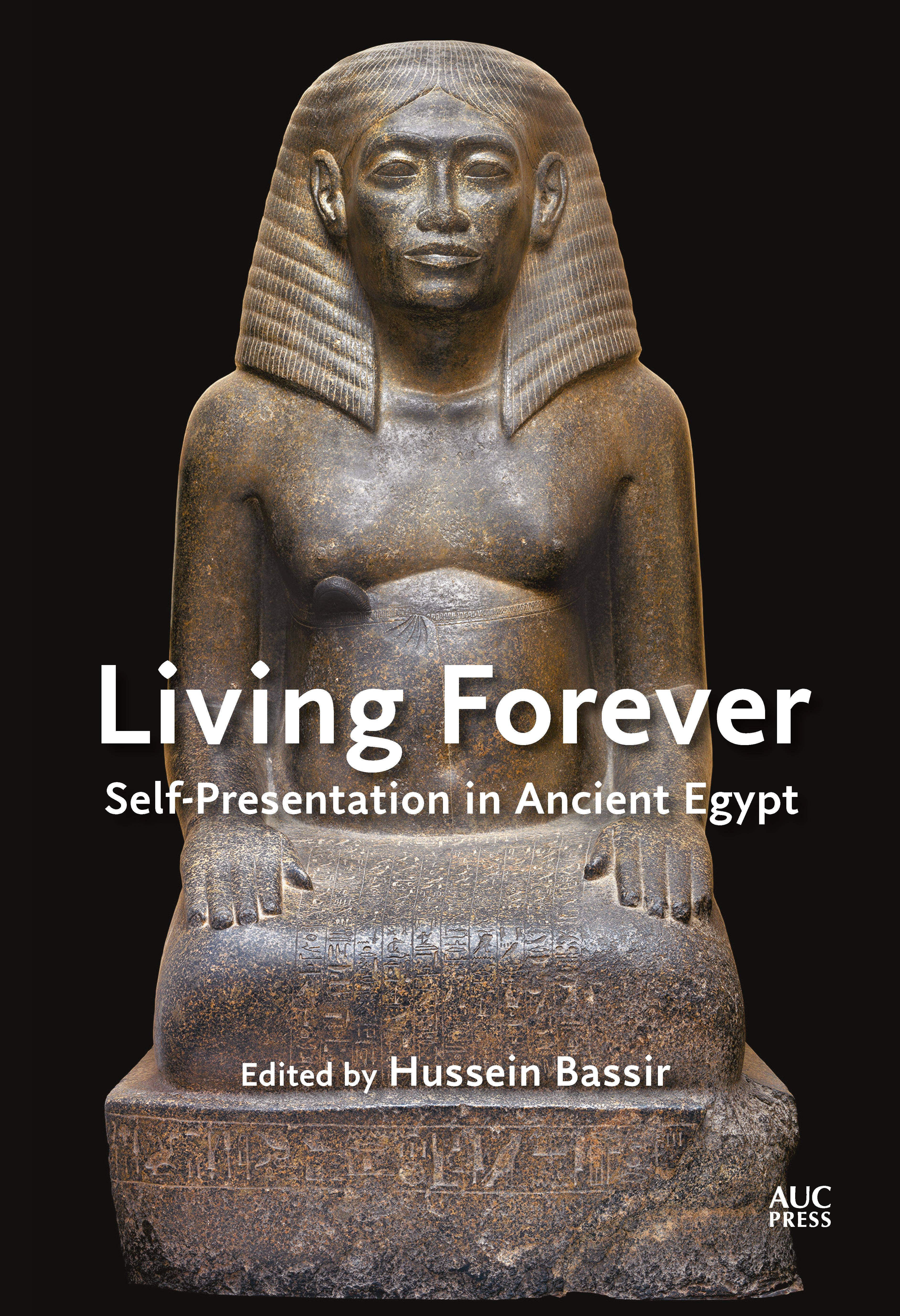
Self-presentation is the oldest and most common component of ancient Egyptian high culture. It arose in the context of private tomb records, where the character and role of an individual—invariably a well-to-do non-royal elite official or administrator—were presented purposefully: published by inscription and image, to a contemporary audience and to posterity.
Living Forever: Self-presentation in Ancient Egypt looks at how and why non-royal elites in ancient Egypt represented themselves, through language and art, on monuments, tombs, stelae, and statues, and in literary texts, from the Early Dynastic Period to the Thirtieth Dynasty. Bringing together essays by international Egyptologists and archaeologists from a range of backgrounds, the chapters in this volume offer fresh insight into the form, content, and purpose of ancient Egyptian presentations of the self. Applying different approaches and disciplines, they explore how these self-representations, which encapsulated a discourse with gods and men alike, yield rich historical and sociological information, provide examples of ancient rhetorical devices and repertoire, and shed light on notions of the self and collective memory in ancient Egypt.
Pay easily by card, Klarna, Apple Pay or Google Pay. Not happy? You always have a 14-day money-back guarantee. Read more in our terms. If you have any questions, email us at hello@memmo.org.
Memmo makes studying easier – wherever you are in the world. We bring your course books and smart study tools together in one place: summaries, quizzes, podcasts and flashcards. Plus Ted, your study buddy who answers anything you wonder. Over 75,000 students already study here – built to help you learn faster and stress less.