
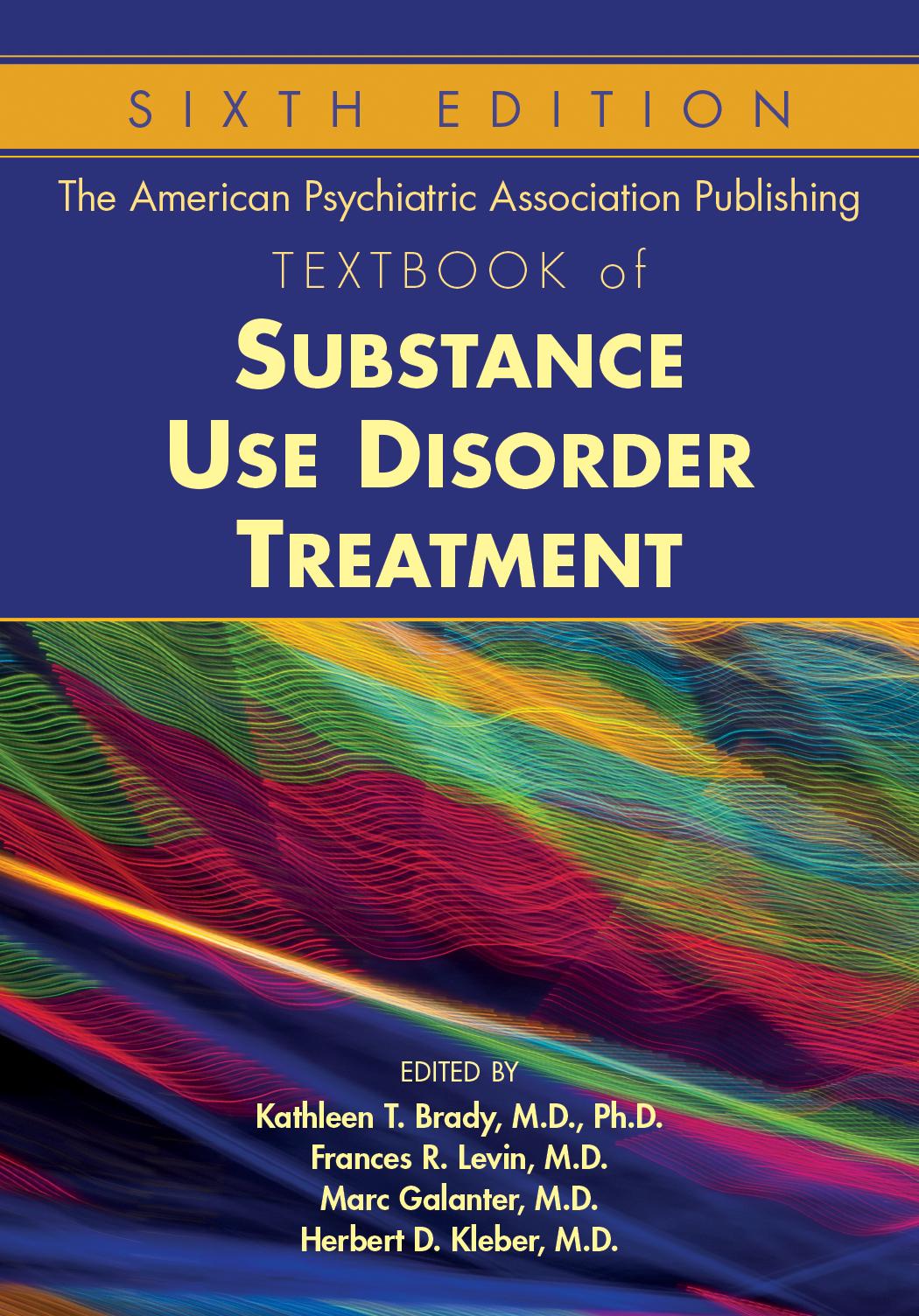
A robust revision, including many entirely new chapters addressing policy, the latest treatment approaches, and special topics, the Sixth Edition of The American Psychiatric Association Publishing Textbook of Substance Use Disorder Treatment offers a comprehensive and compelling review of this ever-evolving field. New sections address important topics that have gained prominence or become the focus of increased research attention since the Fifth Edition was released. For example, substance use and other psychiatric disorders often co-occur, and the resulting dual disorder is frequently associated with greater symptom severity and worse long-term prognosis than either disorder alone. Accordingly, the section on psychiatric comorbidity covers the epidemiology, assessment, and treatment of substance use disorders (SUDs) that co-occur with psychotic, mood, anxiety, eating, attention-deficit/hyperactivity, or trauma-related disorders. The section devoted to special populations has been revamped, and the topics have been thoroughly updated, some now covered by new contributors and others completely new to this edition. SUDs among women (including perinatal issues), adolescents, patients with chronic pain, sexual and gender minority populations, and older adults are addressed in detailed chapters, as are behavioral addictive disorders and cross-cultural aspects of substance-related and addictive disorders. Finally, the editors have included a section devoted to critically important topics in public health, including the U.S. opioid epidemic, cannabis policy and use, HIV/AIDS and hepatitis C, nicotine and public health, and the prevention of SUDs.
New or noteworthy coverage includes the following: A chapter devoted to the legal and practical aspects of addiction in the occupational sphere, designed for clinicians who treat people with SUDs and/or develop workplace testing programs, employee assistance programs, and occupational drug/alcohol policies for these workers. A chapter that surveys the growing literature supporting the use of mindfulness, exercise, and other "mind and body" practices (e.g., yoga, acupuncture, tai chi) as complements or alternatives to standard SUD treatment models. A chapter devoted to hallucinogens, which clarifies their actions, psychoactive effects, historical uses, potential therapeutic benefits, and neural mechanisms, and both identifies their risks and seeks to dispel some of the misconceptions that have continued to surround them. A suite of chapters devoted to cannabis, encompassing a review of its neurobiology and history, a survey of effective treatment approaches and harm-reduction strategies for cannabis use disorder, and a consideration of evolving public policy around cannabis use. A trio of chapters devoted to nicotine and tobacco, encompassing a review of neurobiology, a survey of clinical assessment tools, a summary of the research base for effective treatments for tobacco use disorder, and a consideration of public health policy and interventions regarding tobacco use.
Evidence-based, down to earth, and meticulously edited, the new Sixth Edition of The American Psychiatric Association Publishing Textbook of Substance Use Disorder Treatment is an essential resource for clinicians who treat SUDs in a variety of settings -- from examining rooms to emergency departments, and from hospitals to recovery facilities.
Pay easily by card, Klarna, Apple Pay or Google Pay. Not happy? You always have a 14-day money-back guarantee. Read more in our terms. If you have any questions, email us at hello@memmo.org.
Memmo makes studying easier – wherever you are in the world. We bring your course books and smart study tools together in one place: summaries, quizzes, podcasts and flashcards. Plus Ted, your study buddy who answers anything you wonder. Over 50,000 students already study here – built to help you learn faster and stress less.