
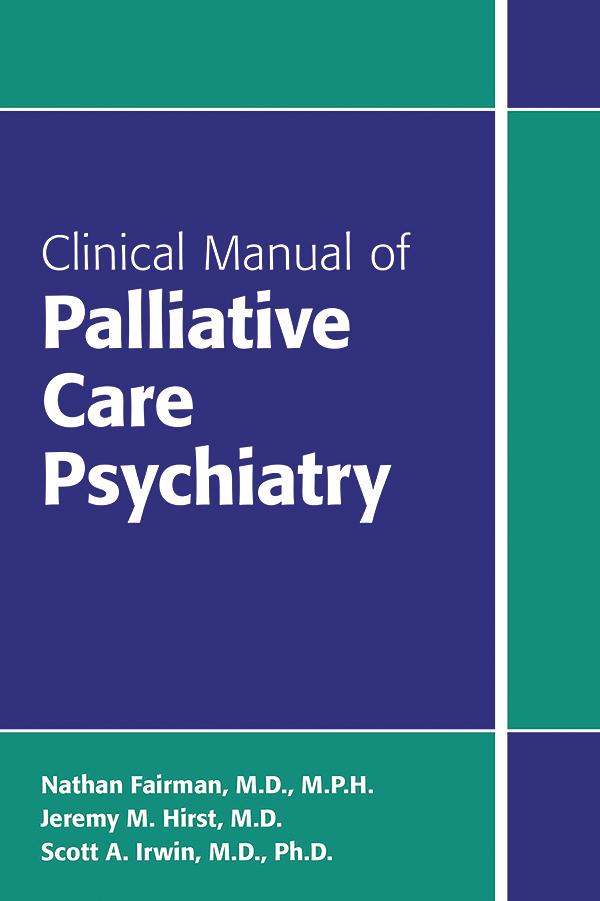
In recent years, palliative care has emerged as the leading model of person-centered care focused on preserving quality of life and alleviating distress for people and families experiencing serious and life-limiting medical illness. Alongside this development has come a growing recognition of the need for expertise in psychiatric diagnosis, psychopharmacology, and psychotherapy within the interdisciplinary team of specialists tasked with identifying and addressing the varied sources of suffering in patients with advanced medical illnesses. The Clinical Manual of Palliative Care Psychiatry was written to motivate and guide readers -- whether mental health clinicians or palliative care providers -- to deepen their understanding of the psychosocial dimensions of suffering for the benefit of seriously ill patients and the support of their families.
Great care has been exercised in the choice of topics and features: Chapter content emphasizes practical aspects of assessment and management that are unique to the palliative care setting, ensuring that clinicians are equipped to address the most common challenges they are likely to face. Each chapter ends with a list of supplemental materials -- including key publications (e.g., "Fast Facts" from the Center to Advance Palliative Care) and links to relevant modules from the Education in Palliative and End-of-Life Care curriculum (e.g., EPEC for Oncology) -- aimed at extending and enhancing reader knowledge of the topics covered. The authors provide thorough coverage of medication use, including off-label applications, which are common in palliative care. A wealth of tables and figures present clinically relevant information in a concise and easy-to-grasp manner.
Practical and brimming with essential information and useful techniques, the Clinical Manual of Palliative Care Psychiatry empowers both mental health clinicians and palliative care practitioners to more skillfully respond to psychosocial suffering in seriously ill and dying patients.
Pay easily by card, Klarna, Apple Pay or Google Pay. Not happy? You always have a 14-day money-back guarantee. Read more in our terms. If you have any questions, email us at hello@memmo.org.
Memmo makes studying easier – wherever you are in the world. We bring your course books and smart study tools together in one place: summaries, quizzes, podcasts and flashcards. Plus Ted, your study buddy who answers anything you wonder. Over 75,000 students already study here – built to help you learn faster and stress less.