
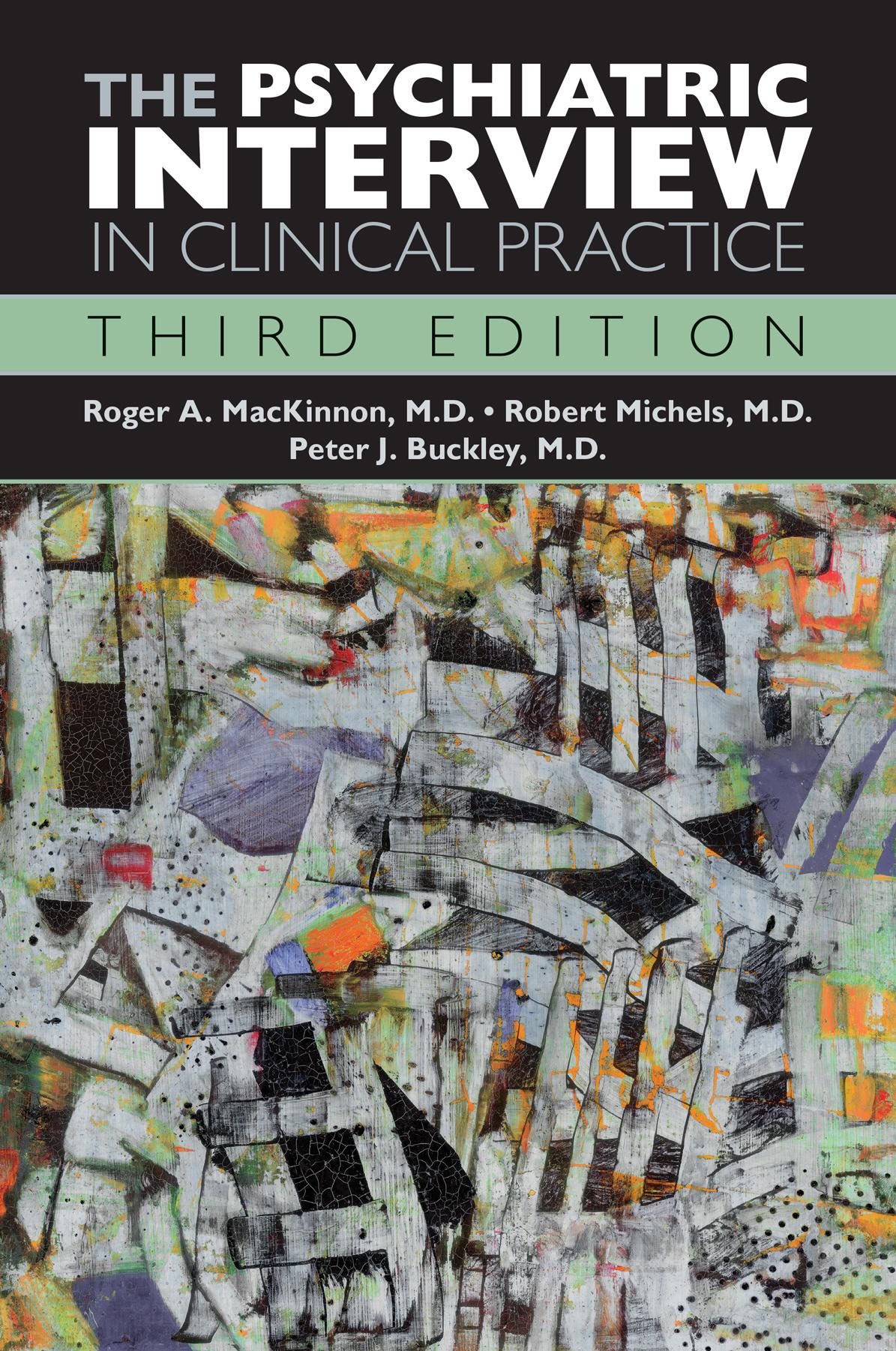
Much has changed in the critical interval since the last edition of The Psychiatric Interview in Clinical Practice was published. This new, third edition provides an up-to-date examination of the psychiatric interview that reflects changes introduced in DSM-5, while continuing to recognize that describing symptoms and establishing a diagnosis should command only a portion of the clinician's attention, and that a patient's personal history must be elicited and character structure addressed in the clinical engagement. Significant advances have been made in biological psychiatry, and research in genetics, cognitive neuroscience, psychopharmacology, brain imaging, and the neurosciences in general continues apace, informing the culture of psychiatry and providing growing insight into the etiology of mental illnesses. However, the book reflects the authors' belief that virtually all major psychiatric disorders are complex amalgams of genetic disposition and environmental influences. In this context, the psychiatric interview is a vitally important dialogue, and effective strategies are modeled through the use of clinical vignettes taken from the authors' experience.
Topics and features of this new edition include: An updating of diagnostic considerations to reflect the publication of DSM-5. A chapter on interviewing the patient with dissociative identity disorder (DID), which is now recognized as an entity distinct from other psychopathological conditions and rooted in childhood trauma. The frequency of DID in the ambulatory setting has been repeatedly demonstrated and speaks to the need to accurately diagnose and treat this often-debilitating disorder. An entirely updated chapter on interviewing the traumatized patient. A section on interviewing the patient of different background. The book emphasizes that the subjective experience of being "different" is universal and that psychiatry is enriched by recognizing and exploring that experience, validating its existence, and attempting to understand how it influences the patient's life. Continued emphasis on and inclusion of relevant case vignettes drawn from the authors' clinical experiences. Structural consistency across chapters, with sections on psychopathology and psychodynamics, differential diagnosis, management of the interview, transference and countertransference, and so forth, which reinforces skills acquisition and makes the text easy to use.
By creating a text that is aligned with DSM-5 while continuing to stress the importance of eliciting the patient's subjective experience and achieving a therapeutic dialogue, the authors of The Psychiatric Interview in Clinical Practice have done a great service to the profession and provided much-needed guidance to mental health clinicians and trainees.
Pay easily by card, Klarna, Apple Pay or Google Pay. Not happy? You always have a 14-day money-back guarantee. Read more in our terms. If you have any questions, email us at hello@memmo.org.
Memmo makes studying easier – wherever you are in the world. We bring your course books and smart study tools together in one place: summaries, quizzes, podcasts and flashcards. Plus Ted, your study buddy who answers anything you wonder. Over 50,000 students already study here – built to help you learn faster and stress less.