
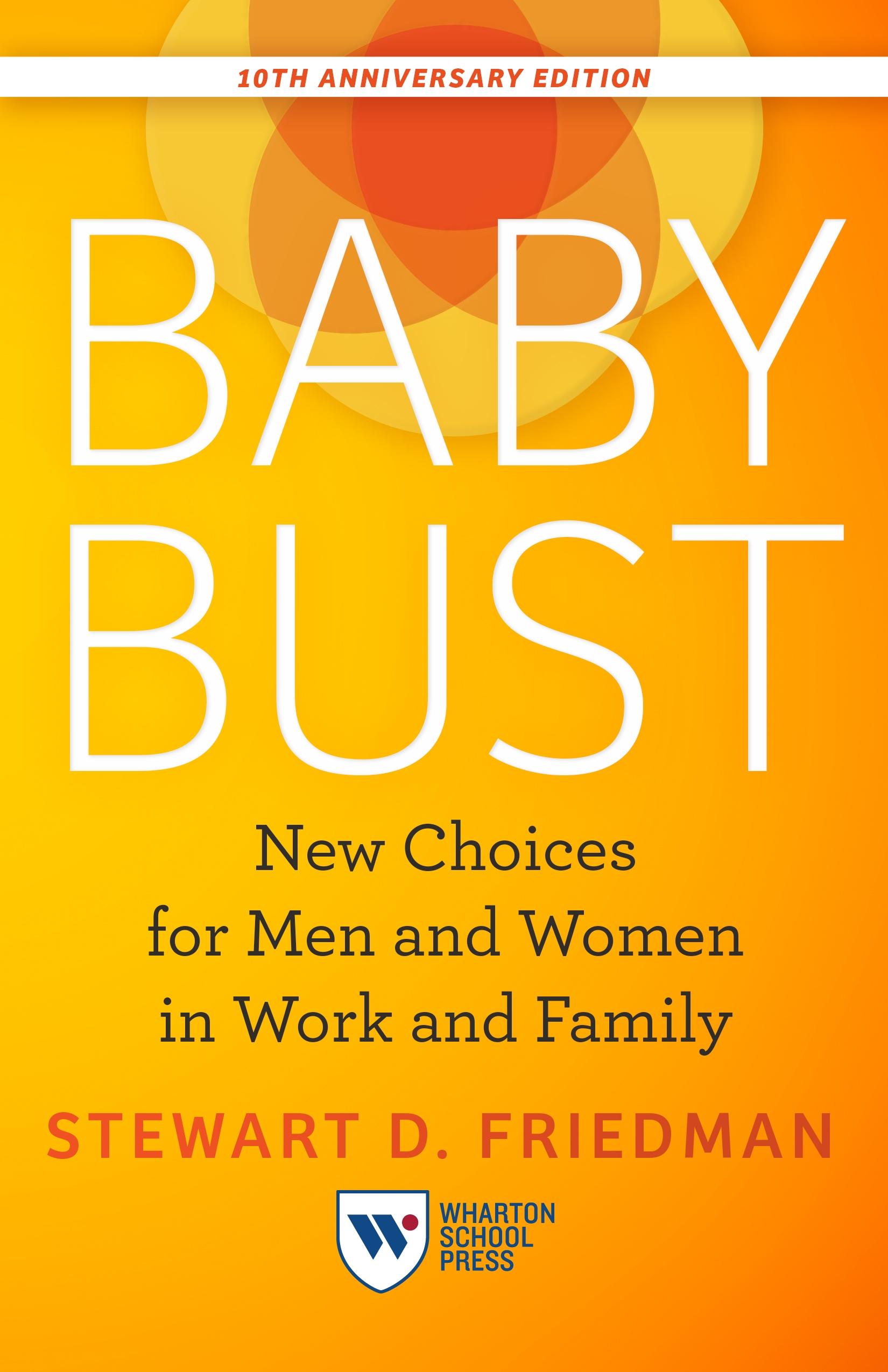
Ten years ago a groundbreaking cross-generational study revealed that greater freedom and new constraints were leading fewer young people to choose parenthood. In the intervening years, the decision to have a family has not gotten easier.
Stew Friedman, founding director of The Wharton School's Work/Life Integration Project, studied two generations of Wharton college students as they graduated: Gen Xers in 1992 and Millennials in 2012. The cross-generational study produced a stark discovery—the rate of graduates who planned to have children had dropped by nearly half over those 20 years. While some might wonder what this privileged group can tell us about broader trends in the United States, Friedman argues that they were “the canaries in the coal mine. . . . if they could not see a way to make their careers and families work, how could those with fewer opportunities and resources square this circle?”
In a new preface to this 10th anniversary edition of Baby Bust, Friedman observes that the birth rate in the United States has continued to decline in the years since. He offers new insights into why fewer people are choosing to have children, how the pandemic affected these trends, and what can be done about it.
In this book, Friedman addresses:
+ How views about work and family have changed;
+ Why men and women have different reasons for opting out of parenthood;
+ How family has been redefined;
+ What choices we face in our social and educational policy; and
+ How organizations and individuals—especially men—can spur cultural change.
In the debates on work and family, people of all generations are calling for a reasoned, thoughtful, research-driven contribution to the discussion. In Baby Bust, Friedman offers just that: an astute assessment of how far we have come and where we go from here.
Pay easily by card, Klarna, Apple Pay or Google Pay. Not happy? You always have a 14-day money-back guarantee. Read more in our terms. If you have any questions, email us at hello@memmo.org.
Memmo makes studying easier – wherever you are in the world. We bring your course books and smart study tools together in one place: summaries, quizzes, podcasts and flashcards. Plus Ted, your study buddy who answers anything you wonder. Over 50,000 students already study here – built to help you learn faster and stress less.