
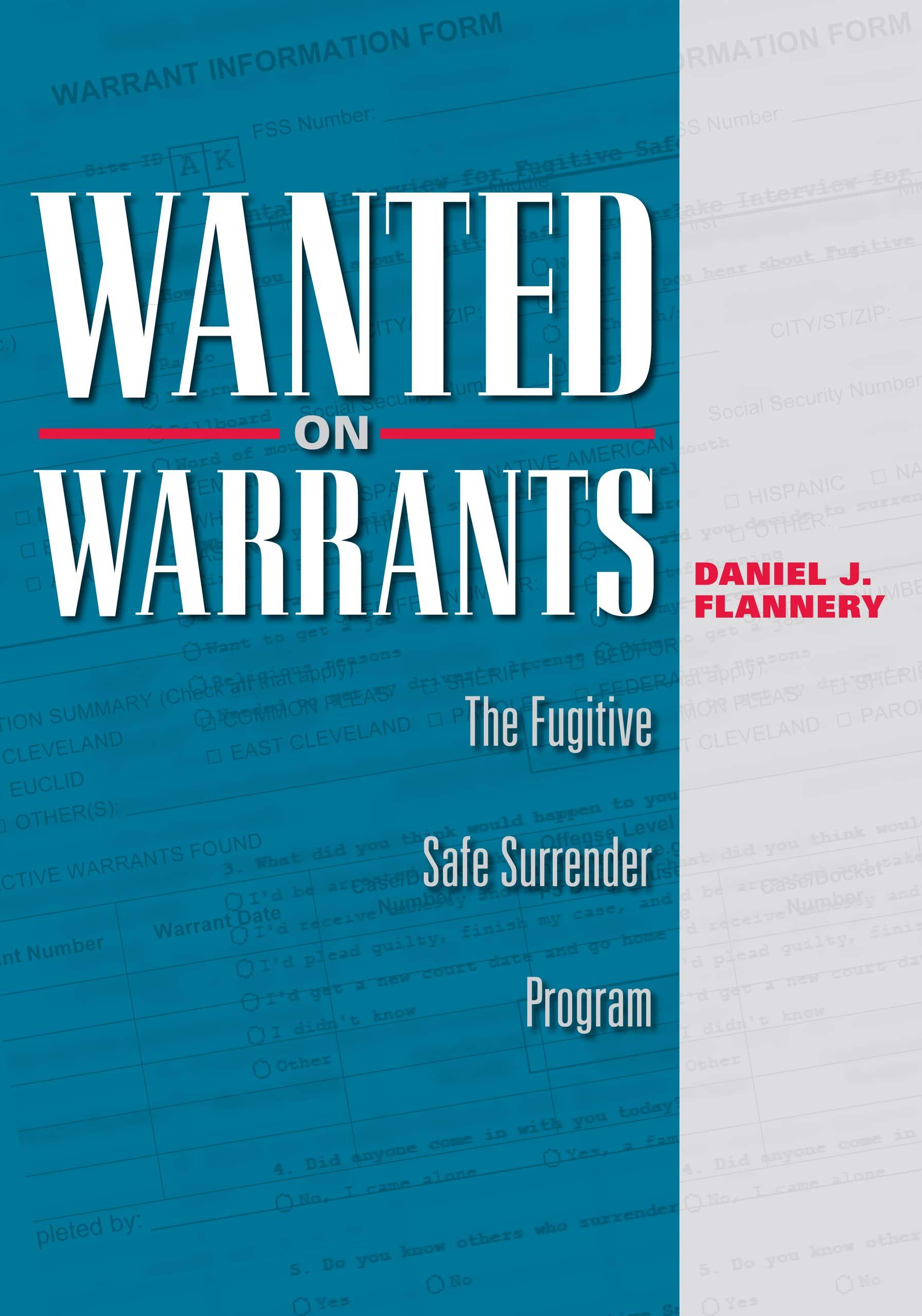
Since 2005, the Fugitive Safe Surrender (FSS) program has been implemented in more than twenty cities around the country. Tens of thousands of individuals with active warrants for their arrest have voluntarily surrendered to law enforcement in a church or other neutral setting. The sites are transformed for four days into complete justice systems with pretrial-intake, prosecutors, defense attorneys, judges, and probation/parole and community services staff. The program is advertised through local media and various community-based outlets, sending the message that individuals with nonviolent felony and misdemeanor warrants can voluntarilysurrender to law enforcement and receive expedited action and favorable consideration of their cases.
Author Daniel J. Flannery has gathered information on who turns themselves in, what the warrant is for, how long the warrant has been active, and what happens to the individual. He asked participants to complete voluntarily an anonymous survey about demographics, how they heard about the program, why they surrendered, why they had not previously surrendered, what they think will happen to them, and what they might need help with in the future. Wanted on Warrants uses these site reports, media coverage, interviews with participants, and survey data to explain why FSS has proven to be such a consummate success in clearing outstanding warrants. Across all sites, less than 2% of people with warrants who surrendered during FSS were arrested. Rather, they were released to go home within hours of turning themselves in.
This collaborative initiative between local and federal law enforcement and community faith-based organizations is unique and has proven to be a successful program that is being copied and initiated throughout the country. Wanted on Warrants offers valuable insights into what happens during and after an FSS program and will be welcomed by policymakers and practitioners.
Pay easily by card, Klarna, Apple Pay or Google Pay. Not happy? You always have a 14-day money-back guarantee. Read more in our terms. If you have any questions, email us at hello@memmo.org.
Memmo makes studying easier – wherever you are in the world. We bring your course books and smart study tools together in one place: summaries, quizzes, podcasts and flashcards. Plus Ted, your study buddy who answers anything you wonder. Over 50,000 students already study here – built to help you learn faster and stress less.