
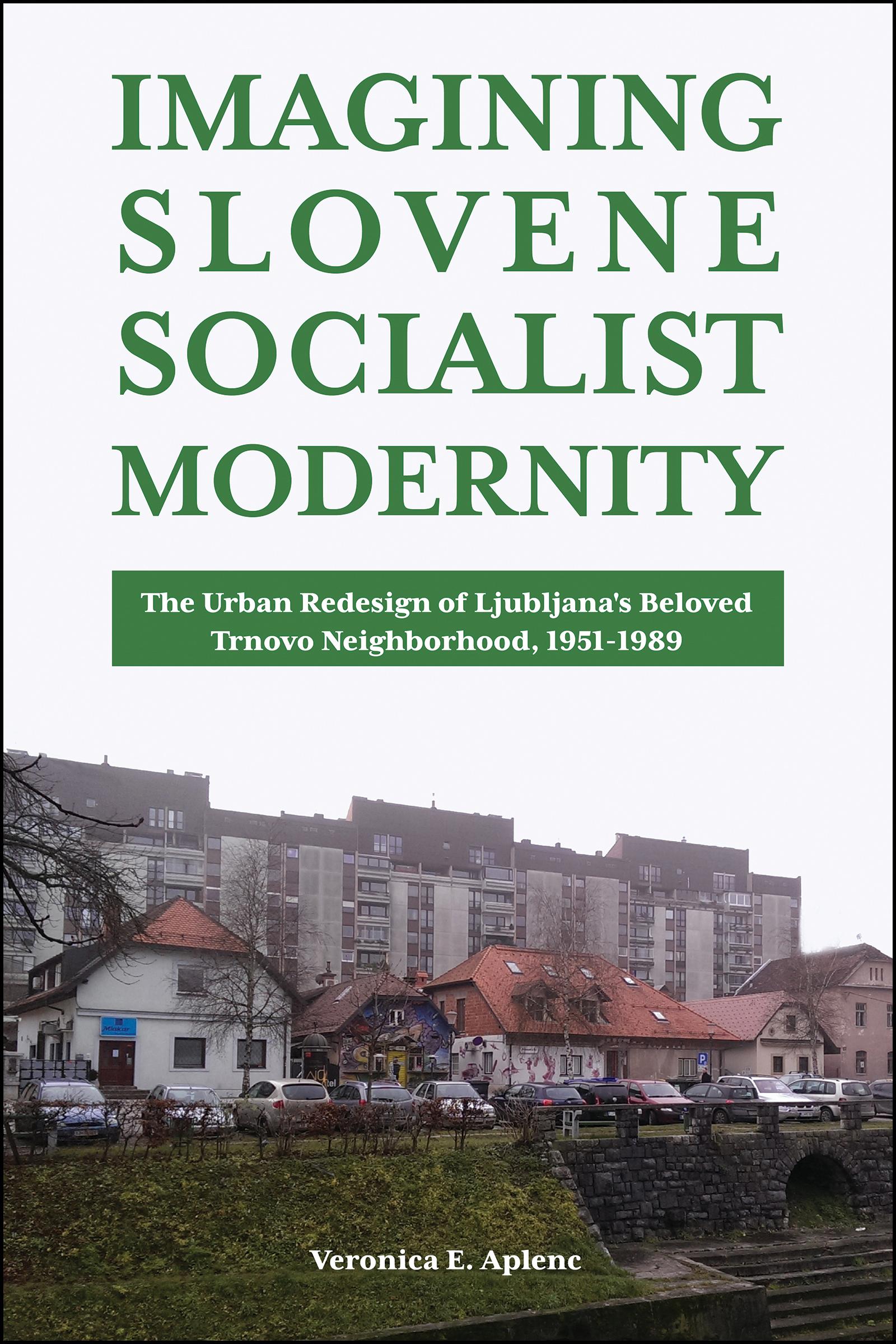
After the Second World War, Yugoslavia’s small regional cities represented a challenge for the new socialist state. These cities’ older buildings, local historic sites, and low-quality housing clashed with socialism’s promises and ideals. How would the state transform these cities’ everyday neighborhoods? In the Slovene republic’s capital city of Ljubljana, the Trnovo neighborhood embodied this challenge through its modest housing, small medieval section, vast gardens, acclaimed interwar architecture, and iconic local reputation. Imagining Slovene Socialist Modernity explores how urban planners, architects, historic preservationists, neighborhood residents, and even folklorists transformed this beloved neighborhood into a Slovene socialist city district. Aplenc demonstrates that this urban redesign centered on republic-level interpretations of a Yugoslav socialist built environment, versus a re-envisioned Slovene national past or design style. This interdisciplinary study sheds light on how Yugoslav state socialism operated at the republic level, within a decentralized system, and on the diverse forces behind success or failure. With its focus on vernacular architecture, small-scale historic sites, single-family homes, and illegal housing, this book expands our understanding of the everyday built environment in socialist cities.
Pay easily by card, Klarna, Apple Pay or Google Pay. Not happy? You always have a 14-day money-back guarantee. Read more in our terms. If you have any questions, email us at hello@memmo.org.
Memmo makes studying easier – wherever you are in the world. We bring your course books and smart study tools together in one place: summaries, quizzes, podcasts and flashcards. Plus Ted, your study buddy who answers anything you wonder. Over 75,000 students already study here – built to help you learn faster and stress less.
You might also like
Buy the book0