
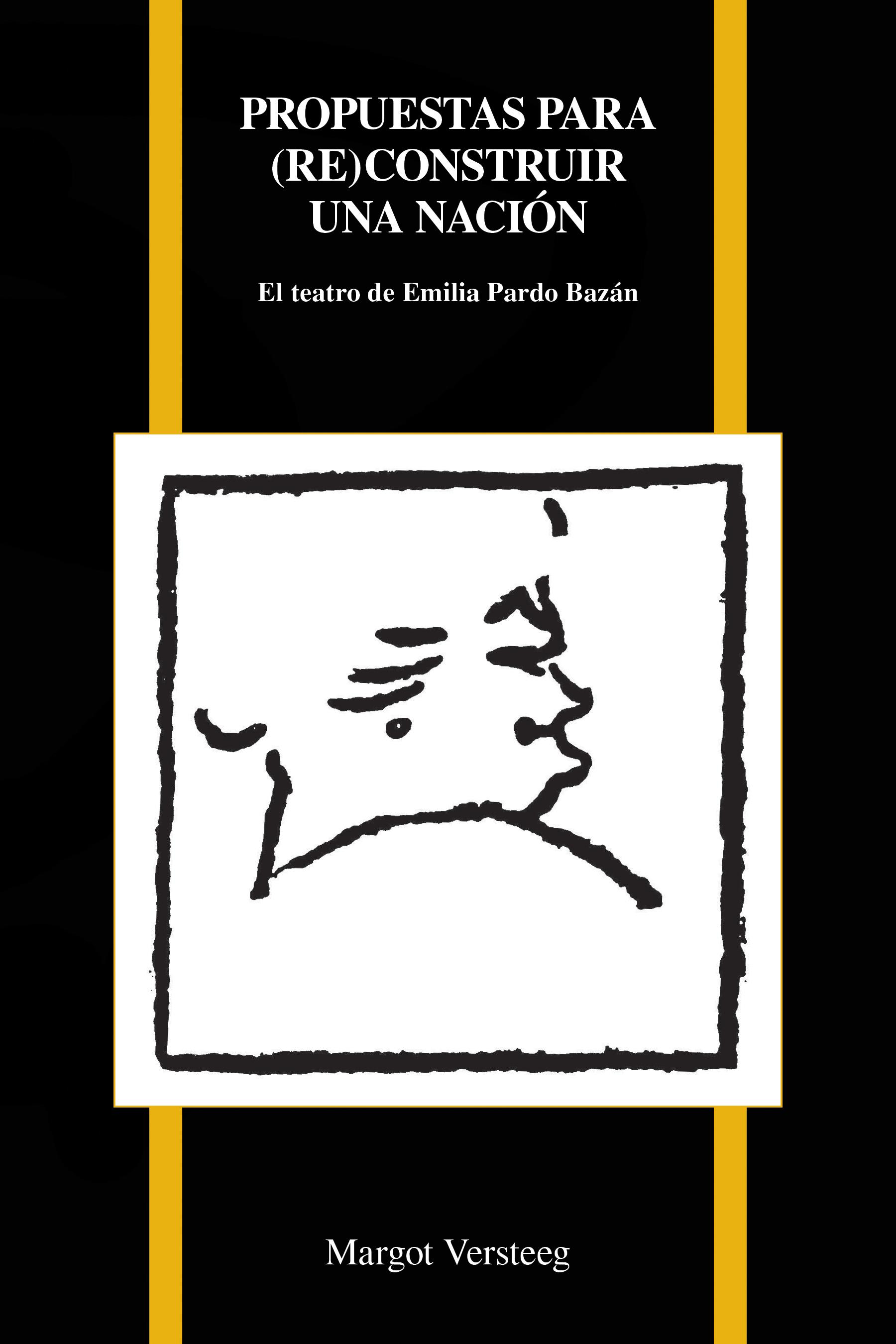
Propuestas para (re)construir una nación explores how Emilia Pardo Bazán (1851–1921) imagines and engenders the Spanish nation in her theatrical production staged and/or published between 1898 and 1909. In the aftermath of Spain’s colonial losses, when Spain’s male authors, in a growing mood of collective introspection, directed their attention to the homeland, Pardo Bazán generated a series of theatrical proposals to revitalize the nation. In her plays, she manifests her ideas about Spain’s fin de siècle crisis, reflects on Spain’s place in the international arena (emphasizing the nation’s civilizing mission), critiques the intoxicating power of the so-called golden legend (Spain’s glorious past), and sees the origin of the nation’s hardship in the lack of education of its inhabitants and in the inequality between men and women.
Pardo Bazán’s vision of Spain is forward looking, and she imagines a future in which new social configurations will be possible. Instead of locating her plays in an ancestral Castile, she situates several of her works in her native Galicia. For the author, Spain’s regional issues are inseparable from the country’s national issues and these can all be traced back to the woman question. The playwright appeals to the spectators/readers’ reason and emotions in order to let them think and feel that the problems the nation faces can all be attributed to the Spanish men. For Pardo Bazán, Spain’s potential for national regeneration resides in the inner strength of women.
In cross-fire with the main male players in the literary field of her time, Pardo Bazán offers her critique of national decadence in plays that cleverly subvert a broad range of by then outdated theatrical conventions, and that introduce the public to new currents of theatrical innovation (Ibsen, Maeterlinck, d’Annunzio).
Propuestas offers a new perspective on the participation of female authors in the contentious debate about the Spanish nation. Pardo Bazán’s theater is an overlooked area in the author’s extensive creative production, and Propuestas challenges the so often repeated topic of the backwardness of the Spanish stage and the alleged lack of innovation during the fin de siècle.
Propuestas para (re)construir una nación explora cómo Emilia Pardo Bazán (1851–1921) imagina y engendra la nación española en su producción teatral finisecular que vio la luz entre 1898 y 1909. A la zaga de la debacle de 1898, cuando la introspección colectiva dirige la mirada de los autores hacia la patria, Pardo Bazán genera una serie de propuestas teatrales para revitalizar la nación. En sus obras, expone sus ideas sobre la crisis finisecular, reflexiona sobre el lugar de España en la arena internacional (enfatizando su misión civilizadora), critica el poder embriagador de lo que llama la leyenda dorada (el glorioso pasado español) y ve la causa de los males de la patria en la falta de educación de sus habitantes y en la desigualdad entre hombres y mujeres.
En vez de enfocarse en el ayer, Pardo se imagina un futuro en el que nuevas configuraciones sociales sean posibles. En lugar de ubicar sus obras en una Castilla ancestral, sitúa varias de sus piezas teatrales en su Galicia natal. Para la autora los problemas regionales son inseparables de los nacionales y los problemas nacionales son inseparables de la cuestión de la mujer. La dramaturga apela tanto al raciocinio como a las emociones de sus espectadores/lectores para hacerles pensar y sentir que son los hombres los que constituyen el problema nacional. Para Pardo Bazán la clave de la regeneración de España se encuentra en la mujer.
En fuego cruzado con los jugadores más importantes del campo de producción cultural de su tiempo, Pardo Bazán ofrece su crítica de la decadencia nacional en unas obras que reciclan una serie heterogénea de materiales por aquel entonces anticuados que la autora combina de manera inteligente con formas inesperadas que introducen al público a nuevas corrientes de innovación teatral (Ibsen, Maeterlinck, D’Annunzio).
Propuestas ofrece una nueva perspectiva de la participación de las autoras femeninas en el contencioso debate sobre la nación española. Dentro de la extensa producción creadora de la autora, su teatro es un terreno frecuentemente pasado por alto y Propuestas desafía el tan trillado tópico del retraso de la escena española y la supuesta falta de innovación durante el fin de siglo.
Pay easily by card, Klarna, Apple Pay or Google Pay. Not happy? You always have a 14-day money-back guarantee. Read more in our terms. If you have any questions, email us at hello@memmo.org.
Memmo makes studying easier – wherever you are in the world. We bring your course books and smart study tools together in one place: summaries, quizzes, podcasts and flashcards. Plus Ted, your study buddy who answers anything you wonder. Over 75,000 students already study here – built to help you learn faster and stress less.