
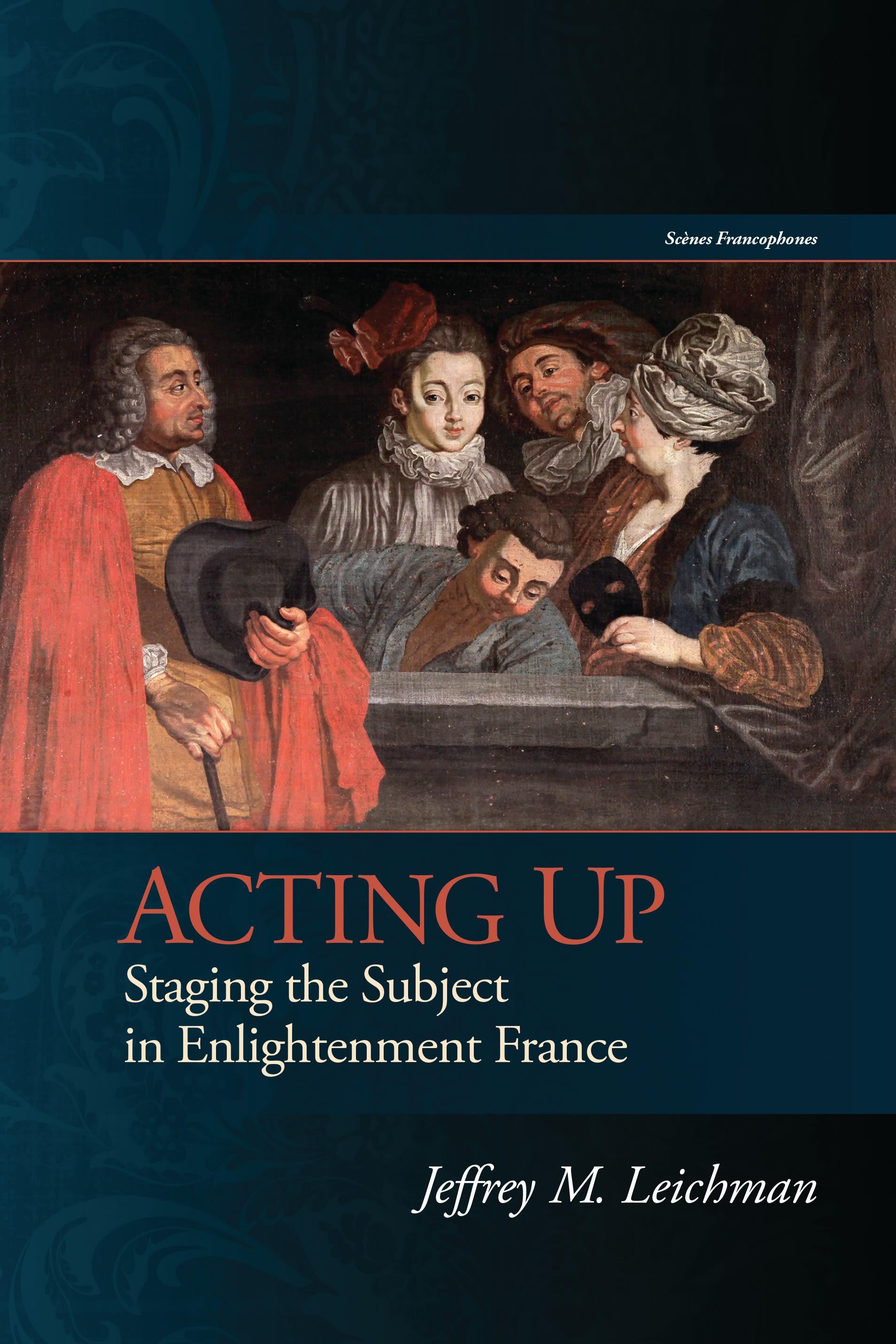
Acting concentrated both the aspirations and anxieties of seventeenth- and eighteenth-century France, where theater was a defining element of urban sociability. In Acting Up: Staging the Subject in Enlightenment France, Jeffrey M. Leichman argues for a new understanding of the relationship between performance and self. Innovative interpretations of La Chaussée, Rousseau, Diderot, Rétif, Beaumarchais, and others demonstrate how the figure of the actor threatened ancien régime moral hierarchies by decoupling affect from emotion. As acting came to be understood as an embodied practice of individual freedom, attempts to alternately perfect and repress it proliferated. Across religious diatribes and sentimental comedies, technical manuals and epistolary novels, Leichman traces the development of early modern acting theories that define the aesthetics, philosophy, and politics of the performed subject. Acting Up weaves together cultural studies, literary analysis, theater history, and performance studies to establish acting as a key conceptual model for the subject, for the Enlightenment, and for our own time.
Pay easily by card, Klarna, Apple Pay or Google Pay. Not happy? You always have a 14-day money-back guarantee. Read more in our terms. If you have any questions, email us at hello@memmo.org.
Memmo makes studying easier – wherever you are in the world. We bring your course books and smart study tools together in one place: summaries, quizzes, podcasts and flashcards. Plus Ted, your study buddy who answers anything you wonder. Over 75,000 students already study here – built to help you learn faster and stress less.